

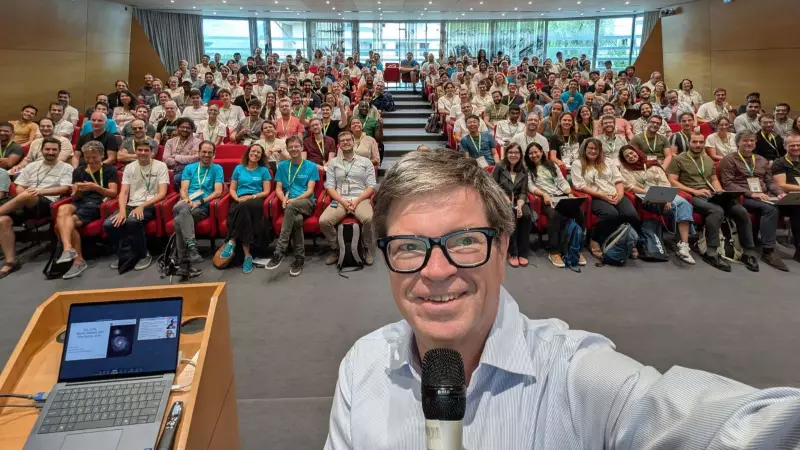
In a significant development shaking the artificial intelligence world, Yann LeCun, Meta's chief AI scientist and renowned NYU professor, has revealed plans to leave the tech giant to launch his own startup. The 65-year-old AI pioneer, often called one of the "godfathers of AI," intends to depart Meta in the coming months amid reported friction over the company's strategic direction under Mark Zuckerberg.
The Departure That Signals AI Industry Shift
LeCun's decision to exit Meta comes at a crucial juncture for the artificial intelligence industry. The veteran scientist has been openly critical of large language models, consistently arguing that they will never achieve human-level reasoning capabilities. Industry observers note that his departure raises concerns about AI development becoming concentrated within a few corporate entities, a scenario LeCun has actively opposed but believes is already unfolding.
The tension within Meta appears to stem from differing visions about AI development. While LeCun has championed fundamental, long-term AI research, Zuckerberg has shifted focus toward product-oriented approaches aimed at competing with OpenAI and Google. This philosophical divide became more pronounced after Meta's Llama 4 failed to match the performance of competing models from OpenAI's GPT and Google's Gemini series.

From French Roots to AI Royalty
Born in 1960 in Soisy-sous-Montmorency, France, LeCun's fascination with artificial intelligence began after watching Stanley Kubrick's 2001: A Space Odyssey. Growing up with an engineer father who introduced him to electronics, his curiosity about technology deepened naturally. This early interest led him to ESIEE Paris, where he earned an electrical engineering diploma in 1983.
LeCun's academic journey continued at Université Pierre et Marie Curie, where he completed his PhD in computer science in 1987. His groundbreaking dissertation on "Connectionist Learning Models" established the theoretical foundation for the backpropagation algorithm in neural networks. He later completed a postdoctoral fellowship under Geoffrey Hinton at the University of Toronto, beginning a collaboration that would shape modern AI.
In 2018, LeCun, Hinton, and Yoshua Bengio received the Turing Award, computing's highest honor, for their transformative work on deep neural networks. This recognition cemented their status as the founding figures of contemporary artificial intelligence.
Career Defining Contributions to AI
After his postdoctoral work with Hinton, LeCun joined AT&T Bell Laboratories, where he developed convolutional neural networks - a revolutionary breakthrough enabling computers to process visual information in ways resembling human vision. His work also included developing DjVu image-compression technology, which became instrumental for digital libraries like the Internet Archive in distributing scanned documents online.
In 2003, LeCun began his academic career at New York University, later founding the NYU Center for Data Science. A decade later, in 2013, he joined Meta as chief AI scientist for Facebook AI Research (FAIR), positioning himself at the forefront of corporate AI development while maintaining his academic role.
Championing Open-Source AI Development
LeCun has consistently advocated for open-source artificial intelligence, setting him apart from many contemporaries. In 2023, when his Turing Award co-winners Geoffrey Hinton and Yoshua Bengio signed a statement labeling AI a "societal-scale risk," LeCun notably abstained. Instead, he signed an open letter to US President Joe Biden urging embrace of open-source AI and warning against corporate control of the technology.
This stance seemed particularly noteworthy given his position at Meta, though the company has maintained a more open approach compared to competitors like Google and OpenAI. When Chinese developer DeepSeek made waves with its breakthrough AI model earlier this year, LeCun framed it as a victory for open-source rather than geopolitical competition, stating: "open-source models are surpassing proprietary ones."

Skepticism Toward AGI and Current AI Limitations
LeCun has repeatedly expressed skepticism about the concept of Artificial General Intelligence (AGI), calling the term misleading and preferring "Advanced Machine Intelligence" instead. "I hate that term," he told audiences during a 2024 talk at Columbia School of Engineering and Applied Science. "Human intelligence is not generalized at all. Humans are highly specialized."
While believing human-level machine intelligence is achievable and could enable practical applications like AI-powered wearable devices, LeCun has been particularly critical of current large language models. He argues that despite generating coherent text, LLMs lack true understanding, planning capabilities, and meaningful interaction with the physical world, placing their intelligence below even that of household pets.
Meta's Strategic Shift and LeCun's Diminished Role
The timing of LeCun's departure coincides with Meta's significant strategic pivot in artificial intelligence. Earlier this year, the company invested $14.3 billion in Scale AI and established Meta Superintelligence Labs under CEO Alexandr Wang. This reorganization changed LeCun's reporting structure and appeared to diminish his influence within the company's AI hierarchy.
While the exact reasons for the rift remain undisclosed, industry analysts suggest Zuckerberg's growing impatience with LeCun's research-focused approach contributed to the separation. As Meta intensifies its competition with OpenAI and Google, the company appears to be prioritizing immediate product development over fundamental research - a direction that aligns poorly with LeCun's vision for artificial intelligence development.
LeCun's impending departure marks a significant moment in the evolving artificial intelligence landscape, potentially signaling a new chapter for both the renowned researcher and the industry he helped create. His planned startup venture will undoubtedly be closely watched by AI communities worldwide, representing both a continuation of his lifelong work and a new direction for one of artificial intelligence's most influential minds.





