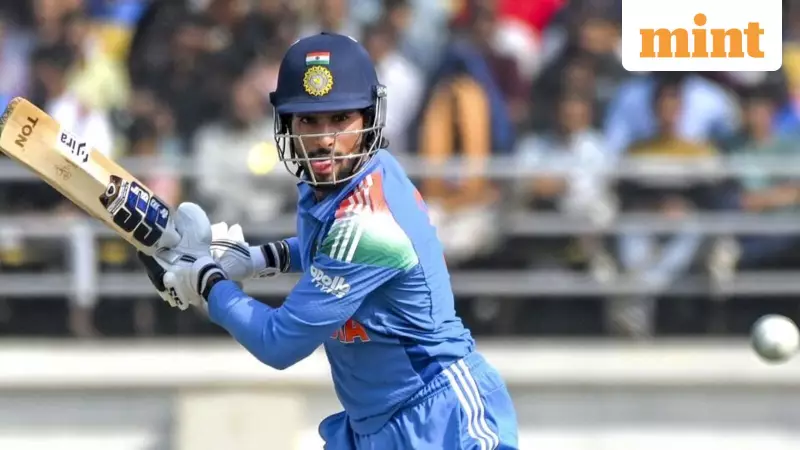
Indian cricket star Tilak Varma has been sidelined from the upcoming white-ball series against New Zealand following an urgent medical procedure. The young batter underwent emergency surgery for a severe groin issue identified as testicular torsion, a critical urological condition.
What Happened to Tilak Varma?
Tilak Varma reported sudden, acute pain in his groin while in Rajkot, where he was participating in the Vijay Hazare Trophy for the Hyderabad team. He was immediately rushed to Gokul Hospital. After a medical scan confirmed the diagnosis of testicular torsion, doctors advised immediate surgical intervention. The emergency surgery took place on Thursday, as confirmed by a BCCI official to PTI.
While the cricketer is now in stable condition and recovering, the Board of Control for Cricket in India (BCCI) has ruled him out of the first three T20 Internationals of the multi-format series against New Zealand. This unexpected health crisis has brought attention to a serious but often misunderstood medical emergency.

Understanding Testicular Torsion: A Race Against Time
Dr. Sanjay Prakash J, Lead Andrologist and Urologist at the Asian Institute of Nephrology and Urology Hospital in Chennai, explains that testicular torsion is an acute urological emergency. It occurs when the spermatic cord, which supplies blood to the testicle, twists. This rotation cuts off the blood flow abruptly, starving the testis of oxygen.
"It is a urological equivalent of a stroke or heart attack," Dr. Prakash stated. The condition initiates a rapid process of cellular damage due to lack of oxygen. Crucially, testicular torsion is a time-dependent emergency, not a symptom-dependent one. This means the urgency for treatment is defined by the clock, not just by the severity of pain.
The "Golden Window" for Saving the Testis
The viability of the testicle declines rapidly once its blood supply is severed. Medical experts emphasize a critical "golden window" of 4 to 6 hours from the onset of symptoms. During this period, the chances of successfully saving the testis remain high.
"At 12 hours, the likelihood of testicular survival is poor; beyond 24 hours, necrosis is almost universal," Dr. Prakash highlighted, underscoring why immediate surgery is non-negotiable. When torsion is suspected, urgent surgical exploration is mandatory and should not be delayed for imaging tests if they risk wasting precious time.
Why Are Athletes at Higher Risk?
This condition poses a significant threat to athletes. Torsion can frequently be triggered by sudden rotational movements, sprinting, or contact trauma—actions common in sports like cricket. For a professional sportsperson, the stakes extend beyond the immediate health scare.
"Delay in treatment risks not only testicular loss but long-term hormonal and reproductive consequences, directly impacting performance, recovery, and psychological well-being," Dr. Prakash added. The long-term implications can include testicular atrophy, impaired sperm production, low testosterone, and psychological distress related to fertility and body image.
Recognizing the Early Signs
Early diagnosis is challenging because symptoms can be misleading. Dr. Prakash advises vigilance for specific signs:
- Sudden-onset lower abdominal or groin pain that may not initially localize to the scrotum.
- Nausea and vomiting that seem disproportionate.
- A vague "pulling" or "twisting" sensation in the groin.
- Transient pain that briefly settles (indicating partial torsion), which can falsely reassure the patient and doctor.
Unfortunately, these symptoms often lead to misdiagnosis as gastroenteritis, appendicitis, or muscular strain. Testicular torsion shows a bimodal age pattern, most commonly affecting newborns and adolescents between 12 and 18 years, a period of rapid testicular growth during puberty.
The incident with Tilak Varma has thrust this important medical condition into the spotlight, highlighting the critical need for awareness and immediate action when symptoms arise.
Note: This article is for informational purposes only and is not a substitute for professional medical advice.