AIFF's Own Football Academy Suspended from U-18 Elite League Following Age Manipulation Controversy
The All India Football Federation (AIFF) finds itself embroiled in a significant controversy as its own flagship football academy has been officially barred from participating in the prestigious U-18 Elite League. This disciplinary action comes after a formal complaint was lodged by Minerva Academy FC, alleging systematic age manipulation by the AIFF FIFA Talent Academy based in Odisha.
Minerva Academy's Formal Complaint and the Core Allegations
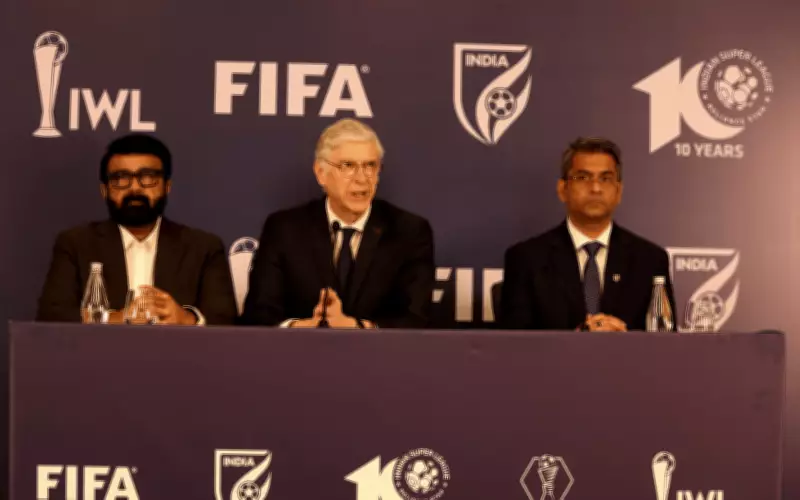
Minerva Academy FC, represented by counsels Shivam Singh and Yoshit Jain, presented a detailed complaint to the AIFF disciplinary committee. The Chandigarh-based club alleged that the Odisha academy, famously launched by Arsenal's legendary manager Arsene Wenger, fielded more than five players who had failed the standard U-16 TW3 bone density test. This action was described as being "contrary to the eligibility framework that has otherwise been enforced upon all the other participating clubs."
The complaint specifically highlighted that the AIFF guidelines permit a maximum of five players who do not meet the bone density category to be moved from the Junior League to the Elite League, but this exception is strictly conditional. It applies only if the team is actively participating in both leagues simultaneously. The AIFF FIFA Talent Academy, however, had a team competing exclusively in the Elite League, thereby rendering the exception inapplicable.

Disciplinary Committee's Findings and Ruling
A four-member disciplinary committee, chaired by Justice (Retd) Vineet Saran, conducted a thorough investigation into the allegations. The committee's order stated that Minerva Punjab's complaint had substantial "merit." It was found that the AIFF academy had violated Article 9.1.(a) of the AIFF Elite Youth League 2025-26 Regulations by fielding players below the restricted age group category, which is designated for those born between January 1, 2008, and December 31, 2009.
The investigation revealed a startling detail: there were 18 players below the age of 16 in the academy's squad for the U-18 league. The academy's defense was that these players possessed a bone age rating above 16.2, despite failing the standard test. The committee firmly rejected this justification, emphasizing that the AIFF was "legally bound by the age specifications set forth in the tournament regulations, which apply to all the participants equally." The relaxation for bone age was deemed unavailable to a team participating in only one league.
AIFF's Defense and Developmental Philosophy
In a statement released late on Thursday, the AIFF presented its defense, framing the situation as part of a deliberate high-performance strategy. The federation stated that the academy had intentionally fielded a younger squad, primarily consisting of U-16 players, in the U-18 competition. This was described as a calculated component of a "developmental pathway" designed to expose exceptionally talented young players to stronger, older competition to accelerate their growth.
"This developmental approach has already demonstrated positive results," the AIFF asserted. "During the previous season, when the academy's younger team competed against older players in the AIFF Elite Youth League, they won the majority of its matches and progressed deep into the competition despite the clear age disadvantage. The same developmental philosophy had continued this season."
Broader Implications for Indian Football Governance
This incident raises serious questions about governance, consistency, and the enforcement of regulations within Indian football's governing body. The fact that the AIFF's own academy has been found in violation of rules it created and enforces for other clubs is a significant point of contention. It highlights potential conflicts of interest and challenges the perception of a level playing field in national youth competitions.

The disciplinary committee's ruling underscores a fundamental principle: regulations must be applied uniformly to all participants, without exception. The ban serves as a strong message regarding the integrity of age-group competitions, which are critical for the fair and transparent development of young football talent across India. The controversy now puts the spotlight on how the AIFF will manage its internal academies and ensure strict compliance with its own rulebook moving forward.