Surat Civic Anger: Residents Boycott Voting Over Unresolved Infrastructure Woes
Ahead of the Surat Municipal Corporation (SMC) elections, widespread frustration over persistent civic problems has erupted across residential societies in the city. In a bold move, residents in multiple areas have displayed banners prohibiting political party leaders and workers from entering for campaign activities, signaling a deep-seated discontent with local governance.
Bharthana-Vesu: A Society's Decades-Long Struggle
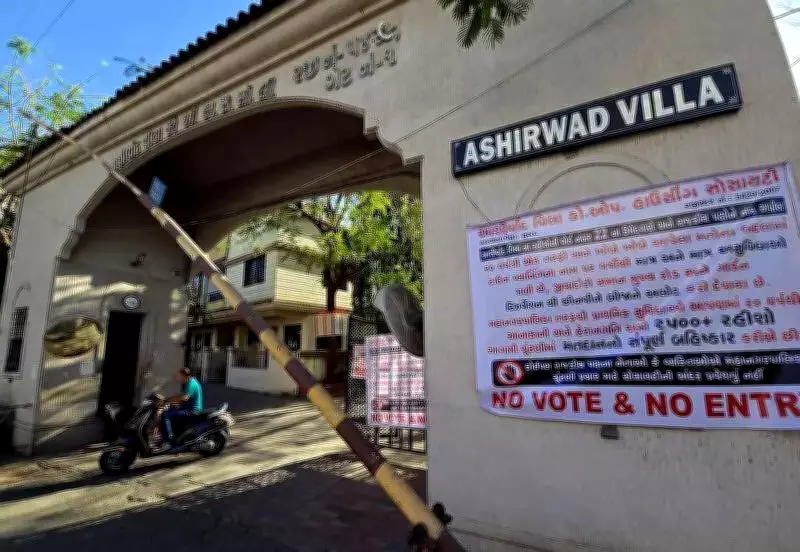
In the Bharthana-Vesu area, residents of Ashirvad Villa have declared a complete boycott of voting due to long-standing unresolved civic issues. A prominent banner at the society gate conveys a stark message: despite years of high voter turnout and consistent support for the ruling BJP, the community has received only inconvenience in return.
The banner specifically alleges that under the guise of town planning schemes, a crucial road and garden designated for the society were seized through reservation and allocated elsewhere. Residents claim that the SMC has denied them basic infrastructure for nearly two decades, impacting approximately 2,500 individuals.

Vinod Patel, a resident, expressed the collective sentiment: "We have ensured maximum voting from the society, with most votes going to the BJP, but we have faced injustice for years. We resorted to this protest as our issues remain unresolved."
Residents detailed their ongoing struggles, relying on water and drainage systems that are over a decade old, lacking streetlights, and having to develop their own internal roads. After losing land earmarked for a road and garden, the matter was taken to court, where it remains pending, adding to their frustrations.
Katargam and Rander: Echoes of Neglect
Similar protests have emerged from Dangigev Society in Katargam, where residents have also erected "No Vote" banners and requested political workers to stay away. Residents there reported that despite paying taxes for more than 35 years, along with incremental charges, the society still lacks fundamental infrastructure.
They alleged that even though the mayor was elected from the ward with strong support from the area, their locality continues to be neglected. Rajesh Pandav, a resident, explained: "Road and drainage infrastructure has not been redeveloped for years due to a dispute over additional land being reserved. We had already given land as required during planning, but more was later marked for reservation."
In Rander, residents near the Gorat Hanuman Temple have put up banners urging only those leaders to seek votes who can ensure the protection of the temple. This area was among those where early demands were made for the implementation of the Disturbed Areas Act, highlighting broader community concerns.
Underlying Grievances and Political Implications
The common thread across these protests is poor basic infrastructure, largely attributed to changes in town planning schemes. Residents feel betrayed by political promises and are using the election period to amplify their voices. The banners and boycotts serve as a powerful statement against perceived civic neglect, with implications for voter turnout and political engagement in the upcoming SMC elections.
As the election approaches, these actions underscore a growing disconnect between citizens and local authorities, with residents demanding tangible solutions over electoral rhetoric. The situation calls for urgent attention to address the deep-rooted infrastructure issues that have plagued these communities for years.