Nagpur Fuel Shortage Sparks Unprecedented Shift to Public Transport
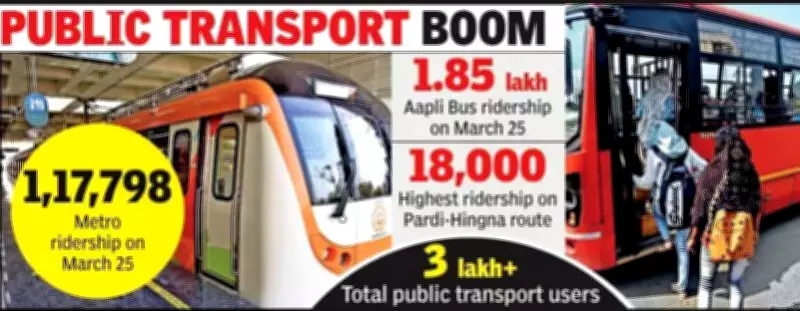
The ongoing fuel crisis in Nagpur triggered a massive shift towards public transport on Wednesday, with over three lakh commuters opting for Metro and Aapli Bus services in a single day. This figure represents one of the highest combined ridership numbers recorded in recent weeks, highlighting the growing reliance on alternative transit options as petrol and diesel supplies remain uncertain at numerous fuel stations.
Metro and Bus Services See Significant Ridership Surge
With thousands of private vehicle users switching to buses and Metro, passenger numbers soared to unprecedented levels. The Metro system recorded a notable increase in ridership, with 1,17,798 passengers traveling until 10:30 PM on Wednesday. This marks a jump of over 6,385 passengers compared to the 1,11,413 commuters recorded on March 19, reflecting a rapid rise within just two weeks. Officials attributed this spike to the deepening fuel shortage, which has forced daily commuters to depend more heavily on public transport.
Similarly, the Aapli Bus service registered its highest-ever ridership, with approximately 1.85 lakh passengers commuting on Wednesday. This surge follows a steady upward trend, as ridership stood at 1,74,317 on March 19, increased to 1.78 lakh on March 24, and peaked at an all-time high of 1,86,148 on March 25. The data indicates a consistent rise in bus usage as the fuel crisis intensifies.

Financial Gains and Operational Efficiency Amid Crisis
The surge in ridership has also improved the financial performance of the bus service. Key metrics show a positive trend, with the earning per kilometer (EPKM) rising from Rs 27.20 on March 11 to Rs 30.81 on Wednesday. Concurrently, the earning per bus increased from Rs 6,077 to approximately Rs 6,555. Officials noted that the higher passenger turnout, despite the ongoing fuel crisis, has significantly boosted daily revenue, underscoring the economic benefits of increased public transport adoption.
Interestingly, this record ridership was achieved despite the civic body operating fewer buses. On March 11, a total of 548 buses made 6,775 trips, whereas on Wednesday, only 544 buses were deployed, completing 6,636 trips. This efficiency gain highlights the growing reliance on public transport, as more passengers are being accommodated with slightly reduced resources.
Route-Wise Analysis Reveals Key Hotspots
Route-wise data further illustrates the sharp increase in passenger footfall across Nagpur. The highest ridership was recorded on the Pardi-Hingna route, with around 18,000 passengers, followed by the Buldi-Takalghat route with nearly 12,000 commuters. Other notable routes include Khaparkheda, which saw about 9,700 passengers, and Kalmeshwar, with approximately 9,600. Additional routes such as Kanhan, Sitabuldi-Hingna, and Sitabuldi-Kamptee also witnessed significant rises in ridership, indicating widespread adoption of bus services throughout the city.
Management and Future Operations
Additional Municipal Commissioner Vasumana Pant, along with staff from Chalo Mobility Private Limited (CMPL), is ensuring the smooth operation of the Aapli Bus fleet during this critical period. Officials have announced that the regular bus schedule will resume from Friday, following a reduced fleet operation on Thursday due to a public holiday. This management effort aims to maintain service reliability and meet the heightened demand from commuters affected by the fuel shortage.
The ongoing fuel crisis in Nagpur has not only disrupted private vehicle usage but also catalyzed a transformative shift towards public transport. With record ridership numbers and improved financial metrics, this trend underscores the resilience and importance of efficient transit systems in urban areas during times of scarcity.