An internal audit has exposed a significant financial shortfall for the Hubballi-Dharwad Municipal Corporation (HDMC), revealing that the civic body has failed to tap into a potential revenue stream worth crores of rupees from advertisements. The report highlights systemic lapses in policy implementation and revenue collection, raising serious questions about financial management.
Audit Uncovers Deep-Seated Management Failures
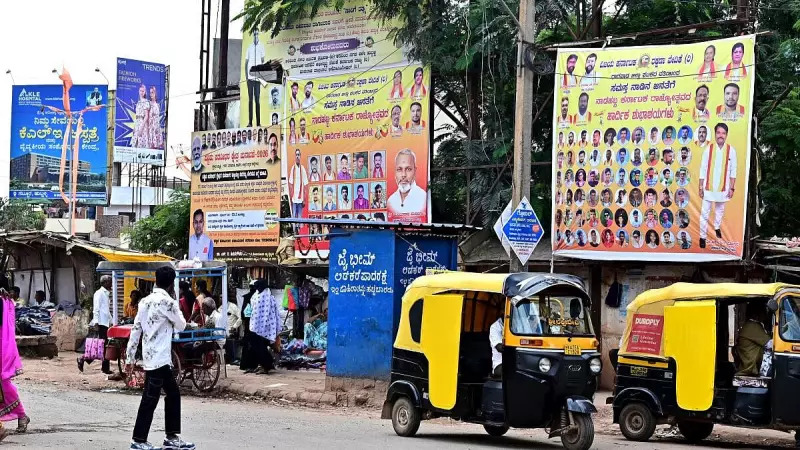
The audit, which scrutinized the HDMC's advertisement revenue collection for the financial year 2023-24, paints a picture of missed opportunities and administrative negligence. It was found that the corporation has not been effectively implementing its own advertisement policy, leading to substantial losses. The policy, designed to regulate hoardings, banners, and other forms of public advertising, is not being enforced uniformly across the twin cities.
One of the most glaring issues identified is the lack of a proper inventory or database of advertisement spaces and hoardings within the HDMC's jurisdiction. This fundamental gap makes it nearly impossible for officials to track which advertisements are authorized, who has paid for them, and which are illegal. Consequently, a large number of advertisers are potentially operating without valid permits, depriving the civic body of legitimate income.
Policy Gaps and Enforcement Challenges
The audit report points to specific areas where the HDMC is losing money. It notes that revenue from various forms of advertisements, including hoardings, bus shelters, and pole kiosks, is not being collected systematically. The absence of a streamlined process for issuing permits and collecting fees has created an environment ripe for exploitation.
Furthermore, the report emphasizes that the corporation has not revised its advertisement rates in line with market realities for a considerable period. This means that even the revenue being collected is likely below the fair market value, compounding the financial loss. The audit suggests that a comprehensive review and modernization of the advertisement policy, along with a city-wide drive to identify and regularize illegal hoardings, are urgently needed.
Financial Implications and the Path Forward
The financial implications of these lapses are severe for a municipal body that requires funds for essential civic amenities and infrastructure projects. The unclaimed advertisement revenue, estimated to be in the range of several crores of rupees annually, represents a critical resource that could have been used for public welfare.
The audit has reportedly been submitted to the HDMC Commissioner, and it is now expected that the civic administration will take corrective measures. These may include:
- Conducting a thorough digital survey to map all advertisement assets.
- Digitizing the entire process of application, approval, and fee collection.
- Revising the advertisement tariff to reflect current market conditions.
- Launching a special enforcement drive to penalize illegal advertisements and recover dues.
This situation is not unique to HDMC but serves as a cautionary tale for other municipal corporations in Karnataka and across India. It underscores the importance of robust administrative mechanisms and the need for civic bodies to proactively manage their non-tax revenue sources to ensure financial health and better service delivery to citizens.