From CM Contender to Shinde's Fiercest Foe: The Ganesh Naik vs Eknath Shinde Rivalry
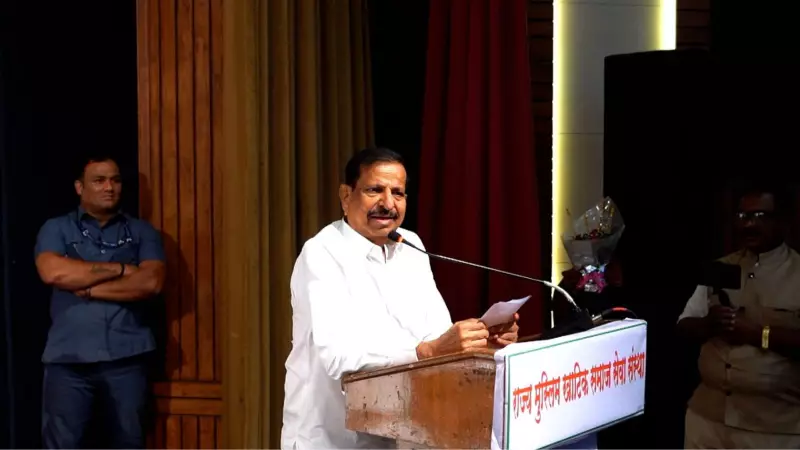
In the complex landscape of Maharashtra politics, few rivalries burn as intensely as the one between BJP MLA Ganesh Naik and Deputy Chief Minister Eknath Shinde. What began as territorial disputes decades ago has evolved into a strategic power play that now serves the BJP's tactical interests while denying Shinde political breathing space.
The Origins of a Political Warrior
Born in Bonkode village, now part of Navi Mumbai, Ganesh Naik emerged from the Agri community during the region's rapid urbanization. His political foundation was built through labor networks—working with Mathadi head loader unions and industrial labor groups across the Trans Thane Creek corridor. These early experiences shaped his confrontational style and grassroots approach that would define his career.
Naik's entry into the Shiv Sena coincided with the party's expansion into Navi Mumbai during the late 1970s. He quickly became the principal face in key areas including Vashi, Nerul, Airoli, Turbhe, and Ghansoli. His growing influence translated into electoral success when he won the Belapur Assembly seat in 1990.

Rise, Fall, and Rebellion
After the Shiv Sena-BJP government came to power in 1995, Naik was inducted into Chief Minister Manohar Joshi's cabinet. Remarkably, his name was mentioned as a potential Chief Minister contender during this period. Naik has publicly claimed that several leading industrialists favored him for the role and communicated this to Bal Thackeray, though he maintains he wasn't interested in the position at that time.
However, Naik's ministerial tenure was marked by conflict. His confrontational approach brought him into repeated disagreements with Joshi and the Sena leadership. When he refused to resign after public criticism of the Chief Minister—an unusual move in a party known for strict discipline—Joshi dropped him from the cabinet with Thackeray's approval.
The rift extended to local politics, contributing to the Shiv Sena losing control of the Navi Mumbai Municipal Corporation in the late 1990s. The final rupture came in 1999 when Naik joined Sharad Pawar's newly formed Nationalist Congress Party. That same year, he suffered defeat in Assembly elections to the Shiv Sena candidate backed by Anand Dighe's Thane unit, where Eknath Shinde was emerging as a key organizer.
The Shinde Factor and Renewed Conflict
After years in political wilderness, Naik staged a comeback in 2004 on an NCP ticket, serving as Excise Minister and holding several key portfolios over the next decade. His 2014 defeat to BJP's Manda Mhatre, a former associate who leveled corruption allegations against him, marked a turning point. As BJP's dominance grew in Maharashtra, Naik gradually moved closer to the party, formally joining in 2019 and winning the Airoli Assembly seat.
Naik's longstanding rivalry with Eknath Shinde, dating back to the Anand Dighe era, meant he wasn't inducted into the cabinet immediately after the Shiv Sena split in 2019. It was only after Devendra Fadnavis returned as Chief Minister in 2024 that Naik entered the ministry as Maharashtra's Forest Minister.
Strategic Positioning and Power Dynamics
Naik's current role as Shinde's fiercest critic serves multiple strategic purposes. From warning he would "topple his cart" to speaking of "wiping out his existence," Naik's rhetoric maintains constant pressure on the Deputy Chief Minister. This dynamic serves BJP's tactical interest in keeping its alliance partner in check while denying Shinde political breathing space.
Several factors explain Naik's unique position in this equation. Unlike many regional leaders, he operates independently of Shinde's influence and isn't politically overawed by him. With considerable financial resources and longstanding corporate connections, Naik has little hesitation in confronting Shinde, particularly regarding what he perceives as attempts to expand into his political stronghold of Navi Mumbai.

Territorial Battles and Political Arithmetic
The rivalry represents more than personal animosity—it's a clash of political territories and historical claims. In the 1990s and early 2000s, Naik emerged as the Shiv Sena's undisputed face in Navi Mumbai and later as guardian minister of Thane district. After Dighe's death in 2001, Shinde inherited the Thane organization and gradually extended his influence.
Shinde's rebellion and elevation as Chief Minister transformed him from a regional leader into a statewide authority with control over government machinery, party organization, and political patronage. Historically, Naik had never operated under a Thane-based leader, making Shinde's consolidation efforts particularly threatening to his political domain.
The BJP's recent sweep in the Navi Mumbai Municipal Corporation—winning 65 of 111 seats under Naik's leadership—has significantly strengthened his position. Meanwhile, Shinde's faction has emerged as the junior partner in most urban local bodies, even as it seeks to increase its leverage within the alliance.
The Future of Maharashtra's Most Bitter Feud
As the BJP appears to give Naik a free run to continue targeting Shinde, this intra-alliance feud reveals deeper tensions within Maharashtra's political landscape. The conflict combines personal history with strategic calculation, territorial disputes with power dynamics, and grassroots organizing with high-stakes alliance politics.
What began as competition between two ambitious politicians has evolved into a proxy battle that tests the limits of the BJP-Shiv Sena alliance. With both leaders possessing substantial regional influence and political resources, their ongoing confrontation will likely continue shaping Maharashtra's political equations in the coming months and years.