Election Code of Conduct Halts Crucial Mango Price Negotiations in Krishnagiri
The enforcement of the model code of conduct for elections has brought the annual tripartite meeting to determine mango prices in Krishnagiri district to an abrupt halt. This development has left local farmers deeply concerned about securing fair prices for their upcoming harvest, with the uncertainty compounding existing challenges in the mango industry.
Farmers Urge Special Permission for Price-Fixing Meeting
The critical meeting, which typically brings together farmers, mango traders, and government officials during the last week of March or first week of April, serves as the primary mechanism for establishing baseline prices before the harvest season begins. With the election code now in effect, farmers have appealed to the district administration to seek special permission from the Election Commission of India to convene the meeting promptly. They emphasize that timely price determination is essential to prevent exploitation and ensure economic stability for agricultural producers.
Krishnagiri's Significance in Tamil Nadu's Mango Economy
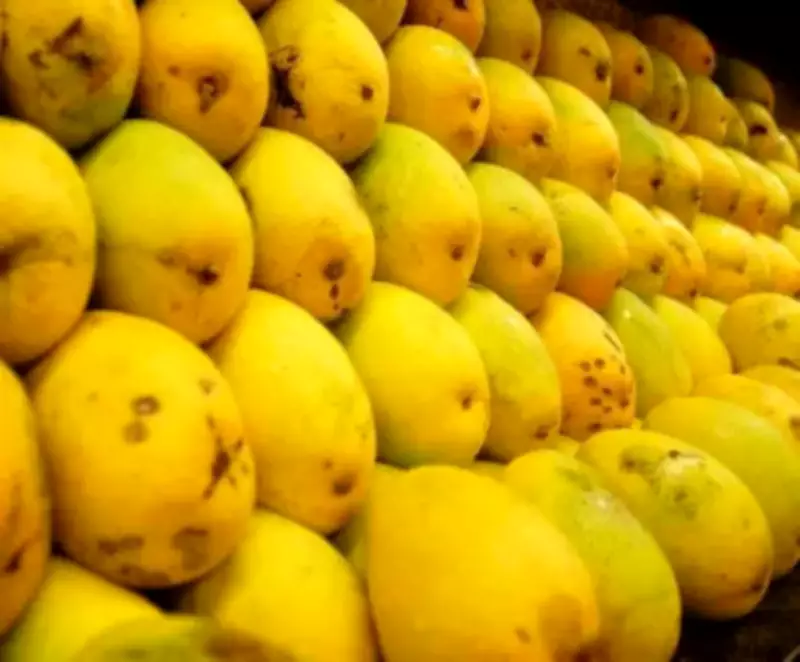
Krishnagiri stands as Tamil Nadu's premier mango-producing district, with cultivation spanning more than 35,000 hectares and generating an impressive annual production of 352,436 tonnes. The mango export sector from this region contributes substantially to foreign exchange earnings, bringing in over ₹650 crore annually for both central and state governments. This economic importance underscores why the disruption of price negotiations carries significant consequences.

Multiple Challenges Plague Mango Farmers
Farmers report facing substantial losses for the past fifteen years due to a combination of adverse factors including persistent drought conditions, inadequate rainfall, widespread tree diseases, and consistently low market prices. Although yield showed improvement last year, farmers did not receive remunerative prices for their produce. This year, the situation has worsened with intense heat and insufficient rainfall already affecting crop yield.
S Tamilarasu, a local farmer, explained the predicament: "Although yield improved last year, we did not receive remunerative prices. This year, the yield is affected by intense heat and lack of rain."
Export Sector Hit by West Asia Conflict
The ongoing conflict in West Asia has delivered another blow to Krishnagiri's mango farmers, with exports suffering significant disruption. Farmers estimate losses attributable to this conflict at approximately ₹2,000 crore, adding to their already mounting financial pressures.
Soundararajan, President of the Krishnagiri District Mango Farmers Association, highlighted the persistent struggles: "Mango growers have been suffering losses year after year and traders are spreading false information to suppress prices." He noted that last year's entire mango output was exported, generating revenues between ₹1,000 crore and ₹2,000 crore.
Farmers Propose Solutions and Demand Support
In response to these challenges, farmers have put forward several proposals to stabilize their industry:
- They have urged the district collector to recommend that central and state governments provide an incentive of ₹5 per kilogram for mangoes, similar to support mechanisms implemented in Andhra Pradesh
- Farmers are demanding the establishment of mango pulp processing factories in key locations including Pochampally, Bargur, Krishnagiri, and Uthangarai to add value to their produce
Official Response and Current Status
District Collector S Dinesh Kumar confirmed that the tripartite meeting cannot proceed while the election code of conduct remains in force. This administrative constraint leaves farmers in limbo as the harvest season approaches, with no clear mechanism for price determination in place. The situation highlights the tension between electoral procedures and essential agricultural processes that affect the livelihoods of thousands of farming families in Tamil Nadu's most important mango-producing region.