Dehradun Residents Voice Frustration Over Unresolved Road Damage Issues
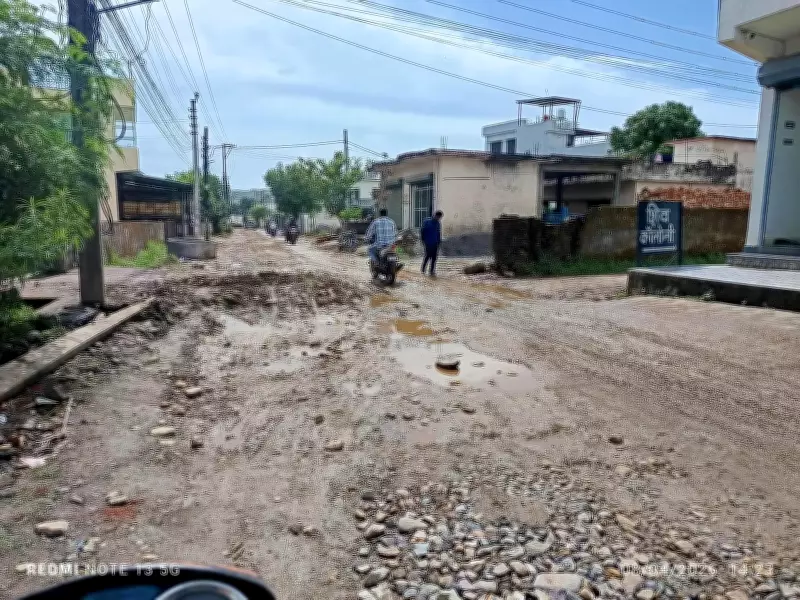
Residents of Dehradun have raised serious concerns about the persistently poor condition of roads across the city, despite recent directives from Uttarakhand Chief Minister Pushkar Singh Dhami to address the damage caused by repeated digging activities by various civic agencies. The situation highlights a significant gap between administrative orders and on-ground implementation, leaving daily commuters and locals grappling with hazardous conditions.
CM's Intervention Fails to Yield Tangible Results
Chief Minister Pushkar Singh Dhami visited the Jakhan area last Friday following numerous complaints from citizens. During his inspection, he explicitly instructed authorities to promptly repair all roads and footpaths that have suffered damage over the past year due to extensive utility work. However, residents report that the problem remains widespread and largely unaddressed in several key neighborhoods, describing it as a "perennial issue" that recurs annually.
Residents Cite Systemic Failures and Lack of Accountability
Local citizens point to a severe lack of coordination among different government departments and poor accountability mechanisms as the root causes of the ongoing infrastructure decay. DD Arora, a resident of Rajender Nagar, provided specific examples: "Over the last 18 months, multiple agencies including power, gas, and water departments have conducted extensive work that has left critical stretches from Kishanpur to ONGC Chowk and around the Ballupur flyover in a severely damaged state."

Residents further explained that repair work is frequently delayed, especially ahead of the monsoon season, which leaves roads in poor condition for the majority of the year. This pattern of neglect exacerbates transportation difficulties and poses safety risks for pedestrians and motorists alike.
Widespread Disruption Across Multiple Areas
Similar grievances have emerged from residents living along Sahastradhara Road, where work by multiple agencies has severely disrupted daily life. Ashish Garg, a local resident, detailed the problems: "Large spools of underground cables were left unattended on footpaths for months by the Uttarakhand Power Corporation Limited (UPCL). The constant digging has created excessively dusty conditions, and sidewalks have been reduced to loose, unstable tiles at numerous locations, making walking hazardous."
In the Rajpur area, cabling work by UPCL was completed approximately 15 months ago, yet full road restoration remains pending. Officials acknowledge that most ongoing projects are being undertaken by UPCL, GAIL, and Jal Sansthan, but coordination between these entities appears minimal.
Official Responses and Administrative Challenges
A senior UPCL official, speaking on condition of anonymity, stated that the groundwork for underground cabling is largely complete, though the comprehensive two-year project will continue until mid-next year. The official clarified: "Complaint redressal works are carried out separately and are not directly linked to the cabling project. In most instances, roads have been formally handed over to the concerned department for restoration."
Officials added that UPCL's work has been halted twice by the district administration due to irregularities, and quick response teams are currently assessing problem areas to prioritize repairs. In response to the chaos, permission norms have been revised: short-term approvals are now granted for limited stretches instead of citywide work, and permissions are largely restricted to night hours to minimize public inconvenience.
Notably, GAIL has been exempted from some restrictions due to the ongoing gas crisis, allowing them to proceed with PNG-related work despite the broader limitations. This exemption underscores the complex balancing act between infrastructure development and maintaining public convenience.
The persistent road damage in Dehradun reflects deeper systemic issues in urban governance and inter-departmental coordination. While administrative measures have been introduced, residents await concrete, visible improvements that match the promises made by their elected representatives.