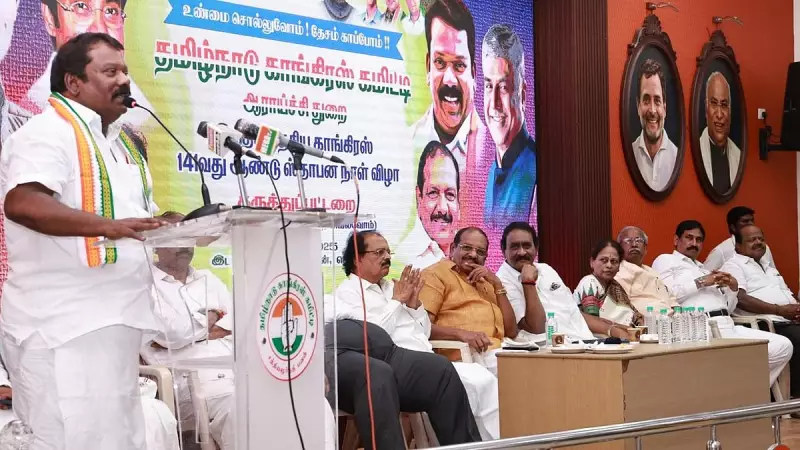
Rumbles of discontent are growing within the Congress party's Tamil Nadu unit, with a section of leaders openly reviving the demand for a more significant power-sharing arrangement with its senior ally, the Dravida Munnetra Kazhagam (DMK). The internal debate has gained momentum, with a state leader making a direct comparison to the party's coalition dynamics in Uttar Pradesh.
Growing Voices for a Fairer Deal
While no senior national leader or sitting Member of Parliament has publicly endorsed the idea of breaking away from the DMK-led alliance, the voices advocating for a recalibration of the partnership are becoming louder. This sentiment is particularly strong among the second-rung leadership within the Tamil Nadu Congress Committee, who feel the party's contributions are not being adequately rewarded with positions of influence.
The issue came to the fore recently when a Congress leader pointedly contrasted the party's situation in Tamil Nadu with its standing in Uttar Pradesh. In the northern state, the Congress contests elections in alliance with the Samajwadi Party but maintains a distinct and assertive identity. The comparison underscores a desire for greater autonomy and a more visible role within the ruling coalition in Chennai.

The Core of the Discontent
The primary grievance revolves around the distribution of administrative and political positions. Congress leaders argue that despite being a crucial partner in the DMK-led Secular Progressive Alliance, which secured a resounding victory in the state, their party has been sidelined in key decision-making processes. The demand is not necessarily for a split but for a structured system of power-sharing that acknowledges the Congress's electoral base and organizational strength.
The debate was highlighted in reports dated 29 December 2025, indicating that the matter is simmering within party forums. The fact that these discussions are spilling into the public domain suggests a concerted effort by a faction to pressure the high command into negotiating a better deal with the DMK leadership.
Implications for the Alliance Stability
This renewed push for a better bargain has significant implications for the stability of the opposition front at the national level, where the DMK and Congress are key partners. While the DMK has historically been the dominant force in Tamil Nadu politics, managing alliance expectations is crucial for presenting a united front against the BJP.
Analysts suggest that the Congress's reference to Uttar Pradesh is a strategic move to highlight perceived inconsistencies in alliance management. How the DMK responds to this internal pressure within its ally will be closely watched. The DMK leadership, known for its political acumen, may offer some symbolic concessions to placate the Congress cadre without ceding substantial ground.
For now, the senior leadership of both parties has maintained public silence on the specific comparisons, likely aiming to resolve matters behind closed doors. However, the growing chorus from the lower ranks indicates that the issue of equitable power distribution will remain a critical point of discussion in Tamil Nadu's political landscape, potentially influencing future seat-sharing negotiations and campaign dynamics.