Century-Old Maritime Mystery Finally Unraveled in Lake Michigan
For more than a hundred years, whispers and legends swirled around the cold, dark waters of Lake Michigan. Stories persisted of a lost vessel, a "ghost ship" that had vanished without a trace. Fishermen occasionally reported snagging mysterious debris in their nets, while a lighthouse keeper once claimed to have glimpsed the spectral masts of a ship rising ominously from the waves. Yet, despite these tantalizing clues, the exact resting place of this maritime phantom remained one of the Great Lakes' most enduring enigmas.
That mystery has now been definitively laid to rest. After 139 long years, the wreck of the F.J. King, a wooden schooner that met its fate in a fierce 19th-century storm, has been located. The significance of this discovery extends far beyond the vessel itself. It is a compelling narrative about the convergence of persistent historical curiosity, a fresh perspective on old data, and the transformative power of modern underwater technology.
The Tragic Final Voyage of the F.J. King
Constructed in 1867, the F.J. King served as a reliable cargo vessel, routinely transporting vital commodities like grain and iron ore across the Great Lakes. Its final journey began in September 1886, laden with iron ore destined for Chicago from Michigan. As the schooner navigated the treacherous waters near Door Peninsula, it was ambushed by a violent and deadly storm.

The punishing winds and waves relentlessly assaulted the wooden hull, forcing open its seams and allowing water to pour inside. The crew fought valiantly to pump out the invading lake, but their efforts proved futile against the storm's fury. Facing certain doom, the captain made the difficult decision to abandon ship in the dead of night. Miraculously, all crew members were rescued, but the F.J. King itself slipped beneath the surface, its location swallowed by the deep, cold waters and lost to history.
How a 'Ghost Ship' Eluded Discovery for Generations
In the decades that followed, the F.J. King earned its spectral reputation. Unlike many other shipwrecks that were eventually found, this vessel consistently evaded detection. Organized search efforts, beginning as early as the 1970s, repeatedly came up empty-handed. The scattered, anecdotal evidence—fishermen's tales of debris and the lighthouse keeper's disputed account—only deepened the mystery. The vessel seemed to exist only in the fragmented memories and local lore, a true ghost of maritime history.
The Breakthrough: Citizen Scientists and Modern Tech
The turning point arrived with the dedicated work of the Wisconsin Underwater Archaeology Association (WUAA). This team of citizen scientists and researchers decided to challenge long-held assumptions. They revisited historical records with a new lens, paying particular attention to the lighthouse keeper's observations, which had been largely dismissed in prior searches.
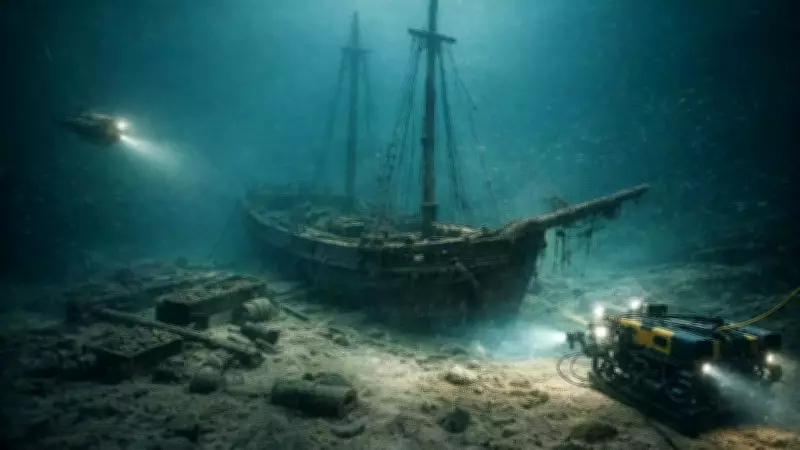
Armed with advanced tools like side-scan sonar and remotely operated vehicles (ROVs), the WUAA team began a meticulous scan of the lakebed. In a stunning development, their technology identified a promising target within just two hours of searching. Further investigation confirmed the incredible find: they had located the long-lost F.J. King, solving a 139-year-old puzzle through a blend of historical diligence and cutting-edge exploration.
A Perfectly Preserved Underwater Time Capsule
One of the most remarkable aspects of the discovery is the wreck's exceptional state of preservation. The cold, fresh water of Lake Michigan has acted as a natural preservative, dramatically slowing the decay processes that ravage shipwrecks in saltwater oceans. Much of the wooden schooner's structure remains intact, along with elements of its cargo.
This has effectively turned the F.J. King into an "underwater time capsule," offering archaeologists and historians an unprecedented, frozen-in-time glimpse into 19th-century maritime commerce, shipbuilding techniques, and life on the Great Lakes.

Lessons in History, Technology, and Human Curiosity
The rediscovery of the F.J. King is a masterclass in historical investigation. It underscores the importance of questioning established narratives and re-examining source material with an open mind. A single, previously overlooked account ultimately redirected the entire search and led to success.
Furthermore, this case highlights the revolutionary role of technology in modern archaeology. Sonar imaging and underwater drones now allow researchers to explore depths and areas that were once utterly inaccessible, opening new frontiers in discovery.
Ultimately, the story of the F.J. King is a testament to pure, driven curiosity. This search was not undertaken for profit or fame, but from a deep-seated desire to solve a historical riddle and connect with the past. It proves that history is not just found in textbooks, but is actively built from fragments, perseverance, and an unwavering spirit of exploration.