Chennai's 2026 Assembly Elections: A High-Stakes Triangular Contest
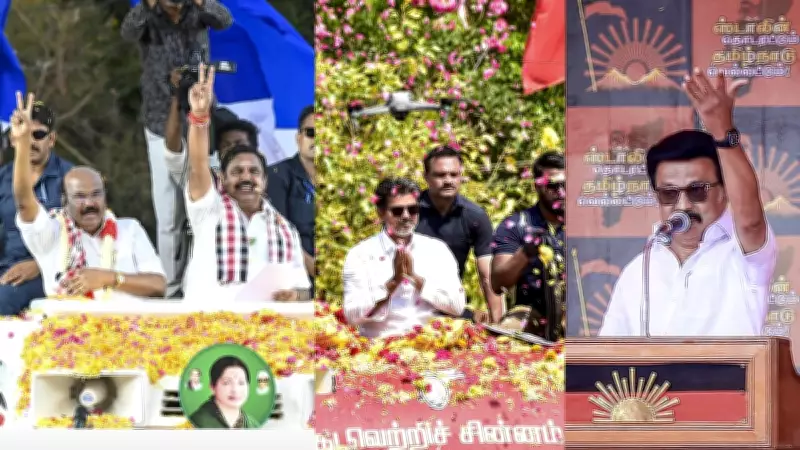
The political landscape of Chennai is heating up as the Tamil Nadu Assembly Elections of 2026 approach, with a compelling triangular contest shaping the city's electoral dynamics. The ruling Dravida Munnetra Kazhagam (DMK) is mounting a vigorous defense of its traditional stronghold, while the All India Anna Dravida Munnetra Kazhagam (AIADMK) and the Tamil Manila Congress (TVK) are aggressively pushing back to capture key constituencies.
Historical Dominance and Shifts in Chennai's Political Fortress
For decades, Chennai has largely served as a bastion for the DMK, with the party maintaining a firm grip on the city's political narrative. This dominance was notably interrupted only during the 1991 'wave election', a period marked by unique national and state-level factors that temporarily altered the electoral equation.
The citadel of DMK's influence in Chennai faced a significant challenge when AIADMK supremo J. Jayalalithaa orchestrated a strategic breakthrough. In the 2006 Assembly elections, Jayalalithaa's leadership enabled the AIADMK to secure half of Chennai's 14 seats, marking a pivotal shift in the city's political alignment. This momentum culminated in the 2011 elections, where the AIADMK nearly swept Chennai, winning a substantial majority of seats and demonstrating the party's capacity to resonate with urban voters.

The 2026 Electoral Battle: Strategies and Stakes
As the 2026 elections loom, the DMK is leveraging its incumbency advantage and historical roots in Chennai to fortify its position. The party's campaign focuses on governance achievements, urban development projects, and social welfare schemes aimed at consolidating its voter base.
Meanwhile, the AIADMK is capitalizing on its past successes under Jayalalithaa's legacy, aiming to replicate the 2011 sweep by highlighting issues such as economic management and law and order. The TVK, emerging as a third force, is positioning itself as an alternative, targeting disenchanted voters from both major parties and emphasizing regional identity and grassroots connectivity.
This triangular contest introduces several key factors:
- Voter Demographics: Chennai's diverse population, including IT professionals, traditional communities, and migrant workers, will play a crucial role in determining the outcome.
- Campaign Issues: Urban infrastructure, healthcare, education, and employment are expected to dominate the electoral discourse.
- Alliance Dynamics: Potential pre-poll alliances or seat-sharing agreements could further influence the contest's trajectory.
Implications for Tamil Nadu's Political Future
The outcome of Chennai's 2026 Assembly elections will not only decide the city's representation but also signal broader trends in Tamil Nadu politics. A DMK victory would reinforce its urban stronghold, while an AIADMK win could indicate a resurgence of its influence in key metropolitan areas. The TVK's performance will be closely watched as a barometer for smaller parties' viability in challenging established political giants.
With high stakes and intense competition, Chennai's electoral battle is poised to be a defining moment in the 2026 Tamil Nadu Assembly elections, reflecting the evolving aspirations and priorities of its residents.