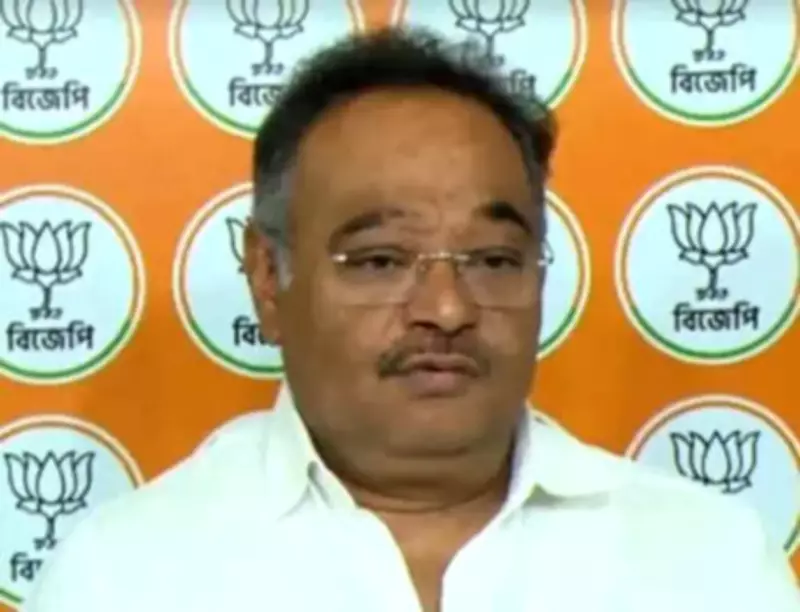
Bengal BJP President Accuses Trinamool Congress of Fomenting Religious Divide
In a sharp political critique on Thursday, Bengal BJP president Samik Bhattacharya launched a scathing attack against the ruling Trinamool Congress, accusing the party of attempting to create divisions among people through religious narratives. The allegations center on what Bhattacharya describes as a deliberate strategy to polarize communities in the state.
Allegations of Hate Politics and Religious Polarization
Bhattacharya asserted that "Trinamool is promoting a politics of hatred" while emphasizing that Bengal traditionally believes in the peaceful coexistence of different faiths, symbolized by "Ram and Rahim." He specifically criticized what he called a "new narrative" being advanced by the Trinamool Congress that seeks to restrict religious expressions.
The BJP leader further accused the ruling party of intensifying religious polarization across Bengal, which he claims has contributed to the political rise of figures like Asaduddin Owaisi and Humayun Kabir. These comments reflect ongoing tensions in Bengal's political landscape where religious identity often intersects with electoral strategies.

Mythological References and Electoral Processes
In a colorful extension of his criticism, Bhattacharya employed mythological analogies to comment on electoral processes. He stated that the SIR (Summary Revision of Electoral Rolls) process cannot be considered complete unless every Form 7 submission filed by the BJP receives proper attention from authorities.
"We have seen who the Dhritarashtra is. However, we need to find out if Gyanesh Kumar is Pitamaha Bhishma. We are looking for Bhishma who fought for the Kauravas," Bhattacharya remarked, drawing parallels from the Mahabharata to contemporary political dynamics. These references suggest deep-seated concerns about perceived biases in electoral administration.
Opposition Leader Comments on Cultural Issues
Meanwhile, Leader of the Opposition Suvendu Adhikari participated in a Ram Navami procession at Bhowanipore on Thursday and echoed similar concerns about cultural preservation. Adhikari claimed that "Trinamool is trying to introduce the culture of Arabs here" while expressing confidence that "nationalist Muslims will not agree to that."
These statements from both BJP leaders highlight what they perceive as attempts to alter Bengal's cultural fabric through imported influences. The comments come amid ongoing debates about religious celebrations and cultural expressions in the state's public sphere.
Political Context and Implications
The allegations emerge against a backdrop of:
- Increasing political rhetoric around religious identity in Bengal
- Ongoing electoral processes and voter list revisions
- Tensions between different political narratives about Bengal's cultural heritage
- Competing claims about who truly represents the state's pluralistic traditions
Both Bhattacharya and Adhikari's comments reflect the BJP's strategy to position itself as the guardian of what it calls Bengal's authentic cultural and religious harmony, while portraying the Trinamool Congress as undermining these traditions through divisive politics. The exchange signals intensifying political battles as Bengal approaches future electoral contests.