Bihar Political Landscape Poised for Historic Transformation
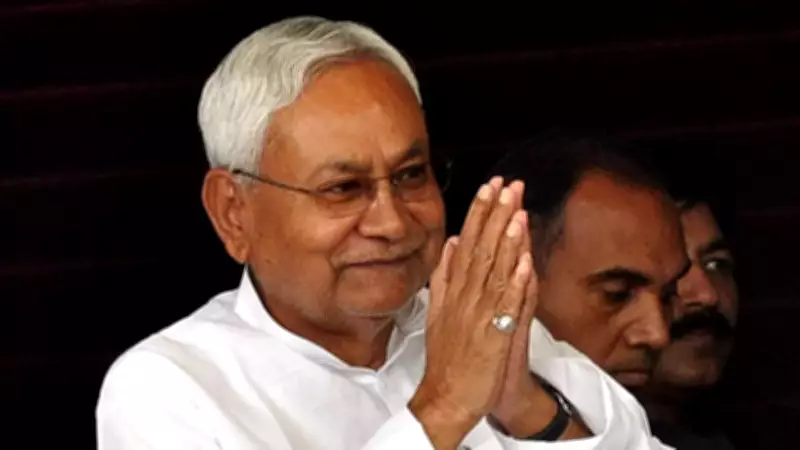
In a significant development that promises to reshape Bihar's political dynamics, Chief Minister Nitish Kumar is expected to resign from the legislative council on Monday. This move will initiate a new chapter in the state's governance, with the Bharatiya Janata Party (BJP) likely to assume the chief ministerial position for the first time after playing a supporting role to Kumar since 2005.
Constitutional Timeline and Political Implications
Nitish Kumar was elected to the Rajya Sabha on March 16, triggering a constitutional requirement that he resign from one legislative body within fourteen days. This period concludes on Monday, setting the stage for his anticipated resignation as chief minister following his oath as a Rajya Sabha member, with his tenure commencing from April 10.
Political activities for forming a new government are expected to accelerate from Monday onward, although neither the BJP nor the Janata Dal (United) has officially confirmed which party will claim the top position. Senior officials from both parties have indicated that a BJP nominee will succeed the 75-year-old Kumar, effectively reversing their roles within the National Democratic Alliance (NDA).

Leadership Contenders and Caste Dynamics
Under this new arrangement, the JD(U) is poised to secure the deputy chief minister's role. While Nitish Kumar's son, Nishant Kumar—who has recently entered politics to reassure anxious party cadres about his father's departure—is considered a potential deputy chief minister, there may be multiple appointments to this position.
Samrat Choudhary, currently one of two deputy chief ministers and leader of the BJP legislature party, has emerged as the front-runner to replace Nitish Kumar. His rapid ascent within the BJP since joining in 2017, combined with his representation of the Kushwaha community (comprising over 4.27% of Bihar's population), positions him favorably. The Kushwahas, or Koeris, have long awaited their turn at the top leadership, following Yadavs and Kurmis who have dominated the chief minister's office since Other Backward Classes (OBCs) became politically influential in the 1990s.
Alternative Candidates and Strategic Considerations
Union Minister Nityanand Rai, a seasoned BJP member who has grown in stature over the years, is also viewed as a viable candidate. As a Yadav—a community traditionally aligned with the Rashtriya Janata Dal (RJD)—his elevation could present BJP with an opportunity to forge new alliances with this numerically significant caste group, despite potential challenges.
Given the BJP leadership's history of unconventional selections, speculation regarding the final choice is expected to intensify until an official announcement is made. This transition marks a pivotal moment in Bihar's political evolution, with the BJP poised to steer the state's administration after nearly two decades of playing second fiddle in the NDA coalition.