Bihar Government Enforces Strict Audit Regime for Urban Local Bodies
In a significant move to bolster transparency and accountability, the Bihar state government has mandated that all urban local bodies (ULBs) undergo auditing by Comptroller and Auditor General of India (CAG)-empanelled auditors. This decision marks a departure from the previous practice where chartered accountants conducted these audits, and is framed within the government's declared policy of "zero tolerance towards corruption."
New Audit Framework to Combat Corruption
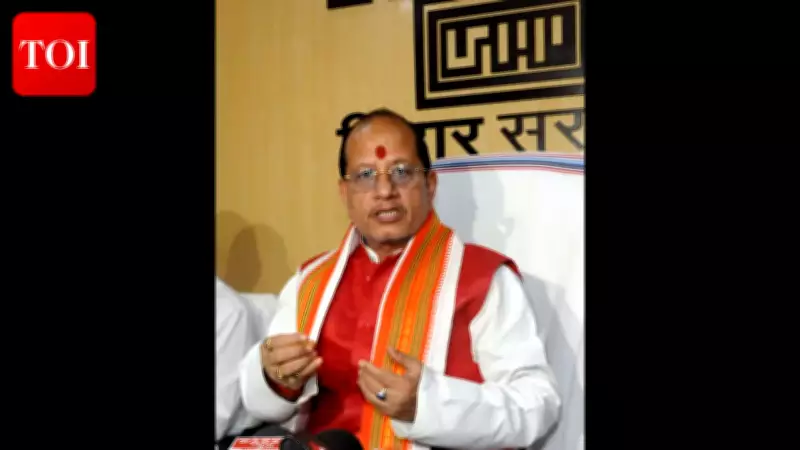
Deputy Chief Minister Vijay Kumar Sinha, who also oversees the urban development and housing department, announced the policy shift on Tuesday. He emphasized that this initiative is the first of its kind in the state, aiming to ensure rigorous financial scrutiny of municipal operations. The auditing will adhere strictly to the provisions outlined in the National Municipal Accounts Manual, setting a standardized benchmark for fiscal oversight.
The scope of this audit encompasses all 262 urban local bodies in Bihar, which include 19 municipal corporations, 89 municipal councils, and 154 nagar panchayats. The government has formally requested the CAG to progressively include more ULBs under its auditing purview each year, signaling a long-term commitment to institutional integrity.

Ambitious Urbanization and Development Goals
Alongside the audit reforms, Deputy CM Sinha outlined an ambitious vision for urban transformation in Bihar. Currently, the state's urban population stands at 15.6%, significantly below the national average of 36%. To bridge this gap, the government has set a target to accelerate urbanization, with a focus on creating "clean city, green city" environments.
Key initiatives include:
- Development of 11 new townships, covering nine divisional headquarters as well as Sitamarhi and Sonepur in Saran district.
- Redevelopment of existing towns and cities to enhance livability and infrastructure.
- Preparation of a comprehensive "master plan" for all state towns within the next year to guide planned urban expansion.
Digital Transformation and Smart City Progress
In a push towards digital governance, municipal corporations will transition all citizen services to a unified online platform within the next seven to eight months. This digital shift will streamline processes such as complaint redressal, tax payments, waste disposal management, and building plan approvals, making urban administration more accessible and efficient.
Regarding the Smart Cities Mission, Sinha confirmed that ongoing projects in Patna, Bhagalpur, Bihar Sharif, and Muzaffarpur are on track, with remaining work expected to be completed by October this year. These projects aim to upgrade infrastructure through intelligent traffic systems, advanced waste management, and enhanced public services, ultimately improving sustainability and quality of life for residents.
Metro Project and Future Urban Mobility
The Patna Metro project, a cornerstone of the state's urban transit strategy, is progressing with both its blue line (priority corridor) and red line slated to become operational by the end of 2030. Spanning approximately 31.39 kilometers, the network will connect Danapur with Mithapur and Patna Junction with New ISBT, Patna. It features a mix of elevated (15.4 km) and underground (15.9 km) sections, supported by a common depot at Bairiya Chak, designed to alleviate congestion and boost connectivity.
This comprehensive approach—combining stringent audits, digital innovation, smart city development, and metro infrastructure—underscores Bihar's commitment to fostering transparent, sustainable, and rapidly urbanizing communities.