Major Redevelopment Plan for Bhimashankar Temple in Pune
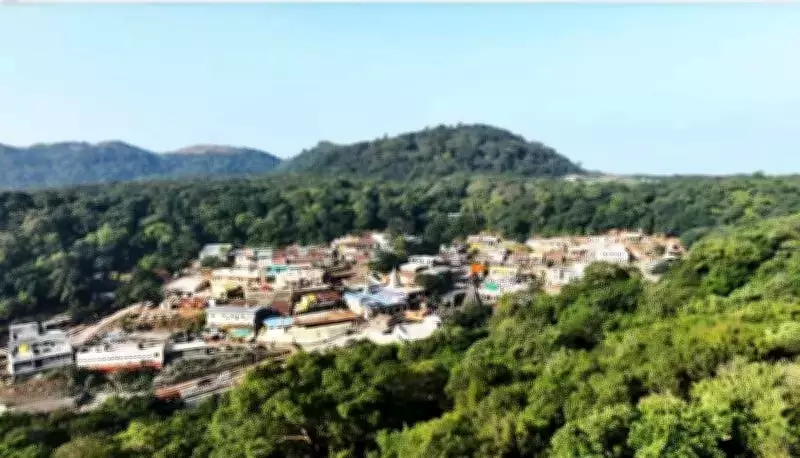
Pune collector Jitendra Dudi presented the comprehensive Bhimashankar Development and Rehabilitation Policy before the planning department secretary in Mumbai on Tuesday. This ambitious initiative focuses on rehabilitating families around the sacred Bhimashankar temple, one of the twelve jyotirlings, while significantly decongesting the shrine precinct to enhance crowd management and safety protocols.
Four-Phase Implementation Strategy
The project is structured to unfold across four distinct phases over an eighteen-month timeline. The initial stage will involve crucial land acquisition processes and obtaining necessary governmental approvals. Subsequently, infrastructure development will commence, followed by the construction of approximately 120 residential units. The final phase will coordinate the phased relocation of affected families alongside clearing operations within the temple precinct to create expanded space.
Governance and Approval Process
The detailed proposal will now advance to a high-power committee operating under the chief secretary's supervision. Following thorough review at this level, the plan will proceed to the apex committee chaired by Chief Minister Devendra Fadnavis for ultimate authorization and implementation directives.

Core Objectives and Community Engagement
Collector Dudi emphasized that the policy aims to achieve multiple critical goals simultaneously. The primary focus remains on decongesting the temple area while systematically rehabilitating local families and preserving the region's delicate ecological balance. "We are committed to executing this entire process in close coordination with the villagers," Dudi assured, highlighting the participatory approach.
Rehabilitation and Land Acquisition Details
The proposal outlines the rehabilitation of approximately 125 families currently residing in the densely populated temple vicinity. These families will be relocated to a designated thirty-six-acre site situated near the main village square area. Land acquisition for twenty acres is projected to cost an estimated Rs 33.1 crore, calculated according to the 2024 ready reckoner rates.
Addressing Current Capacity Constraints
Presently, the temple infrastructure can comfortably accommodate only about 150 tourists, while nearly 2,000 devotees frequently crowd the temple steps, creating significant congestion and raising serious safety concerns. The redevelopment plan proposes to liberate 5,800 square meters of space, dramatically expanding the temple premises to accommodate between 20,000 and 25,000 devotees simultaneously. This expansion is particularly crucial ahead of the upcoming Simhastha Kumbh Mela scheduled for next year.
"This comprehensive project will substantially improve crowd management systems, facilitate emergency movement protocols, and elevate the overall devotee experience," Dudi explained regarding the anticipated benefits.
Rehabilitation Settlement Specifications
The proposed rehabilitation settlement has been meticulously designed to include:
- 500 square feet houses allocated to 80% of the families
- 1,000 square feet houses provided to the remaining 20% of families
- Commercial shops and service centers linked directly to temple tourism
- A dedicated community building for social gatherings
- A primary health center for medical needs
- A primary school for educational requirements
- Open civic spaces for recreational activities
To ensure economic stability and foster local cooperation, commercial spaces within the temple area will be specifically reserved for rehabilitated families, creating sustainable livelihood opportunities.
Temple Precinct Enhancements
Following the relocation process, the temple precinct will incorporate several strategic improvements including designated holding areas, organized queue corridors, expanded open spaces, and clearly marked emergency routes. These enhancements will enable smoother darshan experiences and ensure safer movement for all devotees visiting the sacred site.
Sustainable Heritage Smart Village
The new settlement will be developed as a heritage smart village featuring numerous sustainable elements:

- Solar-powered street lighting systems
- Underground cabling with zero overhead wires
- Comprehensive rainwater harvesting infrastructure
- Sewage treatment plant with zero liquid discharge technology
- Herbal gardens promoting local biodiversity
- Modern civic infrastructure
The village will be designed with a circular layout centered around a communal space, creating a self-sustaining settlement model that respects traditional values while incorporating modern amenities.
Model for Future Development
Government officials expressed confidence that this project will establish a benchmark for sustainable development and heritage preservation at religious sites across the region. The initiative successfully balances three critical aspects: spiritual tourism requirements, environmental conservation imperatives, and local community development needs, creating a holistic approach to sacred site management.