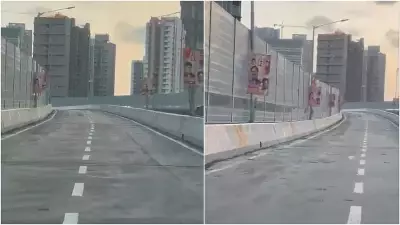
Urban transport specialists in Dehradun have issued a strong warning against relying on the construction of elevated roads to solve the city's growing traffic problems. The caution came during a citizen-led knowledge series discussion focused on a proposed 26-kilometre elevated corridor over the Rispana and Bindal rivers.
Public Transport and Walking Must Be Priority
At a session organized by the Dehradun Citizens Forum, transport strategist Amit Baghel emphasized that organically expanding tier-2 cities like Dehradun need to prioritize robust public transport systems and pedestrian-friendly infrastructure. "Elevated roads are not the solution to congestion," Baghel stated. He explained that choices between walking, cycling, public transport, or private cars are heavily influenced by road infrastructure, not just personal preference. People naturally choose the mode that offers the quickest and most comfortable journey to their destination.
Baghel criticized the prevailing focus of government agencies on mere road construction. He highlighted the concept of "induced demand," where wider and emptier roads attract more vehicles, leading to renewed congestion. Furthermore, vehicles using elevated roads and expressways must eventually descend, creating severe bottlenecks at entry and exit points—a persistent issue cities worldwide struggle to manage.

Questioning the Logic and Highlighting Risks
The expert also questioned the rationale behind building elevated corridors over rivers. Such structures, he argued, damage smaller connecting roads, footpaths, and adjacent residential areas. "Cities should first invest in proper footpaths so people can walk short distances easily," Baghel advised. He noted that walking is healthier and eco-friendly, but the lack of safe footpaths forces people to use vehicles even for very short trips.
Other speakers at the forum underscored the current inadequacy of public transport, which serves only about 6% of the population in most cities, pointing to an urgent need for major expansion.
Calls for Transparency and Flood Risk Warning
Baghel referenced Dehradun's Comprehensive Mobility Plan, which covers the city along with Vikasnagar, Rishikesh, and Haridwar across 3,668 square kilometres. Prepared in 2019 and updated in 2024, the plan outlines measures for sustainable transport and road widening. However, experts expressed concern about how many of these proposals will be practically implemented.
They demanded that if the elevated road over the Rispana–Bindal rivers is under active consideration, its Environmental and Social Impact Assessments (ESIA) must be shared transparently with citizens. Details of associated works and management plans should also be made public. Residents deserve clarity on the project's long-term relevance and consequences, as it would permanently alter the city's skyline and environment.
In an earlier session of the series held on December 2, Pune-based urban flood and river expert Sarang Yadwadkar had analyzed the river morphology of the Rispana and Bindal. He warned that the proposed elevated corridor could obstruct natural river flow and significantly increase Dehradun's risk of flooding.