Calcutta High Court Orders Central Government Intervention to Demolish 505 Illegal Constructions in East Kolkata Wetlands
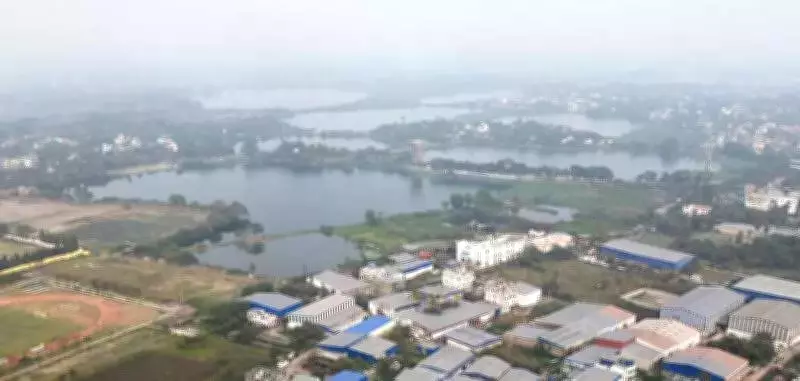
In a stern rebuke to the state government for its failure to act, the Calcutta High Court on Monday directed the involvement of the Union government to remove 505 unauthorised constructions on the ecologically sensitive East Kolkata Wetlands. Justice Amrita Sinha, expressing frustration with the prolonged inaction, stated that the state lacks the necessary infrastructure to execute the demolitions and is now considering deploying paramilitary forces to ensure compliance.
Court Criticises East Kolkata Wetlands Management Authority's Ineffectiveness
Justice Sinha highlighted the East Kolkata Wetlands Management Authority's (EKWMA) admitted inability to handle the situation, despite repeatedly detecting illegal constructions. The court noted that EKWMA officials have disclosed their incapacity to manage mass agitation when attempting to disconnect electricity at these unauthorised sites.
"First of all, you were not in a position to prevent these unauthorised constructions from coming up. Now, when it is to be brought down, you are unable to do it. You do not have the infrastructure. The court has to take help from someone else who can do it," Justice Sinha observed during the proceedings.
Directive to Implead Central Government and Key Ministries
The court has ordered the petitioners to formally include the central government and relevant ministries—specifically Environment, Housing and Urban Development, and Home Affairs—as parties to the case. This move aims to leverage federal resources and authority to address the escalating crisis.
Justice Sinha also referenced a pending matter before the Supreme Court's constitutional bench, which is seeking answers on how unauthorised constructions over wetlands are being managed nationwide. This underscores the broader legal and environmental implications of the case.
Frustration with Piling Reports and Lack of Ground Action
Expressing deep dissatisfaction with bureaucratic delays, Justice Sinha remarked, "There are reports piling up over here, but I don't see any work being done on the ground level. Now I don't want any further report, and let the ground level work be done. The court is filled up with reports." This statement reflects the judiciary's impatience with administrative inertia and its demand for tangible results.
EKWMA's Defense and Challenges in Enforcement
Representing EKWMA, counsel argued that the authority has taken steps to raise public awareness, including advertisements in newspapers clarifying that no construction is permitted in the wetland area. They claimed that illegal constructions or boundaries are being dismantled where possible.
However, the counsel cited significant obstacles, such as a failed joint inspection with the Kolkata Municipal Corporation (KMC), as the wetland falls under its jurisdiction. No KMC representatives attended the inspection, hampering enforcement efforts.
Additionally, EKWMA noted that in some unauthorised cases, demolition notices have been issued to owners, but disputes are currently pending before the High Court, creating legal complexities that delay action.
Kolkata Mayor Responds to Allegations of Inaction
Reacting to the court's observations, Kolkata Mayor Firhad Hakim defended the municipal corporation's efforts, stating that it is untrue that KMC is doing nothing to prevent encroachments. "In most cases, encroachment took place during the Left Front regime. Now we are trying to prevent such attempts. Some time ago, a KMC team had demolished four walls that had been constructed on the wetland," Hakim asserted.
This response highlights the political and historical dimensions of the issue, with current authorities blaming previous administrations for the proliferation of illegal constructions.
The court's intervention marks a critical juncture in the preservation of the East Kolkata Wetlands, emphasizing the urgent need for coordinated action between state and central authorities to protect this vital ecological zone from further degradation.