Varanasi Women Stage 'Benaqab' March Against Opposition Over Bill Defeat
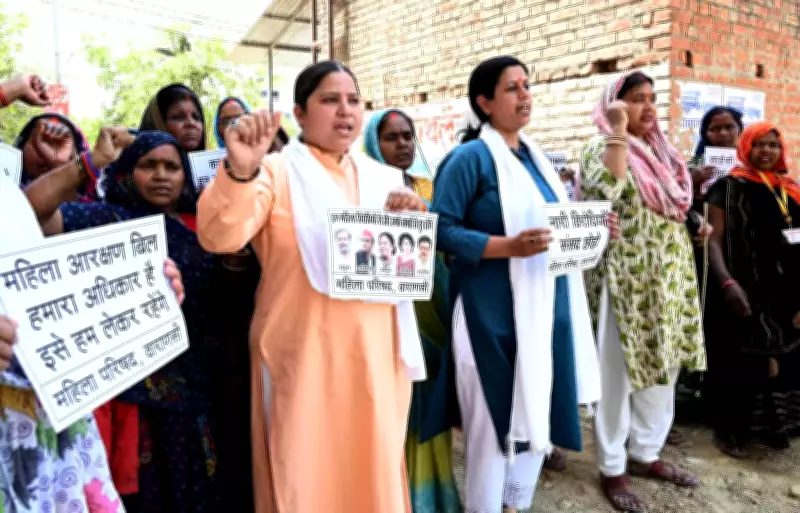
In a powerful display of dissent, a group of women in Varanasi organized a protest march on Sunday, vehemently condemning opposition parties for the defeat of the Women's Reservation Bill in the Lok Sabha. The demonstration, titled 'Benaqab' (meaning exposed), was orchestrated under the banner of Mahila Parishad and spanned from Subhash Mandir to Munshi Premchand Smriti Dwar in Lamahi.
Protesters Issue Kitchen Strike Warning to Husbands
The protesting women delivered a stern warning to their husbands, urging them to distance themselves from opposition parties or face a kitchen strike, which would involve withholding food. This symbolic threat underscored their frustration with political obstruction. Placards at the march amplified this message, with some appealing to the wives of opposition leaders to cease providing roti-pani (bread and water) to their spouses, while others served as direct cautions to the husbands of the protesters themselves.
Effigies Burned and Historical Parallels Drawn
During the event, effigies of Congress MP Rahul Gandhi were set ablaze, symbolizing the women's anger towards opposition figures. Mridula Jaiswal from the history department of Banaras Hindu University (BHU) addressed the crowd, criticizing opposition leaders for displaying victory smiles and laughter after what she described as insulting women in Parliament by defeating the bill. Protesters drew a poignant historical parallel, likening the opposition's behavior to those who mocked Draupadi during her humiliation in the court of the Kauravas from the Mahabharata.

Accusations of Anti-Women Stance and Hypocrisy
The women accused opposition parties of being anti-women, asserting that these groups do not want ordinary women to attain positions in Parliament and state assemblies. They highlighted a perceived hypocrisy, questioning why leaders like Rahul Gandhi and Akhilesh Yadav permit Priyanka Gandhi Vadra and Dimple Yadav to become MPs while allegedly blocking common women from achieving similar roles as MPs and MLAs. In contrast, they expressed gratitude towards Prime Minister Narendra Modi for his demonstrated commitment to advancing the Women's Reservation Bill.
Broader Implications and Local Context
This protest in Varanasi reflects growing grassroots activism around gender equality in Indian politics, particularly in the context of legislative efforts to reserve seats for women. The use of domestic metaphors, such as the kitchen strike, resonates deeply in local cultural narratives, emphasizing the personal and societal stakes involved. The event underscores the ongoing political tensions in Uttar Pradesh, with Varanasi serving as a significant epicenter for such movements due to its historical and political prominence.