Congress MP Manish Tewari Challenges Budget 2026 Amid Global Geopolitical Shifts
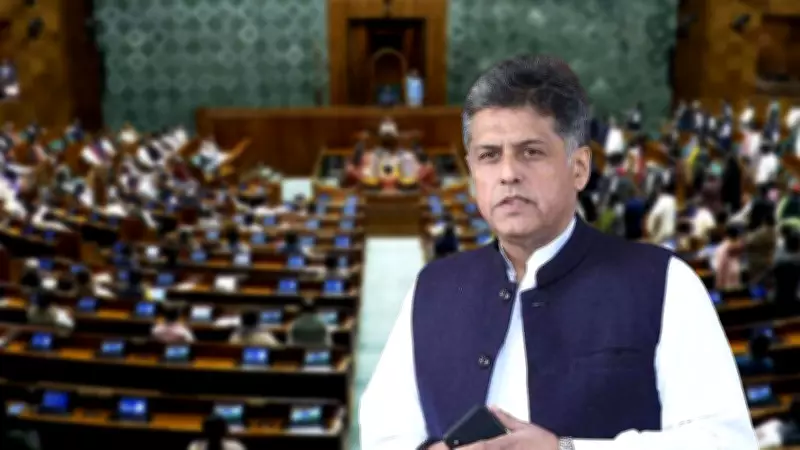
The Lok Sabha witnessed heated exchanges during discussions on the Finance Bill 2026, as opposition leaders raised fundamental questions about the Union Budget's relevance in an increasingly volatile global landscape. Congress Member of Parliament Manish Tewari emerged as a vocal critic, delivering a pointed critique that highlighted how shifting geopolitical realities have fundamentally altered the economic assumptions underlying the government's financial planning.
Geopolitical Realities Undermining Budget Assumptions
Tewari specifically pointed to the escalating conflicts in West Asia as a primary concern that could render many budget calculations obsolete. He argued that the government's economic projections failed to adequately account for how regional instability might disrupt global markets and supply chains. The Congress MP emphasized that India's economic outlook cannot be viewed in isolation from these international developments.
The Strait of Hormuz emerged as a critical flashpoint in Tewari's analysis. He warned that any disruption to this vital maritime passage could trigger a severe energy shock with cascading effects throughout the Indian economy. Such an event would likely send fuel prices soaring and disrupt intricate supply networks that Indian businesses depend upon for both imports and exports.

Fiscal Strain and Government Preparedness
Beyond immediate energy concerns, Tewari raised alarms about potential fiscal strain that could result from unanticipated global crises. He questioned whether the government had developed contingency plans to manage evolving international situations that might impact revenue collection, expenditure priorities, and overall economic stability.
The debate highlighted growing anxiety among opposition members about India's economic resilience in the face of external shocks. Tewari's intervention reflected broader concerns that domestic economic planning must incorporate robust risk assessments related to international conflicts and geopolitical realignments.
Broader Implications for Economic Policy
The parliamentary exchange underscored fundamental disagreements about economic governance approaches. While the government presented Budget 2026 as a comprehensive roadmap for national development, opposition critics like Tewari argued that such plans must demonstrate greater flexibility and responsiveness to unpredictable global events.
The discussion revealed deepening concerns about how India might navigate potential disruptions to international trade routes, energy supplies, and financial markets. Tewari's questions about government preparedness touched upon core issues of economic sovereignty and strategic planning in an interconnected world where regional conflicts can quickly translate into domestic economic challenges.
As the debate concluded, it was clear that questions about Budget 2026's relevance would continue to resonate, particularly as geopolitical tensions in West Asia and other regions show little sign of immediate resolution. The exchange marked another chapter in ongoing parliamentary discussions about how best to balance domestic economic priorities with the realities of an uncertain international environment.