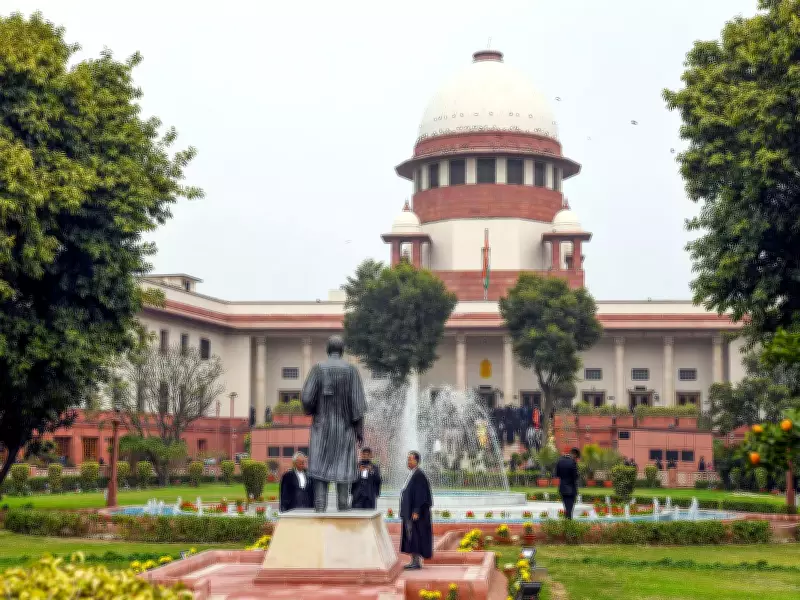
Supreme Court Issues Stern Rebuke to Lower Courts Over Rape Survivor Identity Disclosure
The Supreme Court of India has delivered a sharp reprimand to trial courts and high courts for their repeated failure to protect the identities of rape survivors in judicial orders. In a significant ruling, the apex court has issued a clear directive that the names of survivors and their family members must not be mentioned in any court records, emphasizing that such lapses violate statutory safeguards established decades ago.
Persistent Violations Despite Legal Mandates
A bench comprising Justices Sanjay Karol and N K Singh expressed deep concern that despite explicit legal provisions and repeated directives from the Supreme Court, lower courts continue to disclose sensitive information about sexual assault victims. The court made these observations while convicting a rape accused, noting with dismay that the name of a minor survivor had been openly mentioned in lower court orders.
The legislative protection dates back to 1983, when an amendment was introduced into the Indian Penal Code specifically to shield the identity of victims under Section 376 IPC. "The amendment was made apparently to address a specific mischief that emerged starkly from the way sexual offence cases were handled: the public disclosure of a survivor's identity," the bench noted, highlighting the historical context of this crucial protection.

Court Distinguishes Between Morality and Law
In a related aspect of the ruling, the court addressed arguments from a woman's family in a separate case, firmly stating that "morality and law have to be kept apart." The bench rejected the family's position, clarifying that "if there is no offence under the law made out, social opinions and morality will not guide the action of the court for protecting the rights of citizens."
The court specifically addressed a case involving a married man living with an adult woman in a consensual live-in relationship, stating unequivocally that "there is no offence of the kind where a married man, staying with an adult in a live-in relationship, by consent of the other person, can be prosecuted for any offence whatsoever."
Protection for Couple Facing Threats
The Supreme Court also intervened in a case where a couple had approached the judiciary fearing for their safety. The petitioners informed the court that the woman's family members had threatened her with death, and they were concerned about a potential honor killing attempt. They further alleged that the district police chief had taken no action despite their pleas for protection.
The court reminded authorities that it is the fundamental duty of police to protect two consenting adults living together. Finding a prima facie case, the bench admitted the petition, issued notices to respondents, and granted the state counsel two weeks to file a counter-affidavit.
Immediate Relief and Safety Measures
Granting immediate interim relief to the couple, the court directed that the petitioners not be arrested "until further orders." The case against the man had been registered under Section 87 of the Bharatiya Nyaya Sanhita (BNS), which criminalizes kidnapping, abduction, or inducement of a woman to compel her into marriage or illicit sexual relations, with penalties extending to ten years of imprisonment and substantial fines.
To ensure comprehensive protection, the court issued specific restraining orders:
- The informant and all members of the woman's family are prohibited from causing any physical harm to the couple
- They are restrained from entering the couple's home
- They are forbidden from contacting the couple directly, through electronic means, or through intermediaries
The court made the district Superintendent of Police personally responsible for ensuring the petitioners' safety and security, establishing clear accountability for their protection.
This comprehensive ruling reinforces the judiciary's commitment to protecting vulnerable individuals from both legal oversights and social threats, while maintaining a clear distinction between legal obligations and moral judgments in the administration of justice.