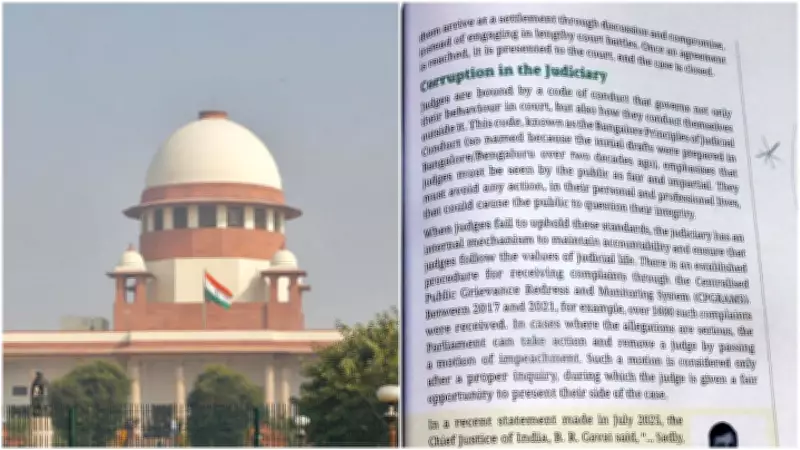
Supreme Court Takes Cognizance of NCERT Chapter on 'Corruption in Judiciary'
The Supreme Court of India has formally taken cognizance of a chapter in the NCERT Class 8 curriculum that addresses the topic of 'corruption in judiciary'. This development has sparked significant attention in legal and educational circles, highlighting concerns over the portrayal of judicial institutions in school textbooks.
CJI Surya Kant's Remarks on the Matter
Chief Justice of India Surya Kant, while addressing the issue, described the inclusion of this chapter as a 'calculated move'. He emphasized that the judiciary is a pillar of democracy and must be respected, stating, 'I won't allow anybody to defame the institution'. However, he added that he would refrain from elaborating further at this time, indicating a cautious approach to the sensitive nature of the topic.
Background and Implications
The NCERT (National Council of Educational Research and Training) is responsible for developing educational materials used across India. The chapter in question, part of the Class 8 syllabus, discusses corruption within the judiciary, aiming to educate students about governance and ethics. This move has raised questions about:

- The balance between academic freedom and institutional respect.
- The potential impact on public perception of the judiciary.
- The role of educational content in shaping young minds regarding legal systems.
Legal experts have noted that while transparency and accountability are crucial, the framing of such topics in school curricula requires careful consideration to avoid undermining trust in judicial processes.
Wider Context and Reactions
This incident comes amid ongoing debates about judicial reforms and the independence of the judiciary in India. The Supreme Court's intervention underscores its proactive stance in safeguarding the integrity of judicial institutions. Reactions from various stakeholders have been mixed:
- Supporters of the chapter argue that it promotes critical thinking and awareness about governance issues among students.
- Critics, however, contend that it could lead to misinformation or disrespect towards the judiciary if not handled appropriately.
The Supreme Court's cognizance is seen as a step towards ensuring that educational materials do not inadvertently harm the reputation of key democratic institutions. Further developments are awaited as the court may issue directives or seek clarifications from NCERT regarding the content and intent of the chapter.