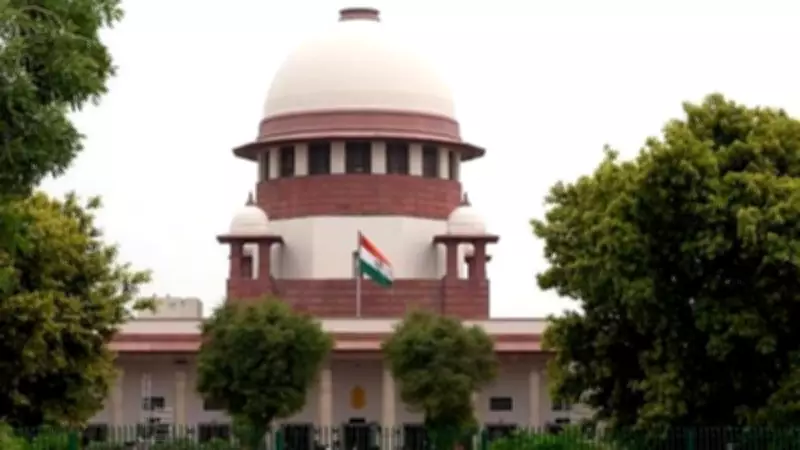
Supreme Court Upholds BNSS Provisions on Prosecution Officer Appointments
In a significant legal development, the Supreme Court of India has dismissed a petition that sought to challenge the validity of specific provisions within the Bharatiya Nagarik Suraksha Sanhita, 2023 (BNSS) concerning the appointment of prosecution officers. The ruling reinforces the legislative framework established under the new criminal procedure code.
Details of the Petition and Legal Challenge
The plea was filed by petitioner Subeesh P S, represented by advocate Suvidutt M S, and specifically targeted Section 20, sub-clauses (2)(a) and (2)(b) of the BNSS. These provisions outline the procedures and criteria for appointing prosecution officers, who play a crucial role in the criminal justice system by representing the state in legal proceedings.
The petitioner argued that these clauses might be unconstitutional or violate fundamental rights, but the Supreme Court, after thorough consideration, found no merit in the challenge. The court's decision underscores the judiciary's deference to legislative intent in matters of procedural law, especially in reforms aimed at modernizing India's legal infrastructure.
Implications of the Supreme Court's Decision
By rejecting the plea, the Supreme Court has effectively validated the BNSS provisions, ensuring that the appointment process for prosecution officers remains as stipulated under the new law. This ruling is expected to have far-reaching consequences:
- It provides legal certainty for the implementation of the BNSS, which replaces the older Code of Criminal Procedure.
- It supports the government's efforts to streamline judicial processes and enhance efficiency in prosecution.
- It may influence future legal challenges to other provisions of the BNSS, setting a precedent for judicial review.
The BNSS, enacted in 2023, represents a comprehensive overhaul of India's criminal procedure laws, aiming to make the justice system more accessible and responsive. The provisions related to prosecution officers are designed to ensure that qualified and competent individuals are appointed to uphold the rule of law.
Broader Context and Future Outlook
This decision comes at a time when India is undergoing significant legal reforms, with the BNSS being a cornerstone of these changes. The Supreme Court's dismissal of the petition highlights the judiciary's role in balancing individual rights with legislative mandates. Legal experts suggest that this ruling could bolster confidence in the new legal framework, encouraging smoother adoption across the country.
As the BNSS continues to be implemented, stakeholders in the legal community will closely monitor its impact on prosecution practices and overall judicial efficiency. The Supreme Court's stance in this case may serve as a guiding principle for interpreting other contentious aspects of the law.