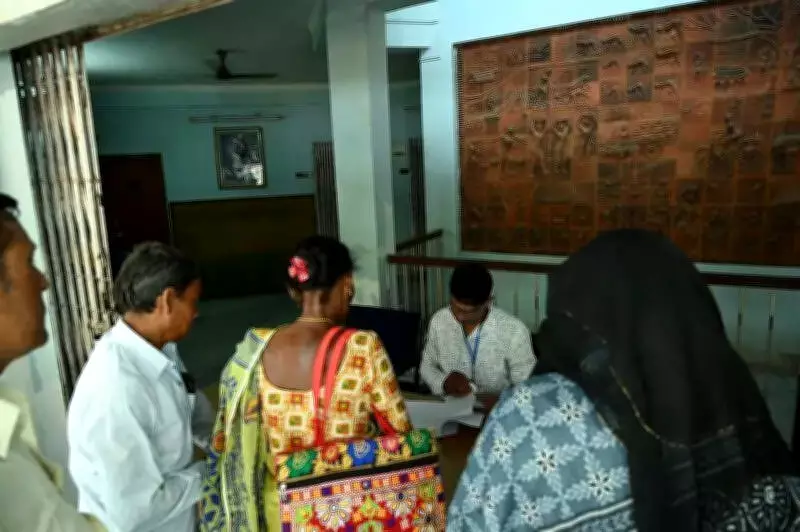
Santiniketan's Electoral Revision Sparks Identity Crisis for Indigenous Communities
The Special Intensive Revision (SIR) exercise in Santiniketan has triggered a profound crisis that extends far beyond mere administrative adjustments to the electoral roll. This initiative has fundamentally threatened the identity and voting rights of indigenous people who have inhabited these lands for generations, some predating even the establishment of Visva-Bharati University.
Widespread Deletions in Tribal Hamlets and Ashram Communities
The impact has been particularly severe in the tribal hamlets surrounding Rabindranath Tagore's "abode of peace," an area deeply shaped by his intellectual and cultural legacy. Even the ashramiks, the traditional residents of the ashram complex, have not been spared from this sweeping purge of voter names.
As Santiniketan, under the Bolpur assembly constituency, prepares to vote on April 23, residents point to high-profile cases as indicative of a broader pattern. The harassment faced by Nobel Laureate Amartya Sen and Suprabuddha Sen, grandson of renowned artist Nandalal Bose, exemplifies how ordinary citizens, especially poor rural populations, are bearing the brunt of this exercise.

Notable Cases Highlight Systemic Issues
Amartya Sen received a notice from the Election Commission citing a "logical discrepancy" regarding the age difference between him and his mother. Gitikantha Majumdar, who manages Sen's Pratichi home and official matters, clarified: "The EC claimed the age gap was less than 15 years, while the actual difference is 19-and-a-half years. The notice and its language constituted an insult to the esteemed economist."
Suprabuddha Sen and his wife had their names struck off the electoral list despite providing all necessary documentation. Although Election Commission officials later restored his voting rights, the incident underscores the procedural flaws in the revision process. Both Amartya and Suprabuddha are registered voters in ward 2, which encompasses the Ashrama complex, Sreepalli, Purbapalli, and Ratanpalli.
Disproportionate Impact on Indigenous and Marginalized Communities
Ward 2 councillor Chandan Mondal revealed the staggering scale of deletions: "Our constituency includes ashramiks, Bihari migrants, and significant Scheduled Caste and Scheduled Tribe populations. More than 90 indigenous tribals have been deleted from Phuldanga alone. At least 100 people, predominantly from ST communities residing at Ratanpally, have been removed from the rolls."
Gouri Tudu, councillor of ward 4 (Moldanga-Sriniketan), confirmed that most deletions occurred in tribal villages. "In Pearson Palli, Balipara, and Kaligunge within ward 3, families have lived for generations, possibly even before Visva-Bharati was founded. Ward 4 alone witnessed 152 deletions, including 48 from the Bagdi community and 35 from the Bauri community. These groups form an integral part of Tagore's Santiniketan," Tudu emphasized.
Broader Concerns About Administrative Failure
Sudripta Tagore, principal of Santiniketan Sishutirtha and a fifth-generation descendant of Satyendranath Tagore's family, criticized the state's handling: "The government has failed its citizens, with rural areas suffering disproportionately compared to urban centers."
Kausik Bhattacharya, a philosophy professor at Visva-Bharati, shared his personal experience: "My name was missing from the 2024 electoral list despite appearing on the 2002 roster. I submitted Form 6 for inclusion, but it was summarily rejected without adequate explanation."
Anil Konar, honorary secretary of Santiniketan Trust, attributed the problems to procedural haste and confusion: "The SIR exercise was rushed through without proper planning, and the forms themselves were confusing for many residents to complete accurately."
This electoral revision has thus raised serious questions about voter disenfranchisement, cultural erasure, and administrative accountability in one of India's most culturally significant regions, just as it approaches a crucial electoral moment.