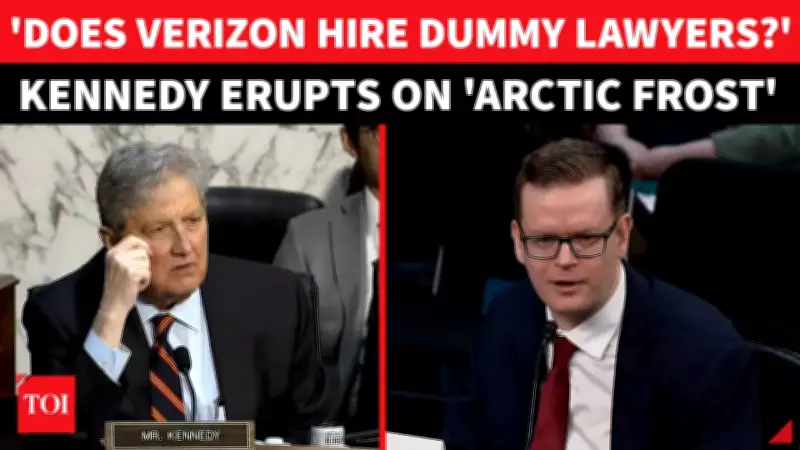
Senator Kennedy Confronts Verizon Over GOP Subpoenas in Arctic Frost Hearing
Senator John Kennedy engaged in a fiery exchange with Verizon officials during a Senate Judiciary Committee hearing, raising critical questions about the telecommunications giant's liability in the ongoing Arctic Frost investigation. The hearing, marked by intense scrutiny, focused on Verizon's alleged role in facilitating subpoenas that targeted the records of Republican lawmakers.
Kennedy's Fiery Critique of Verizon's Involvement
Visibly frustrated, Senator Kennedy criticized Verizon for its participation in what he described as an overreach in the Arctic Frost probe. He emphasized the potential legal and ethical implications of the company's actions, questioning whether Verizon had properly assessed its responsibilities before complying with the subpoenas. Kennedy's pointed inquiries highlighted concerns about corporate accountability in politically sensitive investigations.
Details of the Arctic Frost Investigation and Subpoenas
The Arctic Frost investigation, which has garnered significant attention, involves allegations that have led to subpoenas targeting GOP lawmakers' communications and data. During the hearing, officials discussed how Verizon handled these subpoenas, with Kennedy pressing for transparency on the company's decision-making process. The senator argued that such actions could set a dangerous precedent for privacy and political interference.

- Senator Kennedy challenged Verizon's compliance with subpoenas targeting Republican records.
- The hearing explored Verizon's liability and ethical obligations in the Arctic Frost case.
- Discussions centered on the balance between legal requirements and protecting lawmakers' privacy.
- Kennedy's confrontational style underscored the high stakes of the investigation.
Broader Implications for Corporate and Political Accountability
This hearing sheds light on the complex interplay between technology companies and government investigations. As Verizon faces scrutiny, the case raises broader questions about how corporations navigate legal demands while upholding principles of fairness and non-partisanship. The outcome could influence future policies on data privacy and subpoena compliance in politically charged contexts.