J&K Political Rivals Find Common Ground on Iran Conflict and Environmentalist's Detention
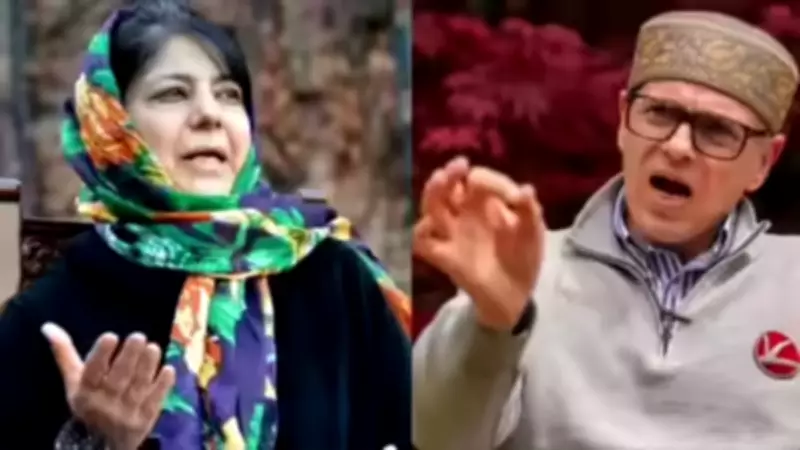
In a rare display of political unity, Jammu and Kashmir Chief Minister Omar Abdullah and former Chief Minister Mehbooba Mufti voiced shared concerns on Saturday regarding the escalating situation in Iran and the controversial arrest of environmental activist Sonam Wangchuk. Both leaders emphasized the need for immediate de-escalation in Iran and criticized the detention of Wangchuk, while also calling for the release of individuals arrested during recent pro-Iran protests in Kashmir.
Omar Abdullah Condemns "Unjust War" and Foreign Interference in Iran
Speaking to reporters on the sidelines of a function in Srinagar, Chief Minister Omar Abdullah issued a strong condemnation of the ongoing conflict in Iran, describing it as an "unjust war forced on the people of Iran" that must end immediately. He asserted that the United States and Israel have no authority to determine Iran's leadership, stating emphatically, "America and Israel don't get to decide who the leadership of Iran is. They don't get to decide who the supreme leader of Iran is. That is for the people and citizens of Iran to decide."
Abdullah further highlighted the broader implications of the assassination of Ayatollah Ali Khamenei, noting that he was not only Iran's leader but also a widely respected religious figure among Muslims worldwide. "This should not be seen merely as a war with Iran. It has far wider implications," he cautioned, underscoring the potential regional and global repercussions of the conflict.

Demands for Sonam Wangchuk's Release and Fulfillment of Promises
Turning to domestic issues, Omar Abdullah expressed firm opposition to the arrest of environmentalist Sonam Wangchuk, stating that he "should not have been arrested in the first place." The Chief Minister called for the fulfillment of promises made to Jammu and Kashmir and Ladakh, linking Wangchuk's case to broader commitments by the administration.
Abdullah also advocated for the release of young prisoners in Kashmir facing minor charges, describing such measures as essential for restoring public trust. He specifically urged the administration to begin by freeing those detained during recent pro-Iran protests in the region, framing it as a confidence-building step.
Mehbooba Mufti Expresses Solidarity with Iran and Criticizes Detentions
In a parallel development, Peoples Democratic Party president Mehbooba Mufti announced that her party had passed a resolution expressing solidarity with the people of Iran. Addressing a press conference, she praised the resilience and fighting spirit of Iranians and called for prayers for Iran's victory in the conflict. Mufti urged India to review its policy towards Iran, recalling that the country has stood by India during difficult times in the past.
Mufti also commended the people of Jammu and Kashmir for holding peaceful protests in support of Iran, stating, "We salute the people of Iran for their resilience and fighting spirit." She emphasized the importance of maintaining peaceful expressions of solidarity.
Unified Call for Release of Detainees and Critique of Wangchuk's Arrest
Mehbooba Mufti welcomed the release of Sonam Wangchuk but criticized his initial detention, describing it as unwarranted given his nationalist credentials and significant work in environmental protection. "He should not have been arrested at all. He is a nationalist and it is strange he was booked under the National Security Act," she remarked, noting that Wangchuk has even praised the Bharatiya Janata Party in the past.
Mufti echoed Abdullah's demand for the release of those detained during recent "peaceful pro-Iran protests" in Kashmir, arguing that it was unjust to arrest mourners condemning the assassination of Ayatollah Ali Khamenei. She highlighted the broader issue of prolonged detentions in Kashmir, pointing out that hundreds of people have been jailed for years under the Unlawful Activities Prevention Act without even beginning trials in many cases.

The rare alignment between Omar Abdullah and Mehbooba Mufti on these issues underscores the cross-party concern over regional stability and civil liberties in Jammu and Kashmir. Their unified stance on Iran and domestic detentions marks a significant moment in the region's political landscape, bridging traditional divides to address pressing international and local matters.