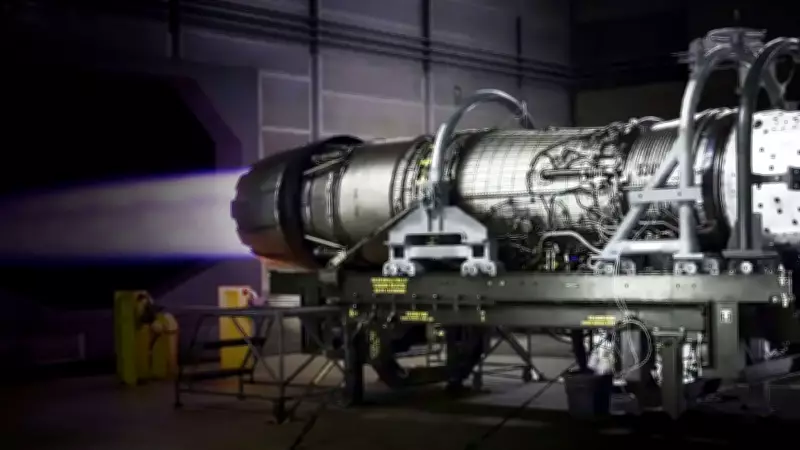
India Takes Strategic Step to Build National Aero Engine Test Complex
In a landmark move to achieve self-reliance in defense technology, India has initiated the process to establish a comprehensive National Aero Engine Test Complex (NAETC). The Gas Turbine Research Establishment (GTRE), a Bengaluru-based laboratory under the Defence Research and Development Organisation (DRDO), has issued a Request for Information (RFI) to global and domestic firms. This facility, planned for Raman Nagar in Karnataka, is designed to end India's decades-long dependency on foreign countries for testing high-thrust combat aircraft engines.
Addressing a Four-Decade Infrastructure Gap
Since 1982, India has been pursuing the development of an indigenous jet engine for fighter aircraft. Despite significant public investment and sustained effort over four decades, the country has faced repeated delays and an inability to certify such engines domestically. The core issue has been the lack of advanced test infrastructure capable of simulating real-world operating conditions. Currently, India must ship prototype engines to Russia, France, and the United States for critical trials, including high-altitude testing, afterburner evaluations, and advanced sub-system assessments. This practice not only incurs substantial costs and delays but also poses security risks and creates dependency on international relationships that can be unpredictable.
Comprehensive Testing Capabilities
The proposed NAETC will be a state-of-the-art, ground-based facility enabling full engine testing and component-level evaluation. It will cover all critical sub-systems such as fans, compressors, combustors, turbines, and afterburners. The complex is designed to simulate extreme operating environments, including high-altitude conditions up to 40,000 feet, wide temperature ranges, and pressure variations. By bringing these capabilities entirely under Indian control, the facility will ensure that testing can be conducted safely, securely, and without external dependencies.

Strategic Imperative for Future Defense Programs
The establishment of the NAETC is a strategic necessity for India's ambitious defense aviation projects. The country is actively developing next-generation platforms like the Tejas Mk-2 fighter jet, the Advanced Medium Combat Aircraft (AMCA), and the Ghatak Unmanned Combat Aerial Vehicle (UCAV), while also exploring entry into sixth-generation fighter programs. Each of these platforms requires a reliable, high-performance engine, and every engine needs a dedicated testing facility that operates under Indian sovereignty. The NAETC aims to fulfill this critical need, providing a secure environment for rigorous evaluation and certification.
This initiative marks a pivotal shift in India's defense technology landscape, addressing a foundational gap that has hindered progress for over forty years. While the project arrives four decades later than ideal, its implementation is now seen as essential for bolstering national security and advancing indigenous innovation in aerospace engineering. The RFI represents the first concrete step toward realizing this vision, inviting expertise from both international and domestic partners to contribute to a facility that will empower India's defense autonomy.