India's Canine Warriors: Four-Legged Heroes on the Frontline
At first glance, they appeared as ordinary village puppies—cream-colored Labradors with oversized paws, velvet ears, and that slightly bewildered look young dogs carry while discovering the world. However, these were not stray pups tumbling through a courtyard. They sat in neat rows on the grass at the Assam Rifles dog training centre in Jorhat, their handlers standing behind them like patient schoolmasters. Nearly 200 of them, some barely three months old and others pushing nine months, were already on their path to becoming soldiers.
When approached, they initially sat perfectly still, but curiosity soon overcame discipline. Tails began to wag, one pup edged forward, and another followed. Within seconds, the entire formation collapsed into chaos as they swarmed around, licking hands, pawing at sleeves, and pushing wet noses into pockets. Even the most hardened soldier in the room broke into a smile. Anyone surrounded by a pack of Labrador puppies understands that resistance is futile.
The Remarkable Partnership in Modern Warfare
It is in places like Jorhat that the Indian armed forces quietly build one of the most extraordinary partnerships in modern warfare—a bond between man and dog that stretches back thousands of years. Recently, this courage was displayed dramatically during Operation Trashi I in Jammu and Kashmir. A German Shepherd named Tyson, serving with 2 Para, was deployed in a counter-terrorist operation. As the encounter unfolded, Tyson moved ahead of troops, searching for hidden militants. Shot in the leg during the operation, he did not retreat. Injured but relentless, he continued tracking terrorists, guiding soldiers to their positions and ensuring the operation proceeded safely.

Stories like Tyson's rarely make headlines for long, yet they are repeated across India where dogs serve alongside soldiers, paramilitary forces, and disaster response teams. Led by their keen sense of smell, sniffer dogs protect convoys by detecting hidden explosives along insurgency-prone routes.
Ancient Bonds and Mythological Echoes
The bond between humans and dogs is ancient, predating organized armies when dogs guarded camps, tracked game, and stood sentinel at human settlements. This connection finds powerful expression in mythology. At the end of the Mahabharata, when Yudhishthira ascends to heaven, only a dog remains, quietly following him through the mountains. When gods demand the animal be abandoned, Yudhishthira refuses, insisting loyalty cannot be repaid with betrayal. The dog is later revealed to be Dharma itself, capturing something fundamental about dogs—their loyalty has few conditions.
During a journey through Arunachal Pradesh, this loyalty appeared in an unexpected form. At a remote transit camp in Hunli, nearly 20 puppies raced across the compound, the result of three litters sired by the same camp dog. The proud father stood guard at the gate, known for disliking civilians. On one occasion, he even attacked the camp commandant after the officer changed into civilian clothes. Across India, battalions often adopt local dogs, who guard remote posts with surprising ferocity and become unit mascots.
Specialized Training and Deployment
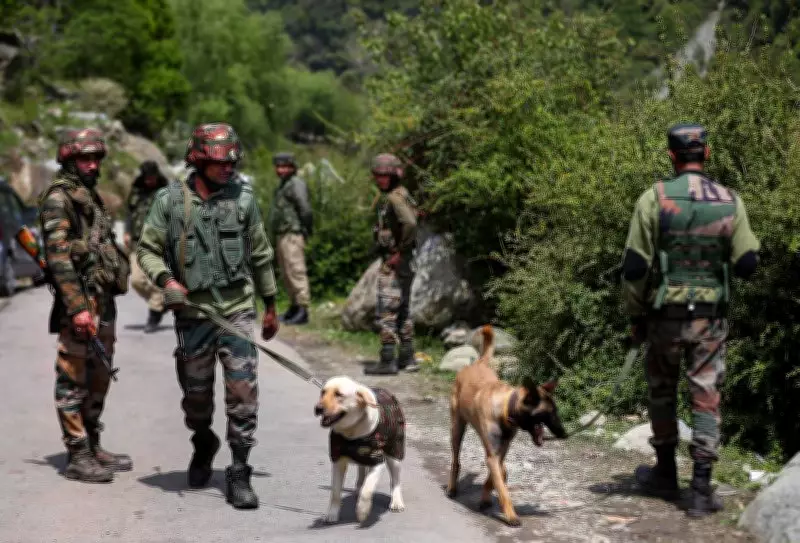
Service dogs, however, are something altogether different. Military working dogs undergo months of specialized training before deployment. Breeds like Labrador Retrievers, German Shepherds, and Belgian Malinois are selected for intelligence, stamina, and temperament. They are trained to detect explosives, track human scent, locate hidden weapons, and rescue survivors trapped under rubble. Training begins early, with puppies exposed to noise, unfamiliar environments, and constant handler interaction. Exercises progress to scent detection drills, obedience commands, agility courses, helicopter rides, and in elite units, parachuting or rappelling from helicopters into difficult terrain.

Multiple forces in India maintain dog units. The Army and Assam Rifles deploy dogs along the mountainous frontiers of the Northeast and volatile valleys of Kashmir. The Border Security Force relies heavily on sniffer dogs along international borders for detecting explosives and contraband. The Central Reserve Police Force uses dogs in counter-insurgency operations in states like Chhattisgarh, where Maoist groups conceal improvised explosive devices along forest tracks.
Roles in Disaster and Security Operations
In disaster zones, the National Disaster Response Force deploys highly trained search and rescue dogs capable of locating survivors beneath collapsed buildings. After earthquakes or landslides, these animals become the eyes and ears of rescue teams. Even the Air Force and Navy maintain specialized canine units. At airbases, dogs patrol runways, detect explosives, and guard sensitive installations, while naval bases rely on them to secure dockyards and facilities.
Perhaps nowhere are they more visible than with infantry units and the Indo-Tibetan Border Police deployed at extreme altitudes across the Himalayas. In these bleak landscapes, dogs serve as sentries and companions for soldiers stationed months away from civilization. Their work is extraordinarily demanding. Road Opening Parties on insurgency-prone highways depend on sniffer dogs to detect buried explosives, where a single missed device can cost multiple lives. Dogs move slowly along road surfaces, noses close to the ground, reading the invisible world of scent with astonishing precision.
Bravery and Emotional Support
Search operations in dense forests present different challenges. Tracker dogs follow faint human scent trails, sometimes hours old, guiding soldiers through thickets and ravines where human trackers would struggle. In counter-terrorist operations, dogs are often the first to enter buildings suspected of harboring militants, reducing risk for soldiers. Stories of bravery are common. In 2017, a Belgian Malinois named Axel from the Army's dog unit located terrorists hiding inside a building during a Kashmir encounter. Despite injuries, he continued engaging militants until the operation was complete. Such acts are honored with ceremonial burials and full respect accorded to fallen soldiers.
Beyond operational roles, dogs provide emotional stability. For soldiers in isolated posts far from family, a dog's presence transforms daily life—a wagging tail after patrol, a warm body curled beside a bunk during freezing nights. These small comforts matter more than most civilians realize. Across remote border outposts, dogs become silent witnesses to military routines, accompanying patrols, sharing rations, and waiting patiently outside bunkers.
Challenges and Care
The relationship is mutual, as dogs read human emotions with uncanny sensitivity. A tired soldier returning from patrol rarely remains tired for long when greeted by an exuberant canine companion. However, this bond carries complications. Where troops feed stray dogs in large numbers, feral populations can expand rapidly. In fragile ecological zones, particularly high-altitude regions, these dogs sometimes turn to hunting wildlife, preying on species like black-necked cranes and Himalayan gazelles. Managing the balance between compassion and ecological responsibility remains an ongoing challenge.
Military working dogs require constant care. Veterinary teams monitor their health closely, with diet, exercise, and regular medical check-ups essential for performance. After years of service, many dogs are retired and adopted by handlers or civilian families, providing a peaceful final chapter.
The Convergence of Instinct and Discipline
Watching a trained service dog at work is to witness an extraordinary convergence of instinct and discipline. The animal moves with purpose, guided by scent cues invisible to human senses. Every twitch of the nose carries meaning, and every pause signals evaluation. Yet when work ends, the soldier often kneels beside the dog, scratching its ears or offering a treat. In that moment, the formidable working animal becomes simply a dog again.
The ancient partnership continues. From the mythic dog that followed Yudhishthira into the mountains to modern K9 heroes like Tyson, the story remains unchanged. Dogs stand beside humans in moments of danger, hardship, and quiet companionship. Across India's borders, forests, mountains, and disaster zones, they serve with a loyalty that requires no oath. And perhaps that is why soldiers trust them so completely.