Former Nepal Minister Detained in Money Laundering Probe Tied to Gen Z Protests
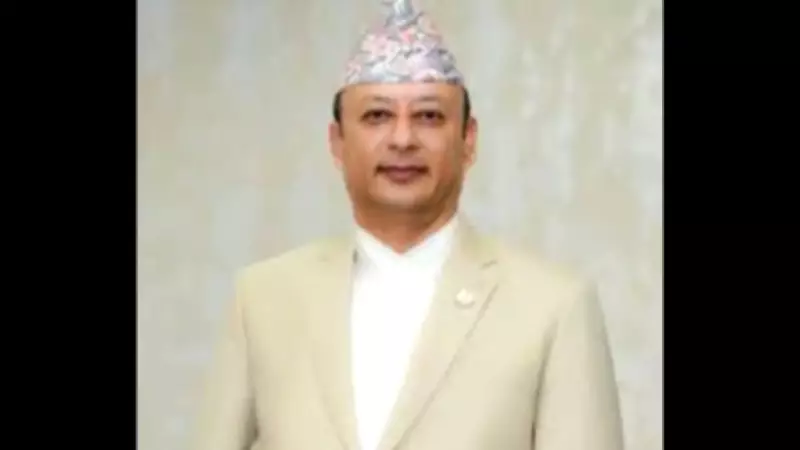
In a significant development, Nepal's Central Investigation Bureau (CIB) has arrested former energy minister Deepak Khadka on Sunday, linking him to a money laundering case associated with the Gen Z protests that erupted last September. The arrest marks a pivotal moment in the ongoing investigations into the violent demonstrations that shook the nation.
Arrest Details and Official Statements
CIB spokesman Shiva Kumar Shrestha confirmed to AFP that Khadka was apprehended specifically for his involvement in money laundering activities. The Department of Money Laundering Investigation will now lead the probe against the Nepali Congress leader, ensuring a thorough examination of the allegations.
Adding to the official narrative, home affairs minister Sudan Gurung disclosed on Facebook that Khadka's detention is directly connected to the investigation of funds recovered from his residence during the protests on September 9. This revelation underscores the tangible evidence being pursued by authorities.

Broader Context of Political Arrests
Khadka's arrest follows closely on the heels of the detention of former prime minister KP Sharma Oli and ex-home affairs minister Ramesh Lekhak, who were taken into custody over their alleged roles in the deadly crackdown on Gen Z protesters. These successive arrests highlight a sweeping governmental effort to address accountability in the aftermath of the protests.
The youth-led uprising initially sparked over a temporary social media ban but rapidly evolved into a broader movement against systemic corruption and economic struggles. Tragically, at least 76 individuals lost their lives during the crackdown on September 8 and 9, as documented by an inquiry commission.
Violent Protests and Political Fallout
During the unrest, demonstrators set fire to key government buildings, including the parliament, ultimately leading to the collapse of Oli's administration. In a dramatic turn, Khadka's own residence was torched, with viral videos capturing protesters throwing cash discovered inside his home into the air, symbolizing public outrage over alleged corruption.
An interim government, led by former chief justice Sushila Karki, managed Nepal until recent general elections, where the Rastriya Swatantra Party (RSP) achieved a landslide victory. This political shift has paved the way for new leadership and reform initiatives.
New Government and Reform Agenda
Rapper-turned-politician Balendra Shah, the 35-year-old leader of RSP and former mayor of Kathmandu, officially assumed the role of prime minister on Friday. His government has unveiled an ambitious 100-point governance reform agenda, which includes plans to establish an investigation committee to scrutinize the assets of politicians and senior officials.
Notably, this agenda was announced on the same day Oli and Lekhak were detained, signaling a strong commitment to transparency and justice. The inquiry commission had previously recommended prosecuting Oli and other officials for neglect in preventing security forces from firing on protesters, though they have denied issuing such orders.
As Nepal navigates this period of political transition and accountability, the arrests of key figures like Khadka underscore a determined push towards addressing the grievances that fueled the Gen Z protests and fostering a more accountable governance framework.