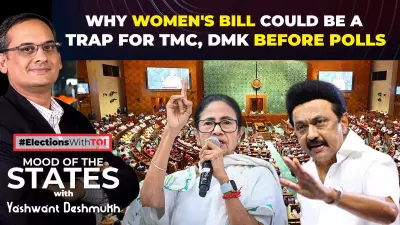
In the intricate chessboard of Indian politics, West Bengal Chief Minister Mamata Banerjee, affectionately known as Didi, is executing a strategic maneuver that has political analysts and opponents alike taking note. Her recent actions and statements indicate a careful balancing act between regional aspirations and national political calculations, particularly in the context of the upcoming general elections.
The Art of Political Dribbling
Banerjee's political style has often been described as a form of dribbling—dodging opponents while maintaining control of the ball. In this case, the ball is the political narrative of West Bengal, and the opponents include not only the Bharatiya Janata Party (BJP) but also potential allies and rivals within the opposition bloc. Her ability to keep multiple plates spinning simultaneously has been a hallmark of her tenure.
Challenging the BJP's Dominance
One of the key aspects of Banerjee's strategy is to position herself as a formidable challenger to the BJP's dominance at the national level. She has been vocal in criticizing the central government's policies, particularly on issues like the Citizenship Amendment Act (CAA) and the National Register of Citizens (NRC). At the same time, she has been careful not to alienate the significant Hindu vote bank in the state, often emphasizing her inclusive approach.

Navigating Alliance Politics
Banerjee's relationship with other opposition parties has been a subject of much speculation. While she has called for a united opposition against the BJP, she has also been wary of ceding ground to potential rivals like the Congress. Her recent meetings with opposition leaders have been interpreted as an attempt to build a broader coalition without compromising her own party's interests.
Economic and Social Maneuvers
On the economic front, Banerjee's government has launched several welfare schemes aimed at consolidating support among women, farmers, and the poor. The 'Duare Sarkar' (Government at Your Doorstep) program and the 'Kanyashree' scheme for girls' education are examples of initiatives that have bolstered her popularity. However, challenges remain, including unemployment and industrial stagnation, which the opposition has been quick to highlight.
The Cultural Angle
Banerjee has also skillfully used cultural symbols to reinforce her political identity. The promotion of Bengali language and culture, along with the celebration of local festivals, serves to strengthen her connect with the masses. This cultural nationalism, however, is carefully calibrated to avoid being seen as parochial, especially in a state with diverse ethnic and religious communities.
Looking Ahead
As the general elections approach, all eyes are on how Banerjee's dribbling act will play out. Will she be able to maintain her hold on West Bengal while expanding her national influence? Or will the pressures of coalition politics and the BJP's aggressive campaign tactics force her to change course? What is certain is that Didi's moves will continue to shape the political landscape of not just Bengal, but the entire country.