CPI(M) Grants Permission for V S Achuthanandan's Family to Accept Padma Award
In a significant development, the Communist Party of India (Marxist) has allowed the family of veteran leader V S Achuthanandan to accept the prestigious Padma award. This decision marks a notable shift in the party's stance towards national honors, which have historically been viewed with skepticism by leftist political groups in India.
Family to Consult Party Leadership Before Final Decision
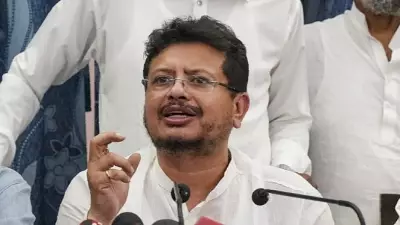
V A Arunkumar, the son of V S Achuthanandan, has confirmed that being a party family, they will take a final decision only after consulting with the CPI(M) leadership. This consultation process underscores the deep-rooted commitment to party discipline and collective decision-making that characterizes communist political movements in Kerala and across India.
The announcement comes at a time when political parties are increasingly navigating the complex terrain of national recognition and ideological purity. For decades, leftist parties in India have maintained a principled distance from government awards, viewing them as tools of the establishment. However, this recent development suggests a potential softening of that position, at least in specific cases involving respected party elders.

Historical Context of Leftist Parties and National Awards
Communist parties in India have traditionally maintained a critical distance from government-conferred awards like the Padma series, seeing them as incompatible with revolutionary ideology. This stance has been particularly pronounced in Kerala, where leftist politics has deep historical roots and strong public support.
The decision regarding Achuthanandan's family accepting the Padma award therefore represents more than just a personal honor—it touches upon fundamental questions of political ideology and recognition within India's democratic framework.
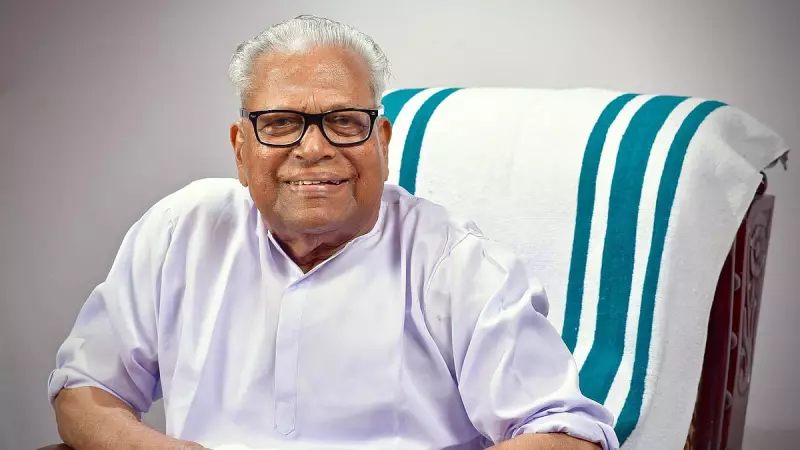
V S Achuthanandan himself has been a towering figure in Kerala politics for decades, serving as Chief Minister and remaining an influential voice within the CPI(M) even in his advanced years. His contributions to public life in Kerala are widely acknowledged across political divides.
Broader Implications for Political Recognition in India
This development raises several important questions about the evolving relationship between political ideology and national recognition in contemporary India:
- How will this decision affect the CPI(M)'s traditional stance on government awards?
- Will other leftist parties reconsider their positions on accepting national honors?
- What does this mean for the families of other veteran politicians who might receive similar recognition?
- How will this decision be received by the party's rank and file members?
The careful approach being taken—with the family committing to consult party leadership before making a final decision—reflects the nuanced balancing act between personal recognition and political principle. It demonstrates how even in matters of personal honor, party discipline and collective decision-making remain paramount within India's communist political tradition.
As the family prepares for consultations with CPI(M) leadership, political observers across Kerala and beyond will be watching closely to see how this situation develops. The outcome could potentially set a precedent for how leftist political families approach similar situations in the future, marking a subtle but significant evolution in the relationship between revolutionary politics and state recognition in India's diverse political landscape.