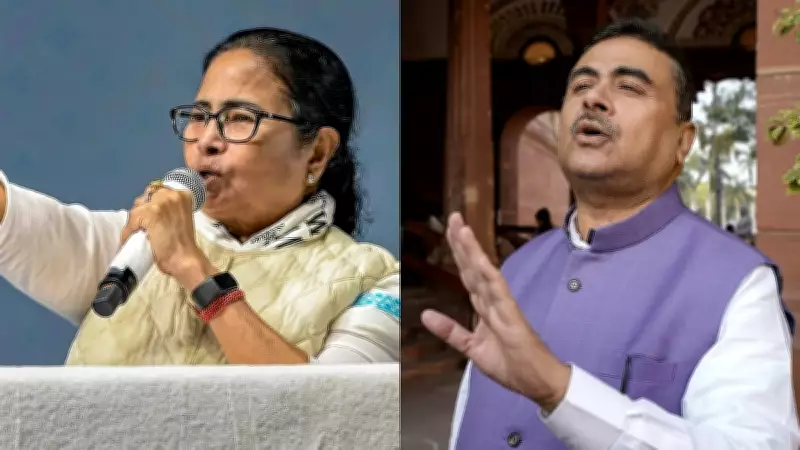
In a sharp political divide, the Bharatiya Janata Party (BJP) in West Bengal has expressed strong support for the Union Budget 2026, hailing it as a progressive and development-oriented financial plan. However, Chief Minister Mamata Banerjee has launched a scathing attack, labeling it a 'Humpty Dumpty' budget that fails to allocate any resources for the state.
Mamata Banerjee's Criticism in Kolkata
Speaking to journalists in Kolkata before her departure for New Delhi, Mamata Banerjee voiced her discontent with the budget. 'They have not given a single paisa for West Bengal. This is a Humpty Dumpty budget,' she stated, implying that the budget is fragile and likely to collapse, much like the nursery rhyme character. Her comments highlight the ongoing tensions between the state government and the central administration over fiscal allocations and development priorities.
BJP's Positive Response
In contrast, the Bengal unit of the BJP has praised the Union Budget 2026, emphasizing its potential benefits for national growth and infrastructure. Party leaders have argued that the budget includes provisions that could indirectly aid West Bengal through broader economic initiatives, such as investments in sectors like agriculture, healthcare, and digital infrastructure. This endorsement reflects the BJP's alignment with the central government's policies and its efforts to gain political ground in the state.

Political Implications and Context
The conflicting reactions underscore the deep-seated political rivalry in West Bengal, where the BJP and the Trinamool Congress, led by Mamata Banerjee, are locked in a fierce battle for dominance. The budget debate adds fuel to this competition, with each side using it to rally support and critique opponents. As Mamata heads to Delhi, her remarks are likely to influence discussions on federal-state relations and resource distribution.
This development comes amid broader national discussions on the Union Budget 2026, which aims to address economic challenges and promote sustainable development. The divergent views from West Bengal highlight how regional politics can shape perceptions of central policies, impacting governance and public opinion across India.