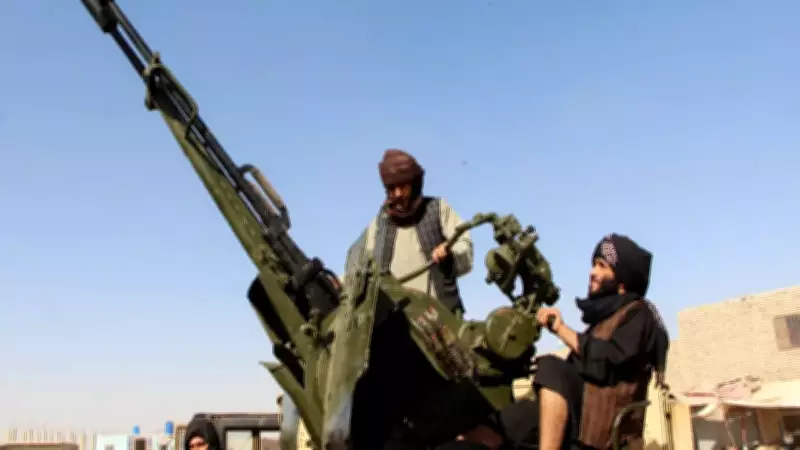
US Report Highlights Pakistan as Operational Base for Terrorist Groups
In a significant assessment, US officials have identified Pakistan as a primary base of operations and target for multiple armed, nonstate terrorist organizations. The report details that twelve out of fifteen groups listed are designated as Foreign Terrorist Organizations (FTOs) under US law, with the majority driven by Islamist extremist ideologies.
Surge in Terrorism-Related Fatalities in Pakistan
This revelation coincides with a sharp resurgence in terrorist violence across Pakistan. The nation has endured substantial domestic terrorism since 2003, with fatalities peaking in 2009. Following the Afghan Taliban's takeover in 2021, many analysts anticipated a regional terrorism revival, which data confirms has materialized.
After five consecutive years of declining death rates, reaching a low of 365 in 2019, terrorism-related fatalities in Pakistan have escalated annually. In 2025, the toll spiked dramatically to 4,001, marking the highest number in over a decade. By numerous accounts, Pakistan currently stands as the country most severely impacted by terrorism globally.

Geographic Concentration of Attacks
While major urban centers like Islamabad and Lahore have faced threats, the overwhelming majority of terrorism-related deaths in 2025 were concentrated in two provinces. Khyber Pakhtunkhwa accounted for 68% of the fatalities, and Balochistan for 28%, particularly in areas near the Afghanistan border.
Pakistan's Counterterrorism Efforts and International Scrutiny
In response to the growing menace, Pakistan implemented a National Action Plan in 2014 aimed at eradicating armed terrorist activities within its borders. However, international oversight has been stringent. In 2018, the Financial Action Task Force (FATF) placed Pakistan on its "gray list" due to deficiencies in combating money laundering and terrorist financing. By late 2022, after addressing technical issues, Pakistan was removed from this list.
Additionally, in 2018, US President Donald Trump designated Pakistan a "Country of Particular Concern" under the International Religious Freedom Act, a status renewed annually since.
Key Terrorist Groups Operating from Pakistan
The report identifies several prominent groups based in Pakistan:
- Al Qaeda (AQ) Core: Founded in 1988 in Pakistan by Osama bin Laden and designated an FTO in 1999. Although significantly degraded, it maintains alliances with other Pakistan-based FTOs.
- Islamic State-Khorasan Province (ISKP): A regional affiliate of ISIS, designated an FTO in 2016. With 4,000-6,000 fighters, mostly former members of Tehrik-i-Taliban Pakistan and Islamic Movement of Uzbekistan, it operates from Afghanistan into Pakistan.
- Lashkar-e-Taiba (LET): Formed in the late 1980s in Pakistan and designated an FTO in 2001. Led by incarcerated Hafiz Saeed, it was responsible for the 2008 Mumbai attacks and later rebranded as Jamaat-ud-Dawa to evade sanctions.
- Tehrik-i-Taliban Pakistan (TTP): Formed in 2007 and designated an FTO in 2010, it is considered the deadliest group in Pakistan. With 2,500-5,000 cadre, it seeks to overthrow the government and impose Sharia law in Khyber Pakhtunkhwa, allegedly with Afghan Taliban support.
- Balochistan Liberation Army (BLA): Founded in 2000 and designated an FTO in 2025, this separatist group targets Chinese nationals and investments in Balochistan using guerrilla tactics.
The escalating violence underscores the complex security challenges Pakistan faces, with international reports emphasizing its role as a focal point for global terrorist activities.