Special Marriage Act Hindered: Couples Face Bribes, Moral Policing in Interfaith Unions
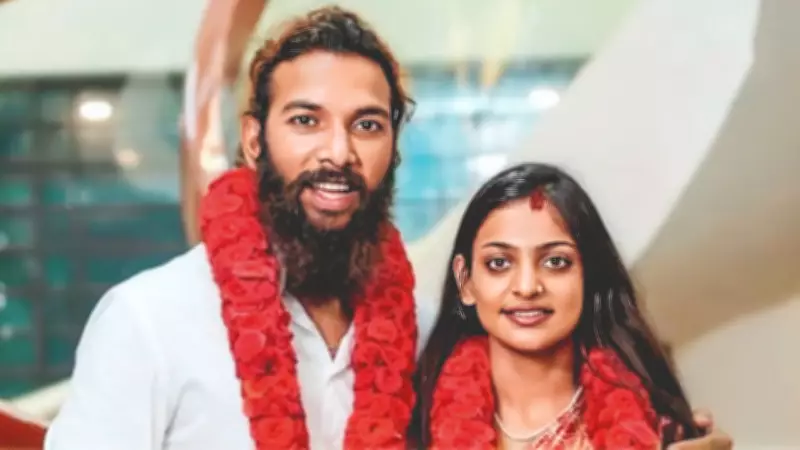
When Swarna Ekambaram, a Hindu woman, decided to marry her Christian boyfriend last year, they encountered immediate resistance from sub-registrars who refused to accept their application under the Special Marriage Act (SMA) of 1954. "They demanded we bring our parents, who were against our marriage. That's not what the law says," Swarna explains. "The act exists to facilitate secular, civil marriages and enable inter-faith or inter-caste couples to marry without conversion."
Frustrated, the couple abandoned their efforts in Chennai and tried in her hometown of Kancheepuram, where they faced intense interrogation by the sub-registrar.
Traumatic Experiences and Unchecked Power
Salem-based Shanmugapriya M describes her wedding as more traumatic than memorable. "My Muslim husband's family didn't approve of our marriage, but the sub-registrar asked us to call our parents. We had to get a lawyer to intervene, and that's how we finally got married," she recounts.
India, which boasts progressive laws and even equates live-in relationships to marriage according to a 2025 Allahabad High Court ruling, appears to draw a firm line at interfaith relationships. Ramesh T, a lawyer and secretary of the Tamil Nadu Intercaste and Inter Religion Couples Welfare Association, has conducted over 500 interfaith marriages across the state. He asserts that sub-registrars wield "unchecked power" with no accountability.
"They engage in moral policing," Ramesh states. "Sometimes, they ask the couple to get married at a temple, mosque, or church and then come to the office to get it registered. They do this knowing no place of worship will solemnize an interfaith marriage unless either party converts."
Legal Provisions Versus Ground Reality
Section 12 of the SMA clearly states that marriage only requires both parties to declare they take each other as lawful spouses in the presence of the officer and three witnesses. However, Ramesh notes, "Sub-registrars usually give couples a hard time because they fear violence from caste and religious groups. Some just expect exorbitant bribes."
Selvi, a member of Manithi, a group assisting interfaith and intercaste couples, reveals that while the entire process should cost less than ₹1,000, most couples are forced to pay bribes of ₹50,000 just to have their application accepted. "Once a couple is legally married, they are entitled to protection," Selvi explains. "However, parents file missing complaints even if the couple left their homes voluntarily. In several cases, the boy is detained under false charges, while the woman is locked up at home. A habeas corpus petition needs to be filed to allow the couple to appear before court and have the complaint dismissed."
Systemic Hurdles and Calls for Reform
Ramesh highlights another requirement: an 'unmarried certificate' to certify that the applicant has never been legally married. "Officials visit the applicant's residence for a background check about marital history. The verification process alerts the family, which is what most couples are seeking to avoid," he says.
Retired Madras High Court judge Justice K Chandru argues it's time to amend the SMA, especially given cases where couples are murdered by their families in caste killings. In Arumuga Servai vs State of Tamil Nadu (2011), the Supreme Court reiterated the legal position against causing physical harm to couples, stating such acts must be "ruthlessly stamped out." The court directed officials to institute criminal proceedings against those responsible and to chargesheet and suspend officials if they had knowledge of the crime but did not prevent it.
"These SC sermons never percolate to lower courts," Chandru observes. "In TN, there is an increase in cases of caste killing. The government has appointed the Justice K N Basha Committee to submit a report about the need for a special law on caste killings."
He adds that what is required today is a "non-ritualistic, non-religious civil wedding registration process." "Apart from a simplified law, the state must remove the power of the registrars and hand it to the state family welfare department. Officers need to undergo a sensitivity programme to handle this better," Chandru emphasizes.
"The government talks about Uniform Civil Code, but even after 78 years of Independence, they have not brought about a simple law for interfaith couples to marry."
Key Facts About the Special Marriage Act 1954
- Purpose: Facilitates secular, civil marriages irrespective of religion, faith, or caste, allowing interfaith/intercaste couples to marry without conversion.
- Age Requirements: 21+ for men; 18+ for women.
- Notice Period: Couple must give written notice to district marriage officer where at least one party has resided for 30 days prior.
- Objections: Only permissible if either party is a minor, concealing a marriage, is in an incestuous relationship, or of unsound mind.
- Legal Standing: Once registered, it is a legal marriage, providing protection under Indian law. Marriage certificate acts as evidence.
- Applicability: Unlike personal laws (Hindu/Muslim/Christian), SMA allows couples to retain religious identity without conversion.
International Comparisons
- Turkey: Abolished religious courts for marriage in the 1920s. Only civil marriages are legally valid.
- Lebanon: Marriage governed by more than 15 religious courts. Many couples travel abroad (usually Cyprus) for a civil marriage and register it in Lebanon.
- Scotland: Humanist marriage, similar to self-respect marriage, is legal in Scotland, Northern Ireland, and Ireland, but not in the UK. Demands have been ongoing since 2013.