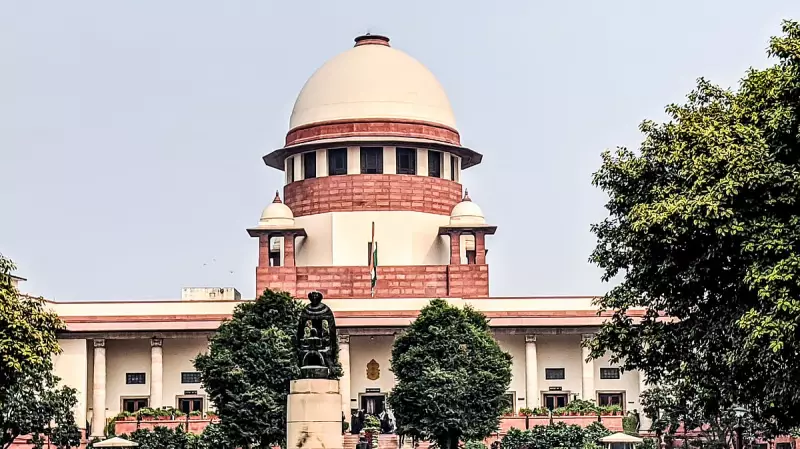
Supreme Court Agrees to Hear Petition Against UGC Regulation on Caste-Based Criteria
The Supreme Court of India has taken a significant step by agreeing to list for hearing a crucial petition that challenges a regulation issued by the University Grants Commission (UGC). This development marks a pivotal moment in the ongoing legal discourse surrounding educational policies and caste-based criteria in higher education institutions across the country.
Bench Led by Chief Justice Surya Kant Takes Note of Urgent Plea
A bench comprising Chief Justice Surya Kant and Justice Joymalya Bagchi presided over the proceedings where the petition was presented. The bench took note of the submissions made by a lawyer who was seeking an urgent hearing for the plea. This indicates the court's recognition of the potential importance and time-sensitive nature of the issues raised in the petition.
The decision to list the case for hearing underscores the Supreme Court's role in addressing contentious matters that have far-reaching implications for India's educational framework. The UGC regulation in question pertains to caste-based criteria, which has been a subject of debate and controversy in academic and legal circles.
Background and Implications of the UGC Regulation Challenge
The University Grants Commission is a statutory body responsible for the coordination, determination, and maintenance of standards of university education in India. Its regulations often set the tone for policies implemented by universities nationwide. The specific regulation being challenged involves caste-based criteria, which could affect admissions, reservations, or other aspects of higher education.
Legal experts suggest that this petition could lead to a landmark judgment that clarifies the constitutional validity and practical application of such criteria. The Supreme Court's hearing will likely delve into fundamental questions of equality, social justice, and educational access as enshrined in the Indian Constitution.
Urgency and Legal Proceedings
The lawyer's request for an urgent hearing highlights the pressing nature of the issues at stake. With the academic year in progress and universities making decisions based on existing regulations, a prompt judicial review could prevent potential disruptions or injustices. The Supreme Court's agreement to list the case demonstrates its commitment to addressing matters of public importance in a timely manner.
As the legal process unfolds, stakeholders including students, educators, and policymakers will be closely monitoring the proceedings. The outcome of this hearing could set a precedent for how caste-based criteria are implemented and challenged in India's higher education system.
The Supreme Court's decision to hear this plea reaffirms its pivotal role in safeguarding constitutional values and ensuring that regulatory bodies like the UGC operate within the bounds of law and justice.