Supreme Court Mandates Full Pension for Women Officers After Systemic Bias Ruling
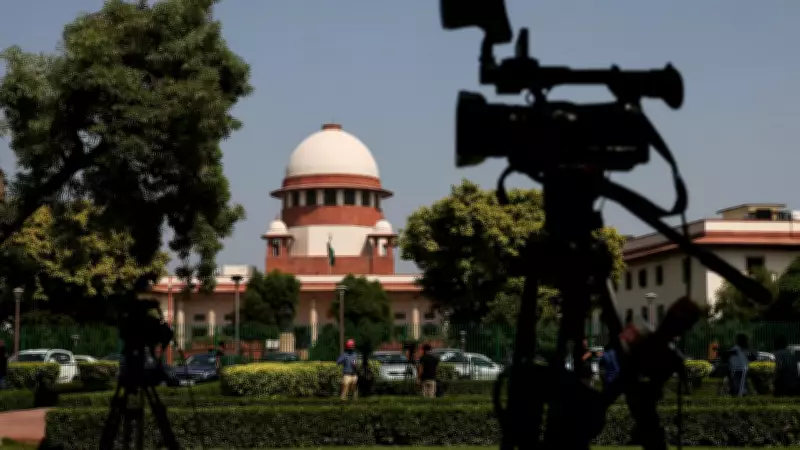
In a landmark decision that will benefit hundreds of women short service commission officers across India's armed forces, the Supreme Court has delivered a powerful verdict addressing historical injustice. On Tuesday, a constitutional bench declared that arbitrariness in the assessment of their Annual Confidential Reports, written during a period when they were ineligible for permanent commission, resulted in their unfair denial of career progression opportunities.
Systemic Framework Rooted in Discriminatory Assumptions
The bench, comprising Chief Justice Surya Kant and Justices Ujjal Bhuyan and N K Singh, delivered a scathing indictment of the assessment process. "ACRs of appellant-SSCWOs were authored with the assumption that they would never undergo any substantive career progression, owing to their ineligibility for PC for the initial 10 years of service," the court observed in its detailed judgment.
Writing separate judgments for women short service commission officers in the Army, Navy, and Indian Air Force, Chief Justice Kant elaborated on the systemic nature of the discrimination. "Since the avenue for PC was opened to them much later, this presumption undermined the entire assessment of their 'suitability' for any career progression undertaken prior to that and, thus, adversely affected their overall merit in the consideration for PC."

The court made a crucial distinction between individual assessment failures and institutional bias. "We find that denial of PC to WSSCOs was not merely the outcome of individual assessments, but the consequence of a systemic framework rooted in assumptions that entrenched disadvantages in career progression."
Extraordinary Constitutional Powers Invoked for Justice
Invoking its extraordinary powers under Article 142 of the Constitution, the Supreme Court delivered specific relief measures. The women short service commission officers who have approached the apex court and who have been released from service during the pendency of litigation "shall be deemed to have completed substantive qualifying service of 20 years and shall be entitled to pension and all consequential benefits, except arrears of pay, on the basis that they have completed such minimum service."
The court specified that "the pension shall be fixed on the basis of the date of completion of deemed service of 20 years, but arrears thereof, if any, shall be paid to the WSSCOs only with effect from Jan 1, 2025." This timeline provides both immediate relief and structured implementation.
Specific Exclusions and Continuing Service Provisions
The bench made important distinctions regarding eligibility, excluding women short service commission officers in Judge Advocate General and Army Engineering Corps from this particular benefit. The court noted these officers were eligible for permanent commission since 2010, establishing a different timeline for their career progression opportunities.
For officers currently serving, the court issued specific directives. "All WSSCOs who are continuing in service by virtue of SC orders dated May 9 and May 19 last year, and who have fulfilled the minimum cut-off grade of 60% in the regular selection boards held in 2020 and 2021, shall be entitled to permanent commission, subject to their meeting the medical criteria and on receiving disciplinary and vigilance clearance."
Historical Context and Legal Validation
This judgment comes six years after the landmark decision making women short service commission officers eligible for permanent commission. The court's ruling validates the arguments presented by amicus curiae and senior advocate Rekha Palli, whose submissions were accepted in their majority by the bench.
The decision represents a significant step toward gender equity in India's armed forces, addressing not just individual cases of discrimination but systemic barriers that have prevented women officers from achieving career progression commensurate with their service and capabilities.