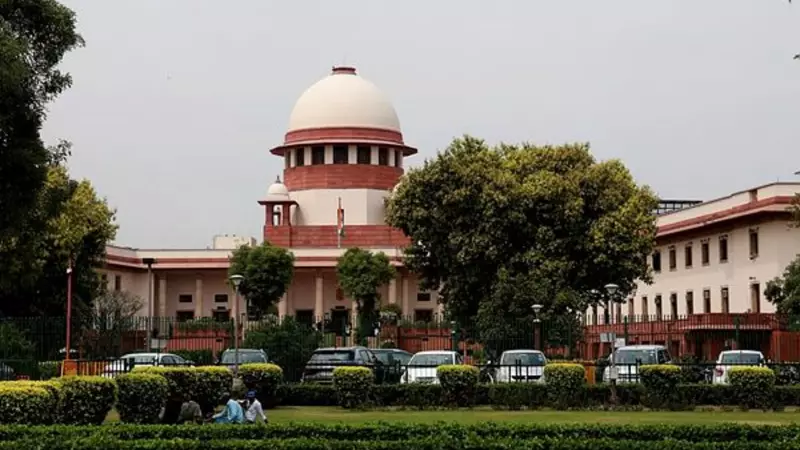
Supreme Court Declines to Intervene in Mahakaleshwar Temple VIP Darshan Case
In a significant ruling, the Supreme Court of India has declined to entertain an appeal challenging the practice of VIP darshan at the revered Mahakaleshwar Temple in Ujjain, Madhya Pradesh. The court emphasized that "in the presence of Mahakal, nobody is VIP", but clarified that it is not the judiciary's role to decide temple entry policies.
Court's Stance on Judicial Intervention in Religious Matters
A three-judge bench, presided by Chief Justice of India Surya Kant and comprising Justices R Mahadevan and Joymalya Bagchi, was hearing an appeal against the Madhya Pradesh High Court's dismissal of a petition. The petition contested the special access granted to VIPs to enter the garbhagriha (sanctum sanctorum) of the temple.
CJI Surya Kant expressed strong reservations about judicial overreach in such matters. He stated, "Whether it should be allowed or not is not something the courts should decide... If the courts start regulating who should be allowed to enter the temple and who should not, it will be too much for the courts also."
Petitioner's Arguments and Court's Response
Appearing for the appellant, Advocate Vishnu Shankar Jain argued that an RTI inquiry revealed only VIPs were permitted entry to the garbhagriha. He contended this violated Article 14 of the Constitution, which guarantees equality before the law, and called for a uniform policy for all devotees.
However, the bench was unimpressed. CJI Surya Kant remarked, "A person who files this kind of petition is not a shradhalu (devotee). They don't go there. We don't want to comment further. These people go for different purposes." He added that if arguments about fundamental rights were to be raised extensively, "they better don't go."
Disposal of the Plea and Future Course
The Supreme Court disposed of the plea, permitting the petitioner to withdraw it. The court's order stated that the petitioner is at liberty to give suggestions or recommendations to the competent authority. This directs the matter back to the temple administration or relevant governmental bodies rather than the judiciary.
This decision underscores the court's reluctance to intervene in religious practices, highlighting the delicate balance between constitutional rights and traditional customs in India's diverse spiritual landscape.