Supreme Court Condemns Telangana High Court's 'Unjust' Dismissal of SARFAESI Petition
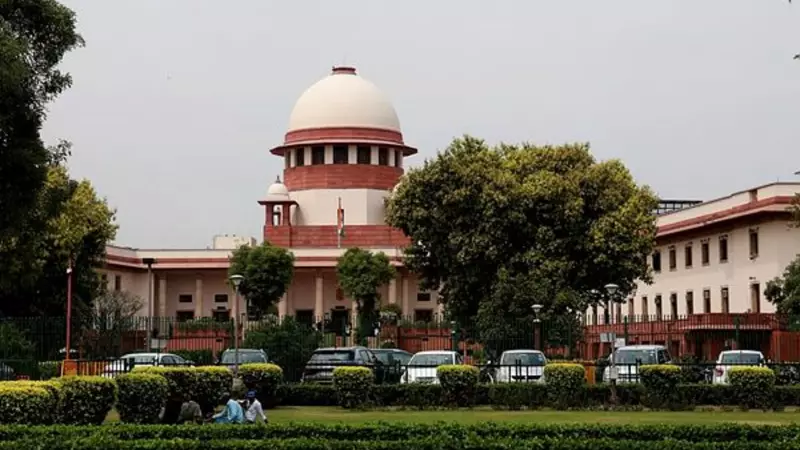
The Supreme Court of India has delivered a scathing rebuke to the Telangana High Court, labeling its decision to dismiss a petition under the SARFAESI Act as "unjust" and "unprecedented." In a landmark ruling, the apex court emphasized that technical objections should not override substantive justice, particularly in cases alleging fraud and collusion.
Background of the Case
The controversy stems from a writ petition filed in the Telangana High Court, arising from the Securitisation and Reconstruction of Financial Assets and Enforcement of Security Interest (SARFAESI) Act, 2002. The petitioners alleged that an advocate, appointed as a commissioner under Section 14 of the Act, had taken possession of a secured asset in a fraudulent manner, colluding with the secured creditor and violating statutory provisions.
However, the High Court Registry raised objections to the petition, including:

- The claim of multiple reliefs in a single prayer.
- Questions about why specific parties were listed as respondents.
A division bench of the Telangana High Court upheld these objections and dismissed the petition on July 2, 2025, prompting an appeal to the Supreme Court.
Supreme Court's Stinging Observations
On January 23, 2026, a bench comprising Justices Dipankar Datta and S.C. Sharma heard the appeal and issued a strongly worded judgment. The Supreme Court highlighted several critical points:
First, the court noted that while dismissing a writ petition at the threshold is permissible on grounds of maintainability, rejecting it solely because multiple reliefs were claimed in a single prayer is "perhaps, unprecedented." The bench argued that if the High Court found the prayer clause defective, it could have allowed the petitioner to amend it or even molded the relief without insisting on technical corrections.
Second, the Supreme Court took exception to the Registry's interference in judicial matters. It stated, "Registry cannot make inroads into areas within the exclusive domain of the judiciary and seek clarification as to why a particular party has been joined as a respondent." The court reiterated that the appellant, as dominus litis (master of the suit), has the right to decide which parties to include. Unnecessary parties could be deleted under established legal principles, such as Order I Rule 10 of the Civil Procedure Code.
Broader Legal Principles Affirmed
In its ruling, the Supreme Court reaffirmed key legal doctrines. It emphasized that when a suitor claims a larger relief than entitled, the court should not dismiss the claim outright. Instead, if a lesser relief is justified, it can be granted. This approach ensures that technicalities do not obstruct justice, especially in cases involving serious allegations like fraud.
The court expressed dismay at the High Court's actions, stating, "We are pained to observe that there has been an abandonment of its judicial role by the high court." By overruling the Registry's objections and setting aside the High Court order, the Supreme Court underscored the importance of judicial diligence and the need to examine cases on their merits rather than procedural flaws.
Implications for the Judiciary
This ruling serves as a significant reminder to lower courts and their registries about the boundaries of their roles. It stresses that:
- Technical objections should not be used to dismiss petitions without considering substantive issues.
- Registries must avoid encroaching into judicial decision-making.
- Courts have a duty to facilitate justice, including allowing amendments or molding reliefs when necessary.
The decision is expected to influence future cases under the SARFAESI Act and other legal matters, promoting a more equitable approach to petition handling across India's judicial system.