Putin Aide Taunts Europe, Foresees Return as Leaders Mull Fresh Russia Talks
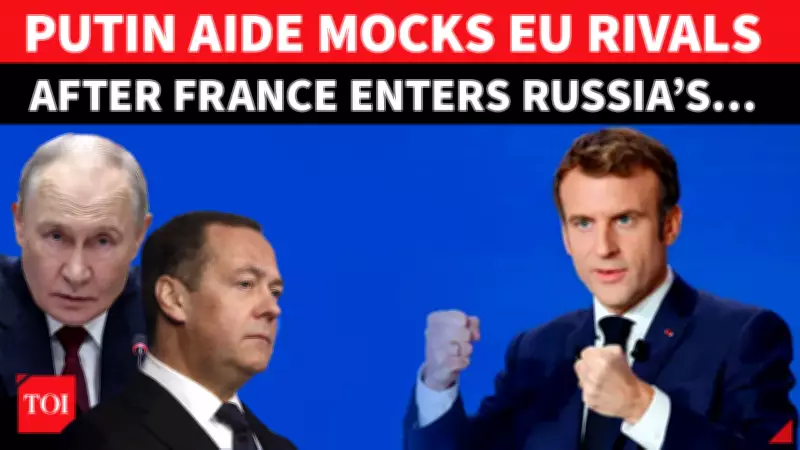
In a sharp escalation of tensions between Moscow and European capitals, Russian Security Council Deputy Secretary Dmitry Medvedev has issued a mocking prediction that nations currently condemning Russia will inevitably come back with proposals for renewed cooperation. His provocative remarks coincide with a growing debate among European leaders, including French President Emmanuel Macron, who are exploring the possibility of reopening diplomatic engagement with Moscow despite ongoing sanctions and deep divisions within the European Union.
Medvedev's Defiant Prediction and European Divisions
Dmitry Medvedev, a close ally of President Vladimir Putin and former Russian president, asserted confidently that European countries will eventually reverse their stance and seek to re-engage with Russia. "They will come back," Medvedev declared, highlighting what he sees as the unavoidable necessity for Europe to address its security framework with Moscow. This statement comes at a time when the EU is grappling with internal disagreements over its long-term strategy towards Russia, with some member states advocating for a more pragmatic approach while others insist on maintaining a hardline stance.
Meanwhile, French President Emmanuel Macron has been vocal about the need for Europe to reconsider its diplomatic posture. Macron has argued that geography is immutable and that Europe must eventually find a way to coexist and cooperate with Russia to ensure regional stability. His position reflects a broader sentiment among certain European leaders who believe that isolation and sanctions alone may not yield the desired outcomes in the long run.

Context of Escalating Tensions and Diplomatic Maneuvers
The backdrop to these developments is a period of heightened tensions, marked by ongoing conflicts and geopolitical rivalries. While Medvedev's comments are seen as a taunt aimed at undermining European unity, they also underscore the complex dynamics at play as some Western nations weigh the costs and benefits of re-engaging with Moscow. The European Union's sanctions regime remains in place, but cracks are appearing as leaders like Macron push for dialogue, arguing that a purely confrontational approach may be unsustainable.
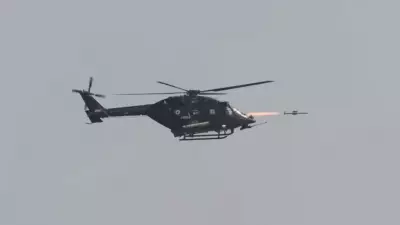
This situation is further complicated by recent events, such as Russian air attacks in Ukraine and failures in NATO-US air defenses, which have raised questions about the effectiveness of current strategies. As Europe navigates these challenges, the debate over whether to reopen talks with Russia is becoming increasingly polarized, with Medvedev's prediction adding fuel to the fire by suggesting that European nations will have no choice but to return to the negotiating table.
Key Points in the Evolving Russia-Europe Standoff:- Dmitry Medvedev mocks Europe, predicting a return to cooperation proposals.
- Emmanuel Macron advocates for renewed diplomatic engagement with Russia.
- Divisions within the EU over long-term strategy towards Moscow are deepening.
- Ongoing sanctions and geopolitical tensions complicate the path forward.
- Recent military actions and defense failures highlight the urgency of the situation.
As the world watches, the interplay between Medvedev's confident assertions and Macron's diplomatic overtures sets the stage for a critical period in Russia-Europe relations. The outcome of this debate could reshape the security landscape of the continent, making it a pivotal moment for leaders on both sides to navigate with caution and foresight.