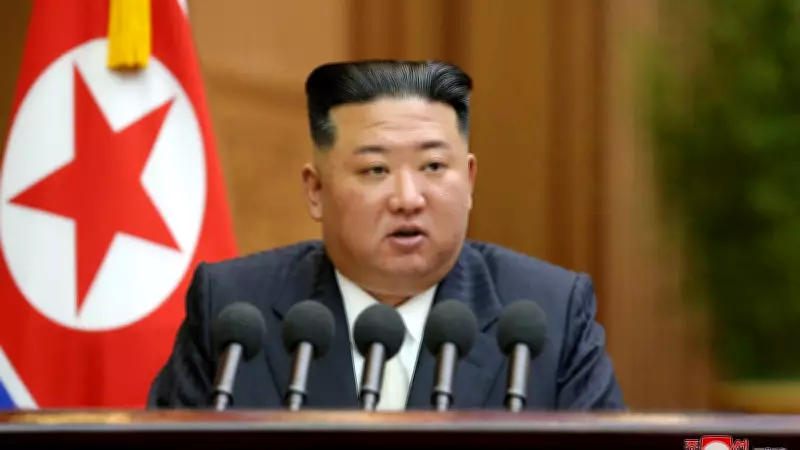
North Korea's Ninth Workers' Party Congress: A Pivotal Political Gathering
North Korea is anticipated to convene the Ninth Congress of its ruling Workers' Party this month, marking a significant political event that could shape the nation's trajectory for years to come. This congress, a rare and highly orchestrated assembly, serves as a platform for the regime to outline strategic priorities, reinforce ideological unity, and project strength both domestically and internationally. With global attention fixed on Pyongyang, several key themes are expected to dominate the proceedings, offering insights into the country's future direction under the leadership of Kim Jong Un.
Timing and the Role of the Congress
The timing of the Ninth Congress is crucial, as it follows a period of heightened geopolitical tensions and economic challenges. Historically, such congresses are infrequent—the previous one was held over a decade ago—making this event a milestone in North Korean politics. The congress primarily functions to set the party's agenda, approve major policies, and showcase the leadership's authority. It is a carefully staged spectacle designed to demonstrate control and legitimacy, often featuring lengthy speeches, mass rallies, and symbolic gestures that reinforce the regime's narrative of resilience and self-reliance.
New Five-Year Plan and Economic Priorities
A central focus of the congress will likely be the announcement of a new five-year economic plan. This plan is expected to address North Korea's ongoing struggles with sanctions, food shortages, and industrial stagnation. Analysts predict it may emphasize self-sufficiency, technological advancement, and infrastructure projects, albeit within the constraints of the country's isolated economy. The details revealed could signal whether the regime is leaning toward modest reforms or doubling down on its traditional juche ideology, which prioritizes independence from foreign influence.

Weapons Buildup and Military Strategy
Another critical theme will be the country's weapons buildup, particularly its nuclear and missile programs. In recent years, North Korea has accelerated its military advancements, conducting numerous tests that have alarmed neighboring nations and the international community. The congress may feature bold declarations about enhancing defense capabilities, possibly including new missile technologies or strategic deployments. This focus underscores the regime's commitment to maintaining a strong deterrent against perceived external threats, while also rallying domestic support through nationalist rhetoric.
Leadership Signals and Succession Speculation
The congress will offer key signals about leadership dynamics within North Korea. Observers will closely watch for any indications regarding Kim Jong Un's health, political standing, or potential succession plans. While the regime maintains a tight lid on internal politics, subtle cues—such as the prominence of other officials or changes in rhetoric—could hint at future shifts. Succession speculation remains a topic of intense interest, though the congress is more likely to reinforce Kim's unchallenged authority rather than reveal concrete plans for a transition.
International Relations: Russia, US, South Korea, and China
International relations will be a major theme, with particular attention on North Korea's ties with Russia, the United States, South Korea, and China. The congress may address the deepening partnership with Russia, which has provided diplomatic support and possibly economic aid amid global isolation. Relations with the US and South Korea are expected to be framed in adversarial terms, highlighting ongoing tensions and the need for military preparedness. Meanwhile, interactions with China, North Korea's primary ally, will be scrutinized for signs of alignment or divergence on issues like sanctions and regional stability. These discussions will reflect the regime's balancing act in navigating a complex geopolitical landscape.

In summary, the Ninth Workers' Party Congress is set to be a multifaceted event that encapsulates North Korea's political, economic, and military ambitions. By monitoring these themes, analysts hope to gain a clearer understanding of the regime's priorities and the potential implications for regional and global security. As the world watches, the congress will likely reaffirm North Korea's commitment to its unique path, blending ideological rigidity with strategic pragmatism in the face of mounting challenges.