North Korea's Kim Jong Un Oversees High-Thrust Solid-Fuel Rocket Engine Test
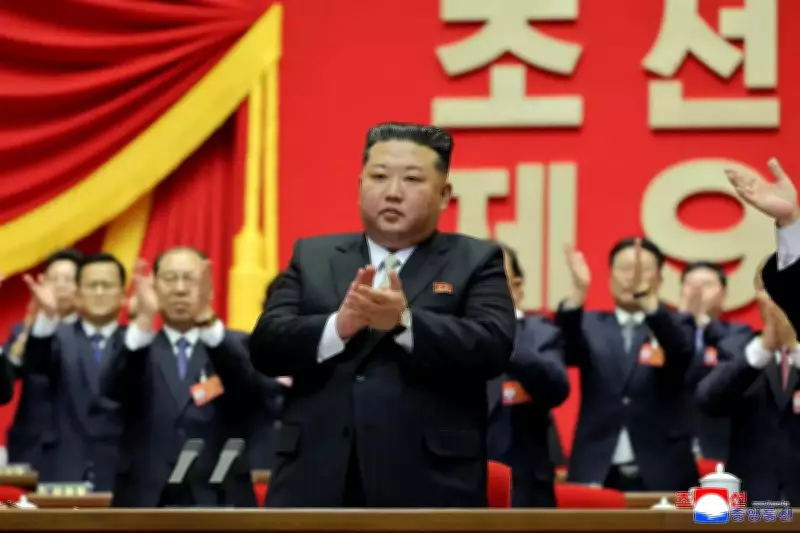
North Korean leader Kim Jong Un personally supervised a ground test of an upgraded solid-fuel rocket engine, as reported by state media on Sunday. This event underscores the nation's persistent efforts to enhance its military capabilities and advance its weapons development program.
Details of the Engine Test
The Korean Central News Agency (KCNA) stated that this test is a component of a new five-year national defence strategy. Photographs released by KCNA depicted Kim inspecting engine components with officials and captured the dramatic moment of flames erupting from the ground-mounted engine during the trial.
Solid-fuel engines are critically important for missile technology because they enable rapid deployment with minimal preparation time, offering a strategic advantage in military operations.

According to KCNA, the latest engine, constructed from composite carbon fibre, generated an impressive thrust of 2,500 kilonewtons. This marks the first confirmed high-thrust solid-fuel engine test since September of the previous year, when a similar engine produced a lower thrust of 1,971 kilonewtons.
Kim Jong Un's Statements and Strategic Implications
Kim Jong Un emphasized that the development of high-thrust engines aligns with the national strategy and meets the military demand for modernizing strategic forces. He declared that the country's defence capabilities have entered a significant phase of transformation as it strengthens its strategic forces.
Analysts interpret this development as indicative of North Korea's broader ambitions. Hong Min from the Korea Institute for National Unification explained to AFP that the test demonstrates North Korea's resolve to acquire missiles capable of striking targets around the globe. The increased thrust suggests an objective to build missiles with global range and the capability to overcome defence systems.
Potential Applications and Future Developments
Hong Min further speculated that North Korea might be planning to utilize such engines in intercontinental ballistic missiles (ICBMs) currently under development. Given the increased maximum thrust, this indicates its intention to possess ICBMs with global strike range, as well as the ability to overwhelm missile defence systems, he noted.
This test represents a notable advancement in North Korea's missile technology, potentially enhancing the speed, range, and reliability of its arsenal. The focus on solid-fuel technology could lead to more mobile and harder-to-detect missile systems, posing new challenges for regional and global security.
The international community will likely monitor these developments closely, as they have implications for diplomatic relations and security dynamics in Asia and beyond. North Korea's continued investment in advanced weaponry underscores its commitment to military modernization despite economic challenges and international sanctions.