Mammoth Cave: The Ever-Expanding World Record Holder
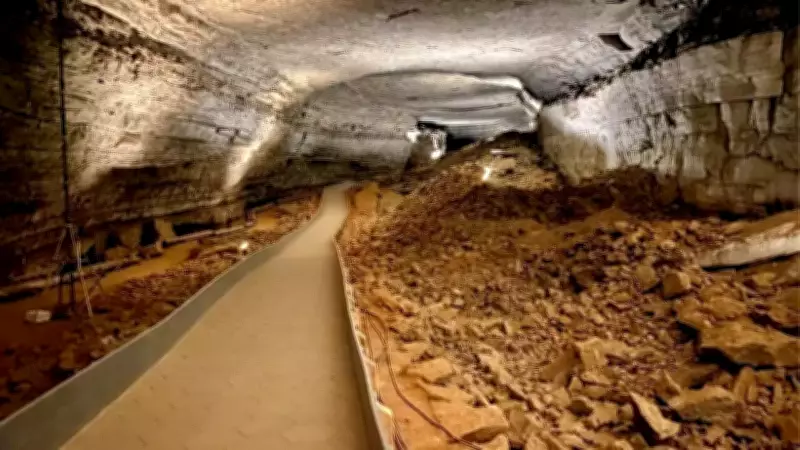
The Mammoth Cave, nestled beneath the rolling hills of Kentucky, stands as the longest cave system on Earth, with an officially surveyed length of 426 miles (686 kilometres) according to the U.S. National Park Service. This monumental underground labyrinth is not static; each year, through relentless mapping expeditions, new miles are added to this seemingly 'endless' network. Designated as a UNESCO World Heritage Site, Mammoth Cave serves as a profound time capsule for our planet, preserving ancient geological and biological wonders.
A Geological Marvel Carved Over Millennia
The cave passages are intricately carved into 330-million-year-old Mississippian limestone, with their formation and evolution spanning an astonishing 10 to 12 million years. The 426-mile distance represents only the beginning of its vastness. Experts estimate that there are approximately another 600 miles of undiscovered cave systems hidden within the dark limestone bedrock, suggesting that the full extent of Mammoth Cave remains largely uncharted.
How Mammoth Cave Earned Its Title
The recognition of Mammoth Cave as the longest cave on Earth, with 426 miles of documented routes, is the result of over 70 years of continuous exploration. This effort has been spearheaded by the Cave Research Foundation (CRF) in partnership with the National Park Service. A pivotal milestone occurred in 1972 when explorers discovered a critical link between the Flint Ridge system and Mammoth Cave, instantly connecting 144 miles of passages and significantly boosting the total surveyed length.

Despite this record-setting achievement, scientists remain confident that around 600 additional miles of unexplored caves lie waiting in the limestone beds, promising future discoveries that could further extend its lead.
Unique Ecosystem Thriving in Darkness
Beyond its sheer size, Mammoth Cave harbors a remarkable and diverse ecosystem. Over 130 species call this dark environment home, including 42 troglobite species that have uniquely adapted to life in total darkness. Among these are the Northern Cavefish (Amblyopsis spelaea) and eyeless, translucent crayfish, which hunt effectively by sensing vibrations rather than relying on sight.
According to the U.S. Geological Survey, cave crickets play a keystone role in this subterranean food web. These crickets venture out at night to feed, returning to fertilize the cave floor with their guano, thereby providing essential nutrients for the blind creatures residing deeper within the cave.
Structural Integrity: Why Mammoth Cave Stands Strong
A common fate for many caves is collapse as they expand, but Mammoth Cave defies this trend due to its unique geological structure. The cave has been shaped by a thick sequence of Mississippian limestone, which dissolves rapidly when exposed to acidic water. However, it is protected by a robust roof of Big Clifty Sandstone. This hard caprock acts like a natural umbrella, shielding the limestone passages below from surface erosion for over 3 million years, ensuring the cave's stability and preservation.
In summary, Mammoth Cave is not just a record-holder in length but a dynamic, living museum of natural history. Its ongoing exploration reveals new passages, while its ancient limestone and specialized wildlife offer invaluable insights into Earth's past and the resilience of life in extreme conditions.