Iran's Revolutionary Guard Delivers Blunt Warning to Trump as Hormuz Blockade Commences
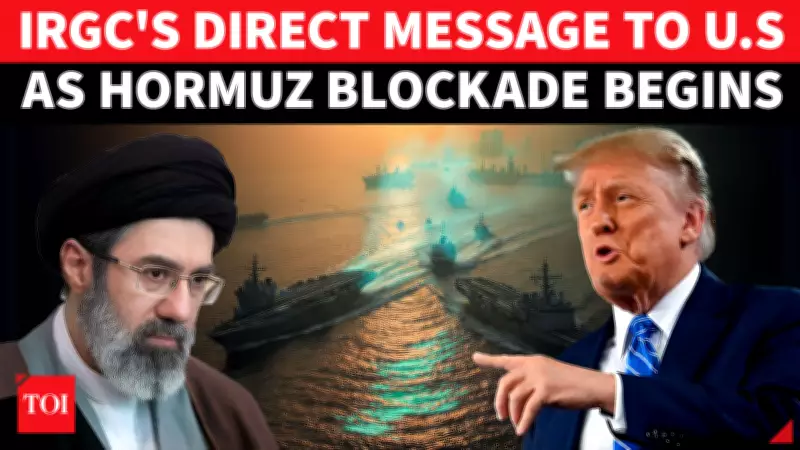
In a dramatic escalation of Middle East tensions, Iran's Islamic Revolutionary Guard Corps (IRGC) has issued a stark five-word warning to former US President Donald Trump as Tehran begins implementing a blockade in the strategic Strait of Hormuz. The warning comes amid heightened military posturing and diplomatic confrontations that threaten to destabilize the entire region.
Quds Force Chief Warns of American Withdrawal 'Without Achievements'
Esmail Qaani, the commander of Iran's elite Quds Force, delivered a forceful statement asserting that American and Israeli military forces will ultimately be compelled to withdraw from the Middle East "without any achievements." This declaration represents a significant intensification of Iran's rhetorical campaign against the United States and its regional allies.
Qaani emphasized that what he termed the "integrated front of resistance" remains fully operational and prepared for potential confrontation across multiple theaters. He specifically referenced previous conflicts in Yemen and the Red Sea, arguing that external powers have consistently failed to secure lasting outcomes through military intervention in the region.

Trump's Response: Shipping Restrictions and Military Posturing
The Iranian warnings coincide with Donald Trump's advancement of plans to restrict Iranian-linked shipping through the Strait of Hormuz. This strategic waterway, through which approximately one-fifth of the world's oil passes, has become the focal point of escalating tensions between Tehran and Washington.
Trump's approach represents a broader effort to counter what US officials describe as Iran's growing leverage over this critical maritime chokepoint. The former president has reportedly rejected further diplomatic talks with Iran, asserting American dominance in the region while simultaneously deploying additional naval assets to the area.
Regional Implications and Historical Context
The current standoff represents the latest chapter in decades of tension between Iran and the United States, with the Strait of Hormuz repeatedly serving as a flashpoint. Iran's ability to potentially disrupt shipping through this narrow passage gives Tehran significant strategic leverage, which it has increasingly employed amid deteriorating relations with Western powers.
Key developments in the current crisis include:
- Iran's explicit warning that the Strait of Hormuz is "non-negotiable" territory
- Trump's deployment of two destroyers to the region as a show of force
- The failure of recent diplomatic talks in Islamabad between US and Iranian representatives
- Continued military activity by Iranian proxy forces across the Middle East
Broader Strategic Calculations
Analysts suggest that Iran's increasingly confrontational stance reflects several strategic calculations. First, Tehran appears to be testing the resolve of the US administration during a period of political transition. Second, the Iranian leadership may be seeking to strengthen its negotiating position ahead of potential future talks. Third, the warnings serve domestic political purposes by demonstrating strength to Iranian citizens amid economic challenges.
The situation remains fluid and potentially dangerous, with both sides demonstrating limited willingness to compromise. As military assets concentrate in the Persian Gulf region and rhetoric intensifies on both sides, the risk of miscalculation or accidental escalation continues to grow.
International observers are closely monitoring developments, concerned that any significant military confrontation in the Strait of Hormuz could have devastating consequences for global energy markets and regional stability. The coming weeks will likely prove decisive in determining whether diplomatic channels can be reopened or whether the region will slide further toward open conflict.