Jharkhand High Court Intervenes in Seven-Year Search for Missing Tribal Girl
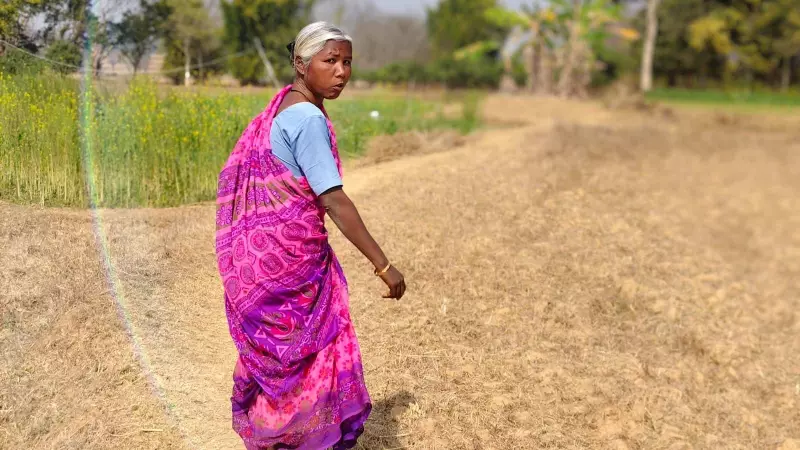
The Jharkhand High Court has taken strong exception to what it termed an "unacceptable" delay in the investigation into the disappearance of a tribal girl from Gumla district, directing police to submit a detailed status report within two weeks. This development comes on a habeas corpus petition filed by Chandramuni Urain, an Oraon tribal woman who has been searching for her daughter for seven long years.
A Mother's Unwavering Hope Amidst Systemic Neglect
Chandramuni Urain, approximately 50 years old and barely literate, lost her husband Chandra Kujur about 24 years ago when he died in a work accident in Himachal Pradesh. Since then, her life has revolved around her two children. In 2018, her world shattered when her 15-year-old daughter went to a local bhaktain (religious teacher) and never returned.
"My heart says she is alive somewhere," Chandramuni declares, expressing the torment of not knowing whether her now 22-year-old daughter has been trafficked, forced into exploitation, or met some other fate. She blames the elderly bhaktain for her daughter's disappearance, though police investigations have found no concrete evidence linking the woman to trafficking.

Legal Battle Against Institutional Apathy
Chandramuni's journey to justice has been marked by systemic barriers that plague marginalized communities. Despite repeated attempts to file an FIR immediately after her daughter's disappearance, police only registered her complaint on February 6, 2020 - nearly two years later. The FIR recorded her allegation that her daughter was taken away "on the pretext of assisting in religious work and later sold."
The case was registered under multiple IPC sections related to kidnapping, trafficking, and wrongful confinement, along with provisions of the Bonded Labour Act and Anti-Human Trafficking Unit sections. Yet, according to Chandramuni's lawyer Shailesh Poddar, meaningful investigation only began after she approached the High Court in September last year on an activist's advice.
High Court's Stern Rebuke and Broader Mandate
A Division Bench of Justices Sujit Narayan Prasad and Arun Kumar Rai expressed strong displeasure at the investigation's progress, questioning why a Special Investigation Team (SIT) was constituted only when the habeas corpus petition was being filed. "There is no explanation by police as to why sincere efforts were not taken immediately after the FIR," the Bench observed, asking how authorities could remain "so unconcerned" in a case involving a missing minor girl.
The court directed Gumla Superintendent of Police Haris Bin Zaman to explain what action had been taken against the officer-in-charge of the police station where the FIR was registered. Zaman, who assumed charge only in May 2025, informed the court that he had constituted a new SIT, noting that three earlier SITs since 2023 had failed to find the victim though they recovered nine other missing children.
Challenges in Tribal Region Investigations
SP Zaman highlighted the unique difficulties in tracing missing cases in tribal regions like Gumla. "Incidents are often reported late and families frequently lack basic documents such as Aadhaar cards, mobile numbers or bank records," he explained. "Because of poverty, lack of education and limited awareness, families are unable to provide detailed information."
Gumla is among Jharkhand's worst-affected districts for child kidnapping and trafficking. During hearings, the state counsel submitted that a trafficking racket had been detected and investigations were underway to uncover the larger conspiracy.
Broader Policy Implications
The High Court has asked the Jharkhand government to initiate a broader policy framework on migrant workers, using Chandramuni's case as a reference point. The court rejected the government's plea for two months to submit a policy roadmap, directing them to do so within 30 days instead.

This case underscores the immense challenges marginalized communities face in accessing legal help. As lawyer Shailesh Poddar notes, "The FIR clearly mentions how long it took for Chandramuni to even lodge a complaint."
A Mother's Resilience and Future Plans
Chandramuni, who says her village has almost ostracized her due to her claims about the bhaktain, maintains a small livelihood through paddy cultivation on her land and four-five cows. She receives Rs 1,000 monthly as widow pension and ration support, and got a new house under the Pradhan Mantri Awas Yojana.
Remarkably, with a Bharatmala highway project set to pass through her field, she expects to receive compensation. After that, Chandramuni says she will "move away" somewhere far - a testament to both her resilience and the social isolation she has endured during her seven-year search for justice and her missing daughter.