Allahabad High Court Demands Explanation from UP Government Over Mosque Sealing
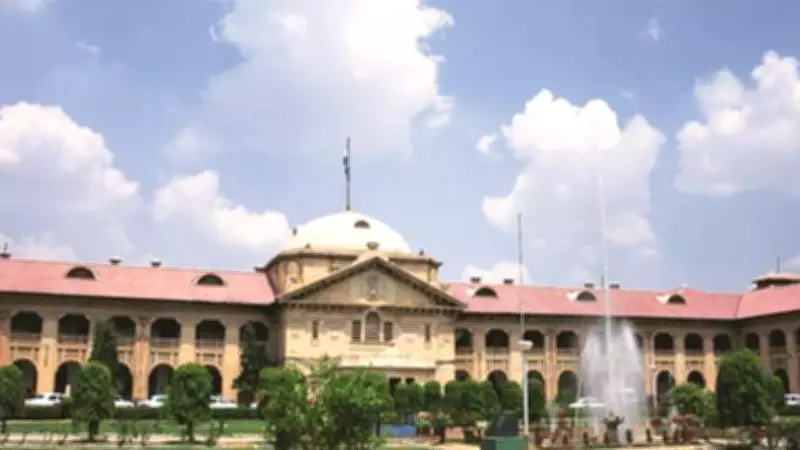
The Allahabad High Court has issued a significant directive to the Uttar Pradesh government, questioning its authority to seal a place of worship without providing any prior notice or opportunity for a hearing to the property owners. This development comes in response to a writ petition filed by a resident of Muzaffarnagar, highlighting concerns over procedural fairness in property disputes involving religious structures.
Court's Inquiry into Legal Authority
A division bench comprising Justice Atul Sreedharan and Justice Siddharth Nandan presided over the case, which was initiated by Ahsan Ali, a Muzaffarnagar resident. Ali had approached the court challenging the sealing of a mosque constructed on his land. In its order dated March 18, the high court explicitly asked the state government to clarify under what legal provision it can seal a place of worship that is under construction without issuing prior notice or allowing the petitioner a chance to be heard.
The bench posed a critical question to the state authorities: "Is there any authority under law to seal a place of worship under construction without issuance of prior notice or providing an opportunity of hearing to the petitioner?" This inquiry underscores the court's focus on ensuring that administrative actions comply with legal standards and respect property rights.

Background of the Case and Petitioner's Claims
Ahsan Ali, the petitioner, asserts that he is the lawful owner of a plot of land in a village within Muzaffarnagar district. He acquired the land in 2019 through a registered sale deed from a local resident named Praveen Kumar Jain. According to Ali, he began constructing a boundary around the mosque on his property, after which the authorities sealed the structure. The sealing action was justified by the authorities on the grounds that the construction was illegal and that no prior permission had been obtained.
Ali's legal counsel emphasized that no notice or opportunity for a hearing was provided to him before the premises were sealed. This lack of procedural adherence forms the core of the petitioner's grievance, as it potentially violates principles of natural justice and due process.
Court's Directive and Future Proceedings
In response to the petition, the Allahabad High Court has instructed the Uttar Pradesh government to obtain specific instructions supported by an affidavit and present them before the court on the next date of hearing. This directive aims to ensure that the state's actions are thoroughly scrutinized and that any legal justifications are clearly documented.
Additionally, the court raised another pertinent question regarding whether property owners need permission from the state to carry out construction within a place of worship on their land. This aspect of the inquiry could have broader implications for property rights and religious freedom in the state, as it touches on the intersection of land use regulations and the autonomy of religious institutions.
Implications and Broader Context
This case highlights ongoing tensions between property rights and governmental authority in Uttar Pradesh, particularly in matters involving religious structures. The high court's intervention reflects a judicial commitment to upholding legal procedures and protecting individuals from arbitrary administrative actions.
The outcome of this case could set a precedent for how similar disputes are handled in the future, emphasizing the importance of due process and transparency in property-related decisions. As the state government prepares its response, stakeholders will be closely watching for clarifications on the legal frameworks governing such sealings and the rights of property owners in religious contexts.
The next hearing is awaited, where the court will review the state's affidavit and further deliberate on the matter, potentially shaping policies and practices around property and worship rights in Uttar Pradesh.