Travancore Devaswom Board Invokes Ram Mandir Verdict in Supreme Court
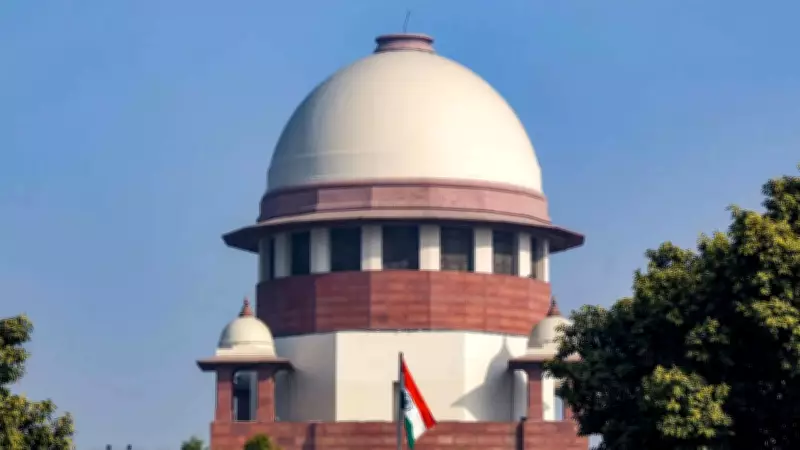
In a significant legal argument before the Supreme Court of India, the Travancore Devaswom Board has invoked the landmark 2019 Ram Janmabhoomi judgment to assert that the fundamental rights of an individual must yield to the centuries-old beliefs and faith of a religious denomination. The submission was made on Wednesday before a nine-judge bench headed by Chief Justice Surya Kant.
Faith Over Individual Rights: The Core Argument
Senior advocate Abhishek Manu Singhvi, representing the Board, argued in near alignment with Solicitor General Tushar Mehta's position for the Central government. Singhvi emphasized that the judicial assessment of any religious custom's validity should be strictly limited to considerations of public order, health, and morality. He stated that the beliefs and practices of a community must be evaluated based on the subjective faith of that community itself.
"The court is bound to accept the belief of the community, and it is not for the court to sit in judgment on that belief," Singhvi told the bench, which included Justices M M Sundresh, B V Nagarathna, Ahsanuddin Amanullah, Aravind Kumar, A G Masih, P B Varale, R Mahadevan, and Joymalya Bagchi.

Direct Reference to the Ayodhya Verdict
Singhvi directly quoted from the unanimous 2019 Ram Janmabhoomi judgment delivered by a five-judge Constitution bench led by then Chief Justice Ranjan Gogoi. The ruling had endorsed the Hindu belief that the disputed site in Ayodhya was the birthplace of Lord Ram.
The senior advocate cautioned against selective judicial interpretation of religious texts, reiterating the 2019 verdict's statement: "We must firmly reject any attempt to lead the court to interpret religious doctrine in an absolute and extreme form and question the faith of worshippers. Nothing would be as destructive of the values underlying Article 25 of the Constitution."
Article 25 and the Clash of Rights
The argument centered on a potential conflict within Article 25 of the Constitution, which guarantees the fundamental right to profess, practice, and propagate religion. Singhvi contended that an individual's exercise of this right cannot be permitted to extend into an area that intrudes upon the collective rights of the adherents of that religion.
The Board's position suggests a hierarchy where long-established, denominational faith structures hold precedence over individual interpretations or claims that might disrupt them. This legal stance seeks to shield community religious practices from being challenged in court based on individual assertions of rights.
The Supreme Court's deliberation on this matter is being closely watched, as it could set a crucial precedent regarding the balance between individual religious freedom and the integrity of collective religious faith and tradition in India.