PCMC's River Barriers Accused of Worsening Mula Pollution and Water Quality
The Hinjewadi gram panchayat has raised serious concerns in a formal letter to the Pimpri Chinchwad Municipal Corporation (PCMC) and irrigation department officials, alleging that floating barriers installed in the Mula River are trapping waste and sewage, thereby exacerbating river pollution and directly impacting drinking water quality for thousands of residents.
Barriers Obstruct Natural Flow and Accumulate Pollutants
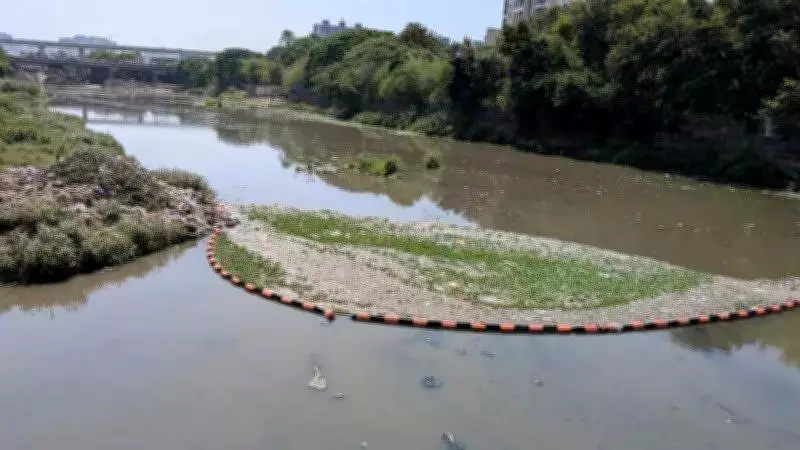
According to the gram panchayat's communication, iron cables with floating plastic blocks installed in the riverbed are holding waste, sewage, and vegetation in one place, obstructing the Mula's natural flow around the Wakad bridge area. While the river's flow had shown improvement following recent removal of construction debris, the barriers are now causing water lettuce and other pollutants to accumulate.
This accumulation has led to a dangerous drop in dissolved oxygen levels while simultaneously increasing overall water pollution in the critical waterway.

Direct Impact on Drinking Water for 17,000 Residents
The gram panchayat has flagged significant health concerns, stating that the contamination is directly affecting the drinking water supply to nearly 17,000 residents living in large townships throughout the Hinjewadi area. The Mula River serves as a key drinking water source for multiple townships in the Hinjewadi-Wakad belt, with many communities relying on river water that undergoes treatment before distribution.
In their letter, the gram panchayat has demanded:
- Immediate removal of floating barriers and other obstructions from the river's channel
- Urgent inspection of stretches near the Wakad bridge and Mhatoba temple STP
- Concrete steps to ensure that the natural flow of the Mula River is not blocked
Official Responses and Conflicting Perspectives
Irrigation department officials have indicated that PCMC could face regulatory action if the barriers were installed without proper permission. However, civic officials maintain that the barriers are part of their comprehensive river-cleaning strategy.
A senior PCMC official explained, "Floating barriers have been installed specifically to prevent hyacinth from entering our jurisdiction. We have appointed a dedicated agency to keep rivers within PCMC limits clean. If upstream areas do not remove the hyacinth, it will continue flowing downstream and negatively affect our stretch as well."
The official emphasized that each authority, including gram panchayats, must maintain the river sections within their respective jurisdictions. "We cannot remove hyacinth coming from upstream every single day," he added, highlighting the challenges of coordinated river management.
Resident Experiences and Water Quality Concerns
Local residents have reported significant water quality issues directly linked to the barriers. Anirudha Karandikar, a township resident, revealed that approximately 300 residents signed a collective letter and met with PCMC officials, only to be told that the barriers would not be removed. "We were advised to keep our side of the river clean and clear up the water lettuce ourselves," he stated.
Pratik Aagal, a resident of Mhalunge township, explained that his community draws water from the Mula and treats it through an in-house plant before supplying it to residents. "Even with treatment, the water is not 100% clean. The river's quality has deteriorated significantly due to water lettuce and pollution. We frequently encounter blood worms in the water, particularly in bathrooms and sometimes even in kitchen supplies," he reported.
Broader Hyacinth Problem Across Pune Waterbodies
The issue extends beyond the Mula River, with water hyacinth infestations plaguing multiple waterbodies across Pune. The Pune Municipal Corporation has missed its March deadline for weed removal despite deploying specialized machinery.
Pashan, Katraj, and Jambhulwadi lakes are all grappling with massive hyacinth infestations, resulting in swarms of mosquitoes, persistent unpleasant odors, and clear health hazards for nearby communities.

Vishrantwadi resident Pramod Shelke noted that hyacinth near Holkar Bridge has spread across several hundred meters of the river. In Keshavnagar, dense hyacinth in the Mula-Mutha river system breeds mosquitoes, while Hadapsar residents express concern about the weed-choked baby canal.
Local resident Anup Kale criticized what he called temporary fixes by municipal authorities, arguing that a scientific, long-term solution is urgently necessary to address the root causes of aquatic weed proliferation.
Ganesh Sonune, head of PMC's disaster management cell, responded to concerns by stating, "We have deployed specialized machines and expect to clear much of the hyacinth by April-end. We will coordinate closely with Khadki Cantonment Board authorities for work in the Holkar Bridge area."
The situation highlights the complex challenges of river management in urban areas, where well-intentioned interventions can sometimes create unintended environmental consequences affecting public health and water security.