Delhi Police Unveils Major Traffic Management Overhaul with Expanded Camera Network
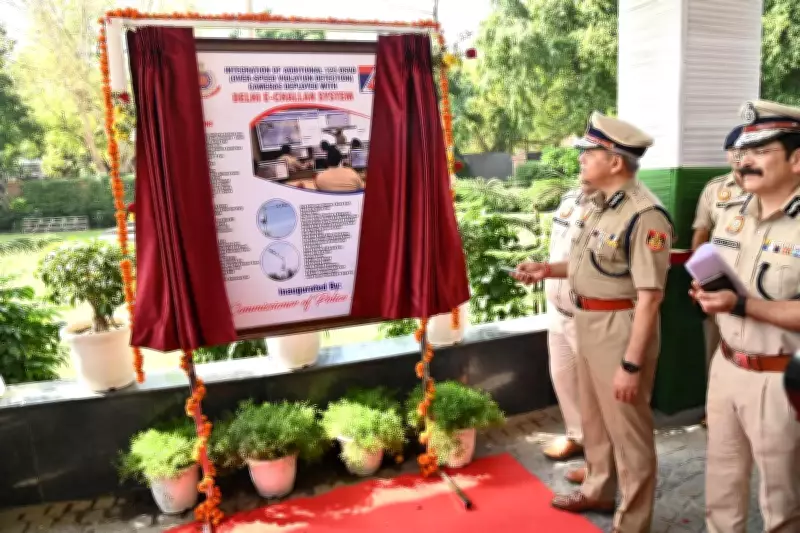
In a significant move to enhance road safety and enforcement capabilities, Delhi Police Commissioner Satish Golcha announced a comprehensive series of traffic management initiatives on Saturday. The centerpiece of this technological upgrade is the installation of 125 new Over-Speed Violation Detection (OSVD) cameras, extending automated surveillance to 76 additional critical road stretches across the national capital.
Expanding the Digital Enforcement Footprint
This substantial expansion builds upon the existing infrastructure of 125 cameras already monitoring 66 road stretches. Special Commissioner of Police (Traffic) Neeraj Thakur emphasized that this enhanced system will facilitate more objective, comprehensive, and effective detection of various traffic violations. The system is designed to identify overspeeding, lane indiscipline, and driving against the flow of traffic with greater precision, ultimately promoting better compliance and significantly improving overall road safety conditions.
"The upgraded camera network will cover all classes of vehicles without exception, including two-wheelers and three-wheelers," stated Thakur, highlighting the system's comprehensive approach to enforcement.

Addressing Rising Traffic Violations
The initiative comes at a crucial time, as police data reveals alarming increases in specific traffic offenses. Cases of driving against the flow of traffic surged from 99,669 in 2024 to 1,48,520 in 2025, representing a substantial jump. Similarly, incidents categorized as dangerous driving rose from 21,824 to 25,827 during the same period, underscoring the urgent need for enhanced monitoring and enforcement measures.
The operational mechanism of these cameras involves sophisticated technology that measures the time taken by vehicles to cross a fixed distance between two virtual lines. Vehicles exceeding prescribed speed limits are automatically flagged for verification at the central control room, where digital evidence is meticulously reviewed before any enforcement action is taken.
Modernizing Fine Payment Systems
Complementing the camera expansion is the imminent rollout of a fully upgraded e-challan system integrated with the Bharat Bill Payment System (BBPS). This integration will allow motorists to pay traffic fines instantly through major UPI applications, transforming what was often a cumbersome process into a seamless digital transaction.
Police officials explained that this modernization will make challan payments substantially more accessible, convenient, and transparent for the public. The system enables faster settlement of fines and provides better transaction tracking capabilities, reducing administrative bottlenecks and improving overall efficiency.
Aligning with SMART Policing Framework
These initiatives are strategically aligned with Delhi Police's SMART policing framework, which emphasizes technology-driven, faceless enforcement as a crucial strategy to curb traffic violations—a primary contributor to road accidents and fatalities in urban environments.
"With the expansion of our camera-based enforcement network, authorities will be significantly better equipped to monitor violations in real time at critical locations and accident-prone stretches," said Additional Commissioner of Police (Traffic) Vijayanta Goyal Arya.
The upgraded system incorporates several advanced technological features including high-resolution imaging capabilities, Automated Number Plate Recognition (ANPR) technology, and seamless integration with the e-challan platform. This integration ensures accurate identification of offending vehicles and enables prompt issuance of challans, creating a more responsive enforcement ecosystem.
Enhancing Traffic Flow Management
Beyond surveillance enhancements, Delhi Police have also inducted 76 new cranes to address congestion issues caused by unauthorized parking and vehicle breakdowns. A senior officer confirmed that this additional equipment will enable quicker removal of illegally parked and stranded vehicles, effectively easing bottlenecks and improving traffic flow across various parts of the city.

Engaging Traffic Personnel
Following the formal launch of these initiatives, Police Commissioner Golcha engaged with approximately 450 traffic personnel in an interactive session designed to provide an open platform for raising grievances, sharing suggestions, and discussing operational challenges. He acknowledged that the Traffic Police represents one of the most visible units of Delhi Police and stressed that its functioning must remain consistently effective and transparent to maintain public confidence.
Emphasizing road safety as an absolute top priority, Golcha urged personnel to conduct thorough reviews of accident hotspots to identify underlying issues related to both road engineering and commuter behavior patterns. "The fundamental intent of prosecution should always be to reinforce discipline and promote safer road practices," he concluded, framing enforcement within the broader context of behavioral change and public safety education.