Bangladeshi Dacoit Gang's Sophisticated 'Strike & Vanish' Strategy Unraveled in Delhi
In a significant breakthrough against organized cross-border crime, Delhi Police has dismantled a dangerous Bangladeshi dacoit gang that perfected a chilling "strike and vanish" rhythm across multiple Indian states. The gang's sophisticated evasion tactics, which involved slipping across international borders to unleash terror before retreating to Dhaka, were finally shattered in a meticulously planned operation in south Delhi.
The Intelligence-Led Operation
The operation was triggered by crucial intelligence developed by sub-inspector Ashok Kumar, who received information indicating that the armed gang was planning another strike in south Delhi. Acting swiftly on this tip, a specialized police team laid an elaborate trap in a secluded forest area during the early hours of Wednesday.
Upon being cornered, the gang members ignored repeated surrender warnings and instead opened fire on the officers, leading to a brief exchange of gunfire. Despite their violent resistance, six men were successfully apprehended in the operation. DCP Sanjeev Yadav confirmed the arrests, stating that police have now solved 14 major cases of robbery, dacoity, and murder with these apprehensions.

The Gang's Modus Operandi and Brutal Tactics
The captured individuals have been identified as Suman Hauldhar, Saifful Islam, Sohail Sheikh, Mohammad Nasir, Noor Islam, and Zakir, all hailing from Bangladesh's Bagerhat district. Their capture revealed a sophisticated criminal enterprise that had been operating with alarming efficiency across multiple Indian states for years.
The gang specialized in a brutal 'hit-run-hide' strategy that involved infiltrating the Indian border through clandestine networks, targeting affluent senior citizens specifically for gold and cash, and employing extreme violence during their operations. Their modus operandi typically involved binding and torturing their targets, with incidents sometimes escalating to murder at the slightest hint of resistance.
After committing a wave of violent dacoities in one region, they would strategically retreat across the border to evade Indian law enforcement, only to resurface months later in a completely different state, making them exceptionally difficult to track.
Widespread Criminal Footprint and Escaped Members
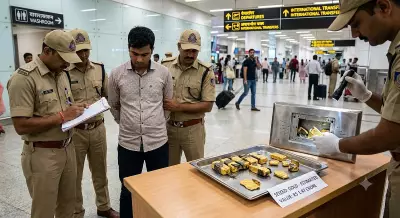
Police recovered four country-made pistols, live ammunition, and specialized house-breaking tools from the arrested individuals. However, two other gang members—identified as Shakayat and Illiyas—managed to escape under the cover of darkness during the operation, and search efforts continue to locate them.
The gang's criminal footprint extended across an impressive geographical range, including:
- Two major dacoities in Goa in 2025 involving the looting of Rs 35 lakh and one kilogram of gold
- Multiple operations across Delhi, Karnataka, Uttar Pradesh, Odisha, and Kerala
- A 2019 dacoity-cum-murder in Karnataka's Hubli
- A 2017 murder case in Bengaluru
Notably, one of the arrested individuals, Mohammad Nasir, had been a fugitive since a 2021 encounter in Lucknow, highlighting the gang's ability to evade capture for extended periods.
Traditional Intelligence Triumphs Over Evasion Tactics
What makes this case particularly noteworthy is how the gang deliberately shunned modern technology to remain invisible to digital surveillance. They relied on low-tech communication and movement methods to avoid detection. However, their sophisticated evasion tactics ultimately couldn't outrun traditional human intelligence networks.
After leaving a trail of blood and stolen gold across Goa and Karnataka, their luck finally ran out in Delhi when intelligence officers pieced together their patterns and predicted their next move. The successful operation demonstrates the continued effectiveness of human intelligence in combating organized crime, even when criminals employ sophisticated cross-border evasion strategies.
The dismantling of this dangerous gang represents a significant victory for inter-state law enforcement cooperation and highlights the ongoing challenges of cross-border criminal networks operating in the region.