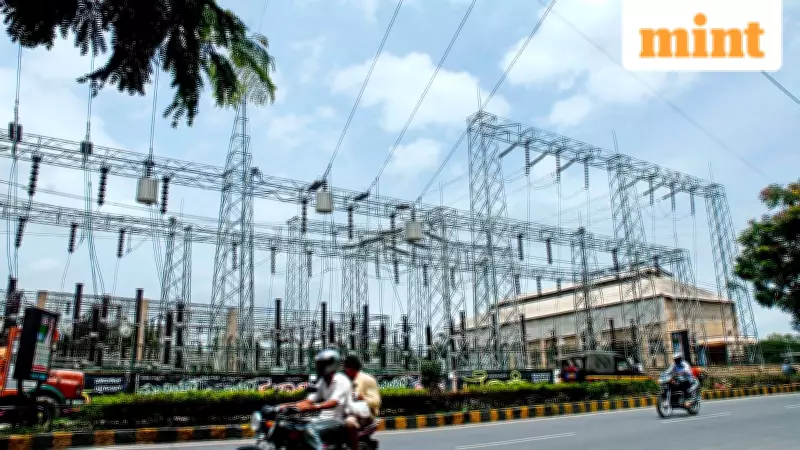
New Delhi: In a significant move to revitalize India's power distribution sector, the Union government has earmarked ₹18,000 crore in the budget for the fiscal year 2027 for the Revamped Distribution Sector Scheme (RDSS). This allocation marks a notable increase from the ₹16,000 crore initially set aside for FY26, which was subsequently revised to ₹15,671 crore, reflecting the administration's renewed commitment to reforming the beleaguered electricity distribution companies (discoms).
Addressing Financial Strain in the Power Sector
The enhanced budgetary support comes at a critical juncture, as discoms continue to grapple with severe financial challenges, burdened by cumulative debts exceeding ₹7 trillion. Despite numerous government interventions aimed at improving their fiscal health, these entities remain under considerable strain, underscoring the urgency of the RDSS initiative.
Privatization and Policy Reforms
Concurrently, a ministerial group focusing on the financial viability of discoms has put forward proposals to incentivize their privatization. Complementing this effort, the power ministry recently unveiled a draft National Electricity Policy for 2026, which outlines a comprehensive set of reform measures. These include mandatory tariff revisions and the introduction of an index-based automatic annual tariff adjustment mechanism, designed to ensure sustainable revenue streams for discoms.

Reviving Discoms Through RDSS
Launched in 2021 with a cumulative outlay of ₹3 trillion, the RDSS aims to rejuvenate discoms' financial standing by facilitating the deployment of smart meters and implementing other critical reform schemes by FY26. However, due to sluggish progress in smart meter installation, the scheme's timeline has been extended to FY28.
Smart Meter Rollout: Progress and Challenges
Under the RDSS, the target is to install 250 million smart meters nationwide. As per data from the National Smart Grid Mission, only 52.8 million meters have been installed so far, though contracts for approximately 150 million additional meters have been awarded. This slow pace has raised concerns, with Parliament's standing committee on energy highlighting underachievement in the rollout and warning that delays contribute to escalating losses for discoms.
Financial utilization reports indicate that out of ₹30,065 crore allocated for RDSS from FY22 to FY25, about ₹25,664 crore had been spent as of February 10, 2025. The ambitious smart meter initiative is projected to require a cumulative investment of $30 billion, emphasizing the scale of this digital transformation.
Historical Context and Broader Objectives
The RDSS was introduced following the conclusion of earlier electrification programs such as the Pradhan Mantri Sahaj Bijli Har Ghar Yojana (Saubhagya) and Deen Dayal Upadhyaya Gram Jyoti Yojana (DDUGJY) in 2022, as the government pursued universal household electrification. A report by Prayas (Energy Group) in August last year underscored that the nationwide smart meter rollout demands substantial investments, which, if managed effectively, could yield significant direct and indirect benefits for both discoms and consumers.
Large-Scale Digital Transition
The deployment of smart meters under RDSS represents one of the most extensive digital transitions in India's electricity sector. Its success will depend not only on technological advancements, the capacity of Advanced Metering Infrastructure Service Providers (AMISP), and improvements in discom performance but also on transparent management of associated costs and benefits.
RDSS comprises two key components: financial support for prepaid smart metering and system metering, and the upgradation of distribution infrastructure. The scheme's ₹3 trillion outlay includes contributions from the Centre and states, along with financing from state-owned power sector lenders like Power Finance Corp and REC Ltd. The central government alone plans to spend over ₹97,000 crore on this initiative.

Past Initiatives and Recent Recovery
Over the years, the Centre has launched several programs to revive discoms, including the Accelerated Power Development and Reform Programme (APDRP) and Ujjwal Discom Assurance Yojana (UDAY), which preceded the current RDSS. In a positive development, the power ministry announced last month that India's power distribution sector returned to cumulative profits after more than a decade. For FY25, discoms reported a net profit of approximately ₹2,701 crore, a stark contrast to the loss of ₹25,553 crore in FY24, with the ministry attributing this recovery to reform measures under RDSS.
Targets and Performance Metrics
The RDSS also aims to reduce Aggregate Technical and Commercial (AT&C) losses to pan-India levels of 12-15% by 2024-25. Although this deadline was not fully met, losses in FY25 decreased to 15.04% from 17.6% in FY24, according to recent power ministry data. Similarly, the goal of eliminating the gap between the average cost of supply and average revenue realized (ACS–ARR) by FY25 remains unmet, but the gap has narrowed significantly to 6 paise per unit from 48 paise in FY24, indicating steady progress toward financial sustainability.